Claim 6: Unfinished Characters In The Combat Demo
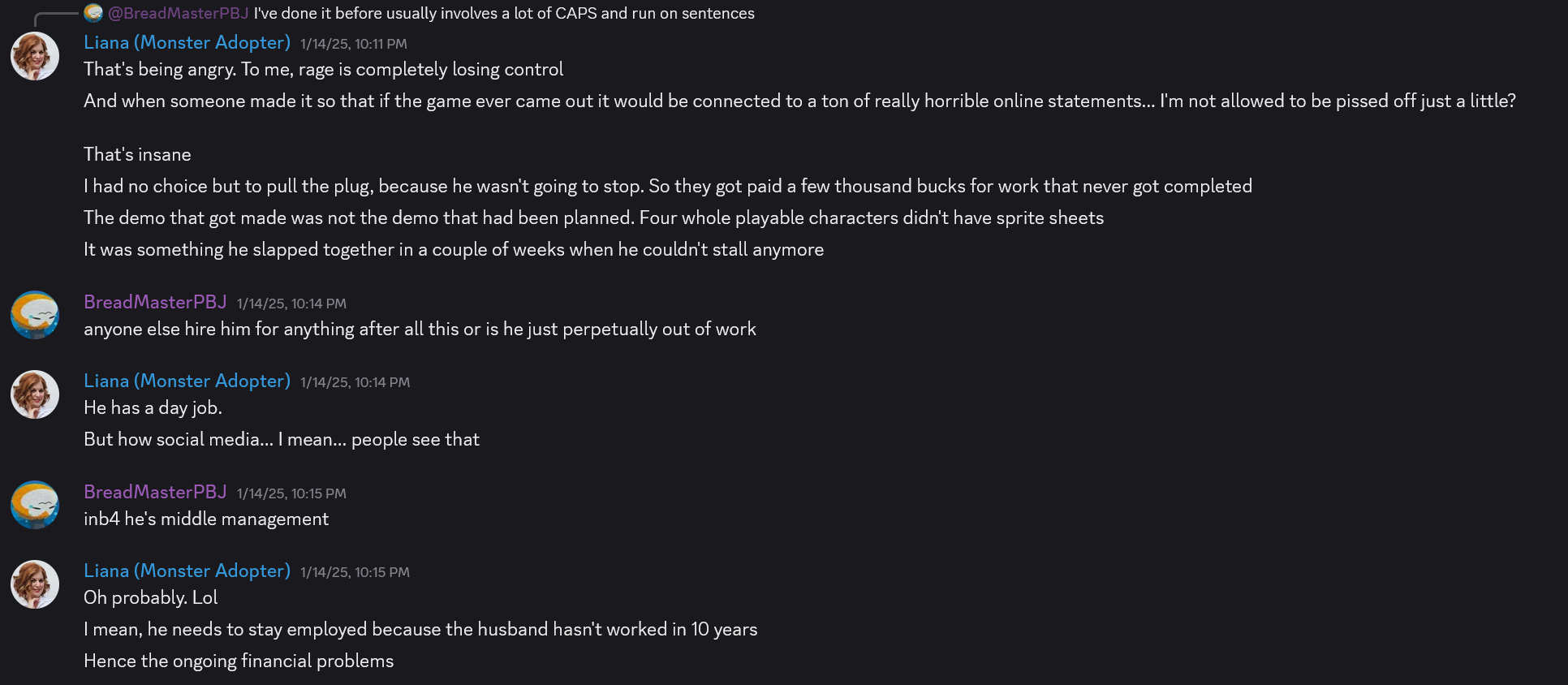
Another claim made by Liana Kerzner is that four characters were missing from the combat demo that, in her view, should have been included. The specific number she references is incorrect: the total number of additional characters contemplated for combat inclusion was five, not four.
To understand this in context, it is important to review both the state of the project at the time and the relationship between narrative readiness and combat implementation.
At the point when Kerzner began expressing concern about missing playable characters, the combat demo script was not yet complete. As of early May 2024 — including May 11, when the script had only 171 words added by Kerzner — there was no finished narrative structure into which additional characters’ combat styles could logically be integrated.
Combat systems for characters who were not part of the core demo party (e.g., Aayan, Isibindi, Armand, Tomoe, Beelzeboob) simply had not been designed or balanced because they were intended for later sections of the game, not for an initial demo focused on teaching basic combat mechanics.
Although Kerzner at one point suggested that, after the demo’s core release, these additional characters could be included for optional combat testing, that proposal was presented before there was a finalized script or completed combat system for the demo itself. In other words:
1.The narrative foundation was unfinished,
2.Combat mechanics for those characters were undeveloped,
3.And the design pipeline was not yet prepared to integrate them in a meaningful way.
Expecting completed combat implementations for those figures at that stage of development was not supported by the project’s documented progress.
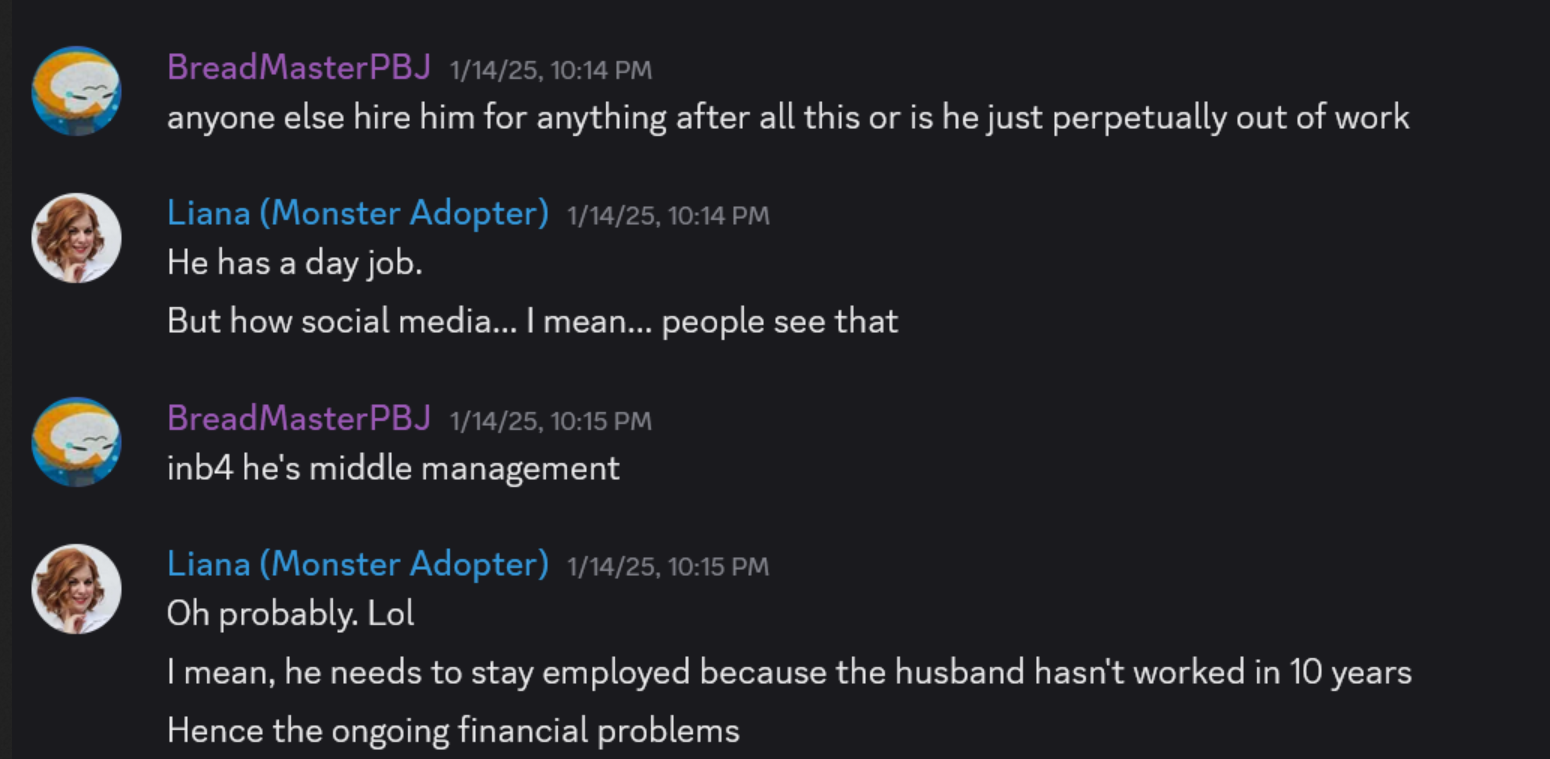
Embedded Discord screenshots show exchanges in which concerns about character inclusion are raised. In those conversations, there is no evidence that I refused to work on additional character combat implementations. Rather, the discussions reflect the sequence of project decisions and the technical constraints under which the team was operating.
Kerzner’s subsequent public characterization — suggesting that my behavior around character implementation was objectionable or threatening to others (including references to how it will imerpil my employment) — introduces implications that go beyond the pale.
Following the cancellation, Kerzner’s public statements have at times attributed broad, generalized motives to me and to my husband. These attributions include terminology such as “cyberstalkers” and other descriptors that signal not simply disagreement but a supposed threat to her personal or professional standing.
It is worth noting that Kerzner has, in the past, expressed that individuals who she believes have misrepresented her actions deserve to be responded to publicly — such as in her 2016 response to criticism (archived link included). That context suggests that Kerzner does not consistently refrain from addressing contested narratives, which makes her relative silence or selective framing in this current situation a point of interest.
In this claim specifically, Kerzner’s framing does not account for:
1. The status of the combat demo’s script,
2. The technical readiness of additional characters’ combat systems,
3. Or the fact that the goal of the early combat demo was to showcase the core combat mechanics, not to deliver a full roster of playable styles.
The documented development reality:
1. Combat demo script unfinished as of mid‑May,
2. Temporary scenario proposed and accepted,
3. Additional characters’ combat systems not yet designed,
4. Core mechanics prioritized for feedback.
The former aligns with verifiable project logs, chat records, and timeline artifacts. The latter appears to reflect a retrospective reinterpretation of project expectations and priorities.
The distinction between these two narratives is part of a broader pattern discussed elsewhere in this dossier: a tendency to reinterpret or reframe past events in a way that shifts emphasis or responsibility. In this case, character implementation and demo completeness are reframed not as a sequence of technical and scheduling decisions, but as a failure attributable to others.
As in other claims, the public narrative presented by Kerzner differs materially from the contemporaneous project record. When contextual details are restored — such as script completion dates, design readiness, and character system development milestones — this claim becomes implausible.