Accountability
Introduction
In this section, I want to do something I have yet to observe Liana Kerzner do in any consistent or substantive way: take direct, unqualified responsibility for her role in a professional matter—without reframing it as virtue, sacrifice, or a result of someone else’s failings.
Before I begin, I think it’s important to draw attention to a rhetorical pattern that appears frequently in Kerzner’s public communications and often escapes scrutiny. It deserves acknowledgment, because it affects how stories—particularly around conflict and blame—are framed.
The first pattern is known as eirōneía, a rhetorical strategy where a strength is recast as if it were a flaw. For example, when someone says they’re “too understanding” or “give people too many chances,” they are presenting something generally seen as a virtue, but framed as if it’s a personal defect. The real effect is to elicit admiration and sympathy—positioning the speaker as a reluctant saint rather than someone actively making choices. This isn’t necessarily malicious, but it is manipulative. It creates a buffer against criticism.
Another tool often employed is paralipsis—the act of saying you won’t mention something while clearly doing so. Kerzner has used this device repeatedly, such as in the January 19, 2025 Bluesky thread, where she insists she isn’t naming names but then proceeds to describe events in a way that leaves no ambiguity about who she means. The same rhetorical device appears throughout her cancellation video and other social media posts.
I bring this up not to nitpick style, but because these strategies affect how accountability is perceived. They allow someone to appear humble while still asserting control over the narrative. I will not delve into the rhetorical.
This is what I was responsible for during the development of Song of Sparklemuffin.
Sections
My Responsibilities:
1. Hiatus
During the period of my unemployment, and later during a stretch of seasonal work where I was working 12-hour days, I made the decision to place the game on the back burner. My focus during that time was on securing a permanent position. That decision—and the resulting delay—is entirely my responsibility.
I had communicated to Liana that my intention was to resume development once my employment was secure and my training was finalized, and I fully expected to return to a regular workflow. However, that doesn’t change the fact that very little forward progress occurred during that period on my end.
2. Health
I take full responsibility for not managing my chronic health condition—newly diagnosed at the time—efficiently. After being diagnosed with diabetes, I spent several weeks in a state of avoidant shock. Much of that stemmed from fear and the mental imagery I associated with the condition: a life of restriction, dullness, and loss of small joys. My imagination filled in worst-case scenarios, and instead of adjusting quickly, I found myself slipping into old habits—particularly in how I balanced creative work with self-care.
During this time, I would sometimes become absorbed in tasks to the detriment of proper nutrition. That led to frequent blood sugar crashes, brain fog, and periods where I was not able to concentrate or create meaningfully. Creativity became inconsistent, and even short tasks became mentally taxing.
Eventually, I recognized that continuing in this state would force me toward insulin dependency. That realization was a turning point. By August 2024, I had brought my A1C down from 13 to 5.5. But a significant set of difficulties occurred from this.
3. Planning
I made a clear oversight in not involving playtesters early enough to vet the grid-based combat system. This was a significant misstep. When experienced testers were eventually brought in, they quickly uncovered bugs I hadn't anticipated—issues that, if triggered by players, would have led to a frustrating and degraded gameplay experience. Had I managed that phase more proactively, many of those bugs could have been caught before they became structural problems. The combat system required rebalancing and some re-architecture, which ultimately delayed the combat demo by about two weeks. It was a classic early-development mistake, and I take full responsibility for it.
4. Estimations
I also take responsibility for not accurately gauging the time required to complete certain key development tasks. One clear example was the creation of character generator assets, which ended up taking significantly longer than I anticipated. The same was true for the implementation of several systems more complex in execution than expected at the outset.
These delays weren’t the result of negligence, but rather the learning curve that comes with early-stage first-time development. Still, the effect was real: since I was managing multiple aspects of the project alone, delays in one area quickly created bottlenecks in others. I was the sole person responsible for pacing and prioritization, and I acknowledge that I should have adjusted my timelines and scope more effectively.
5. Emotional Regulation
I take full accountability for how my husband's mental health crises affected me during the development process. There were periods when the emotional strain became overwhelming—when I felt mentally clouded and struggled to focus. That reaction was not his fault. It reflected a failure on my part to regulate my own emotions effectively.
My emotional well-being is my responsibility. While it's natural that those close to us can influence how we feel, at no point was there any intentional disruption or sabotage on Asher’s part. He did not seek to interfere with the project, nor did he impose obstacles. It is both unfair and stigmatizing to impute blame to him for the ways in which I allowed myself to react to certain situations and events during that time.
Mental health challenges can be difficult to navigate—for those experiencing them and for those close to them—but that difficulty does not equate to wrongdoing. It certainly does not justify scapegoating. Any emotional consequences I experienced are mine to own, and I do. I will speak further on this as it relates to Kerzner shortly.
With those items in place, and before I turn my attention to Kerzner, I will also elaborate what it is that I am not responsible for.
What I Will Not Have Held Against Me:
1. Music

And regardless of how they may contradict her own stated opinions in the past:
It is also necessary to emphasize that I, like any individual, have interests, responsibilities, and activities beyond a single collaborative project. At no point was I contractually or ethically required to dedicate all of my time to Song of Sparklemuffin, nor was Kerzner. During the same timeframe in which my development contributions slowed, Kerzner also had sufficient opportunity to complete at least one script; however, available records indicate that this did not occur. During this period, she continued to engage in gaming, livestreaming on Twitch, and managing other projects and commitments.
Given that Kerzner pursued her personal interests during this time—a choice I respect—it is inconsistent for her to criticize me for maintaining my own. I do not accept the suggestion that I am obligated to apologize for maintaining my musical practice while facing professional uncertainty.
2. The 'Karaoke Contest'
I must address the implication—whether explicit or implied—that delays in the development of Song of Sparklemuffin were the result of my participation in what Liana Kerzner has dismissively termed a “karaoke competition.” Such a characterization is both reductive and misleading, particularly when it is used to diminish the significance of musical work. It fails to acknowledge the true context and purpose of my involvement.
In 2024, I took part in Season 5 of Viral Voice, a juried singing competition hosted in Second Life at the invitation of DJ Mat, who manages the Savoy Ballroom at Creations Park. Creations Park is a distinctive virtual environment established by Fran Serenade and her daughter, as highlighted in a feature by Wired “First They Got Sick, Then They Moved Into a Virtual Utopia.” who lived with Parkinson’s disease, utilized Second Life not only to regain a sense of independence and joy but also to support others facing similar challenges.
Although Fran has since passed away, her daughter and the broader community continue to uphold the sim’s mission: supporting research for a cure for Parkinson’s disease and providing a meaningful virtual space for individuals living with disability and chronic illness.
At the time, Creations Park was experiencing a decline in visitor engagement. DJ Mat believed that my participation in the competition could help revitalize interest and activity. I agreed to participate because Creations Park, its mission, and its community are important to me; I have been a regular performer there for some time. The competition itself took place during hours I had already dedicated to musical pursuits—time that, like anyone else, I am entitled to allocate as I see fit.
Regarding the competition, Kerzner’s references to my involvement may lead readers to assume a lack of ability on my part, yet she omits relevant context. For several rounds, I did place last; however, it was later revealed that another contestant’s supporters had manipulated the voting system, specifically targeting me, in part due to my identity as both gay and a furry. Once this issue was identified, the competition’s voting process was revised, and I ultimately finished as one of the three finalists.
Kerzner is aware of these circumstances. Her decision to exclude them—while tacitly questioning my competence— reflects a pattern of selective framing that omits context and undermines me both personally and professionally.

DJ Mat’s assessment was accurate: following the competition, Creations Park saw a significant increase in traffic, and its mission continues. For me, this was not merely a performance, but a contribution to a legacy of accessibility, dignity, and healing through art. I cannot allow Kerzner’s dismissive remarks or insinuations to go unchallenged, particularly when they concern a community founded on compassion and humanity, and especially not at the expense of Fran’s memory.
It is also important to note that Kerzner was present in Second Life as a member of the audience at the time and was fully aware of this context.
Kerzner's Responsibilities
Throughout this entire sequence of events, both in public statements and in written communications from her lawyer, Liana Kerzner has consistently advanced a single explanatory narrative for the failure of the Song of Sparklemuffin project.
In that narrative, all substantive deadlines are treated as having been firm and unambiguous, all missed deadlines are attributed exclusively to me, and those missed deadlines are explained as the result of my husband’s mental health difficulties. By contrast, the delays on Kerzner’s side are described as minor or unavoidable, framed as “administrative shuffling” necessitated by problems she characterizes as originating entirely with me.
The cumulative effect of this framing is that responsibility for the project’s breakdown is concentrated almost entirely on one participant, while Kerzner’s own role is presented as essentially non-contributory. This leaves no room for shared responsibility, external disruption, or the documented periods in which development slowed for reasons related to both of us, not just myself.
What is striking about this version of events is not merely that it conflicts with the actual development history, but that it depends on an unusually rigid division of moral and professional roles. Participants are repeatedly sorted into those whose actions are treated as wholly causal and those whose actions are treated as incidental or excusable. Such a framing is difficult to reconcile with the complexity of the project’s real timeline, which involved multiple overlapping interruptions, shifting capacities, and external pressures affecting more than one person.
An Asymmetric Narrative
Throughout this document, I have shown on multiple occasions that Liana Kerzner has attributed all substantive causes of delay in the project to me, while limiting her own responsibility to the secondary task of managing or responding to those alleged delays. This framing has remained the dominant—and, effectively, the only—account of events that has been publicly advanced by Kerzner across her platforms.
I have already acknowledged the periods in which my own personal circumstances, including conflicts with my spouse and his mental health crises, affected my ability to function optimally. During those times, my executive functioning suffered, and I did not always manage my emotional responses as well as I should have. I do not dispute that these moments contributed to delays on my end.
What has not been disclosed to the public or to backers, however, is that similar domestic and emotional disruptions were also present on Kerzner’s side throughout the project. This omission is significant. It is the reason I cannot reasonably characterize Kerzner’s account as a simple misunderstanding or imperfect recollection. Instead, the record shows a consistent pattern in which comparable circumstances are acknowledged when they explain my delays, but omitted when they would contextualize hers, resulting in a narrative that concentrates responsibility and sympathy in one direction only.
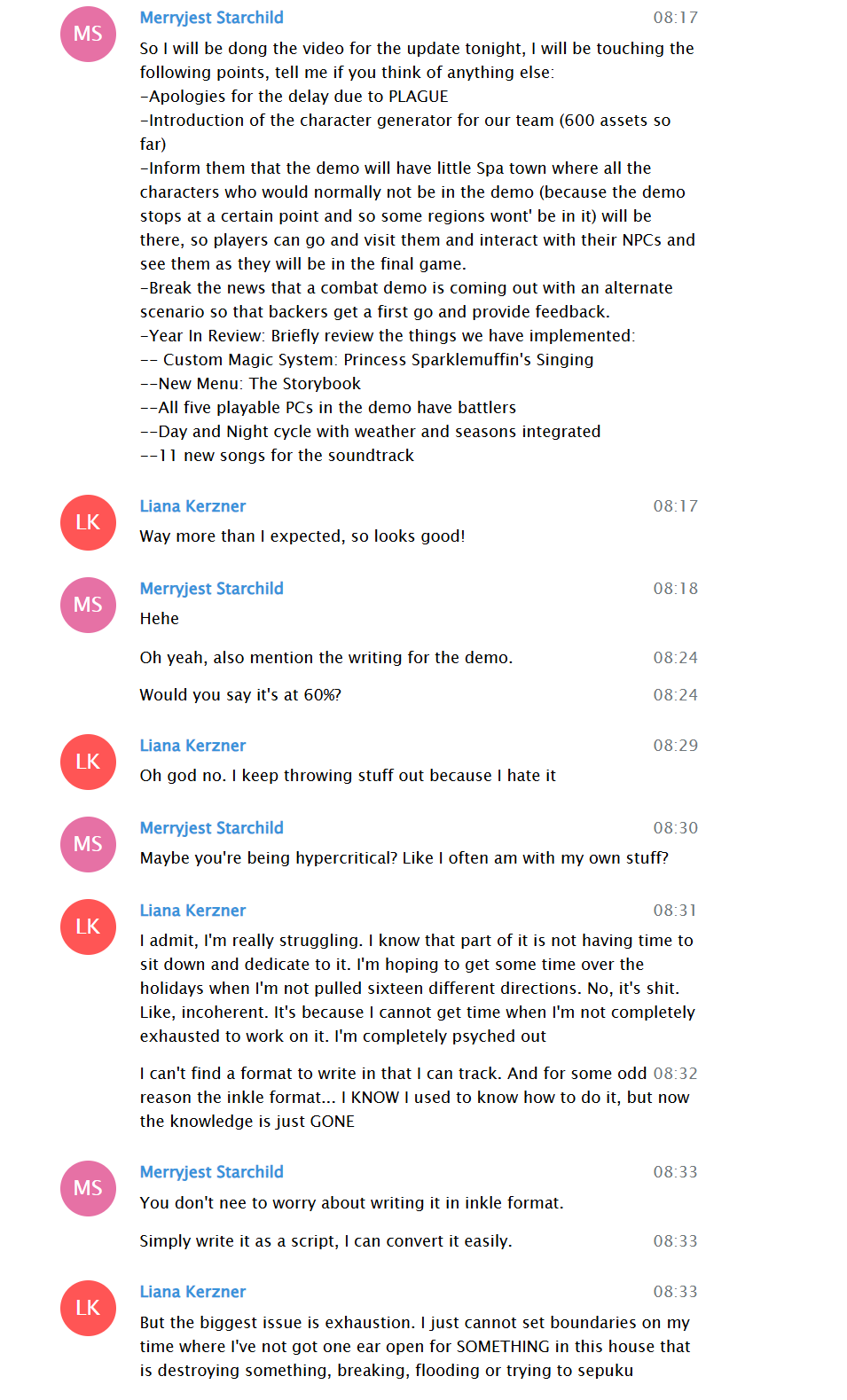
Kerzner’s formal role on the project was focused on writing and narrative/story development. Her repeated claims that she was “juggling multiple volunteers” have already been shown to be inaccurate. Over the course of development, I periodically checked in with her to assess the state of the writing and to understand her progress in the narrative. At one point, I independently obtained a plugin that allowed the game engine to interface directly with Ink
, a widely used narrative scripting system developed by Inkle Studios. The purpose of this integration was to simplify dialogue implementation by allowing scripted calls, rather than relying on the engine’s more cumbersome native messaging system.
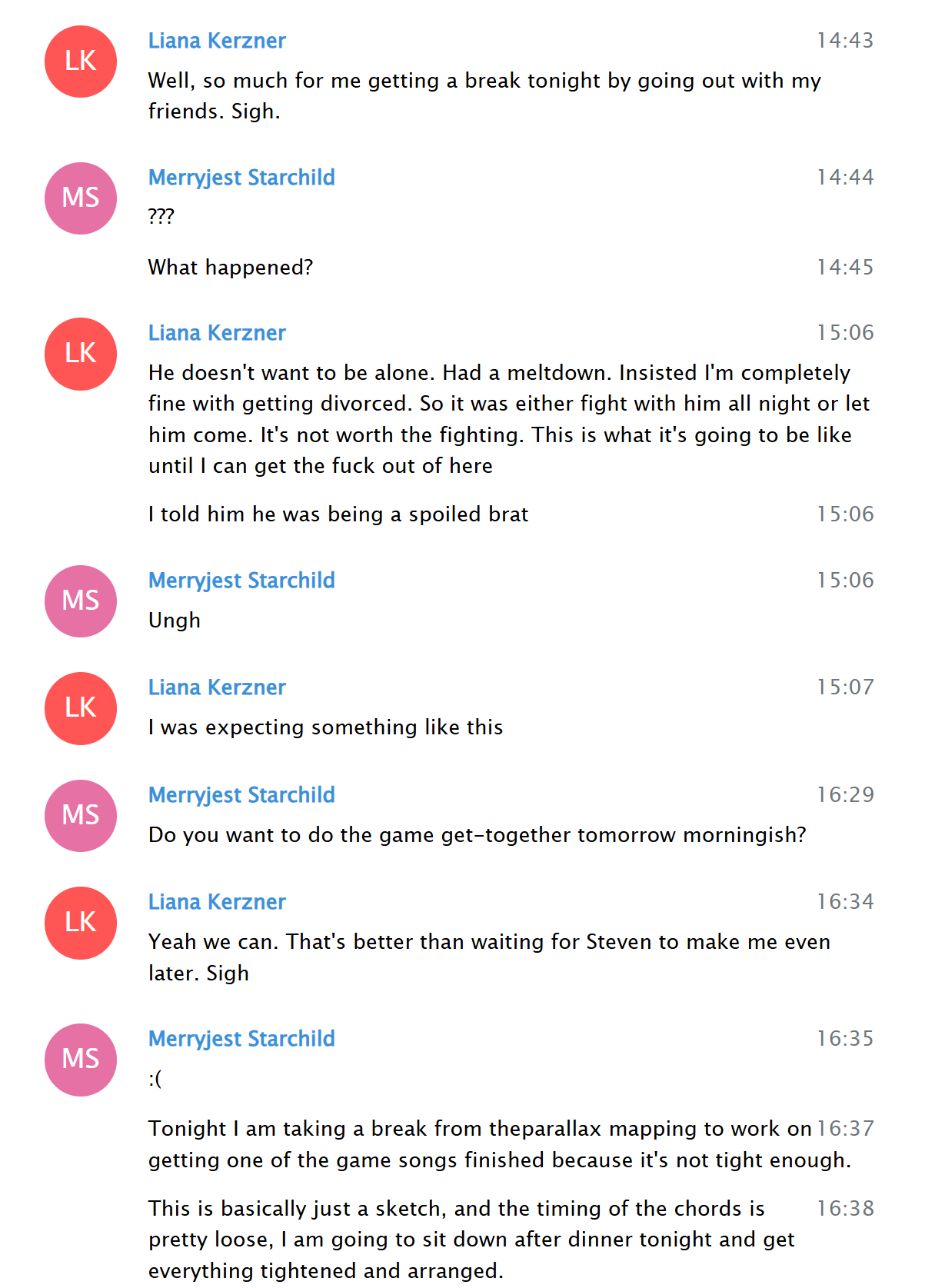
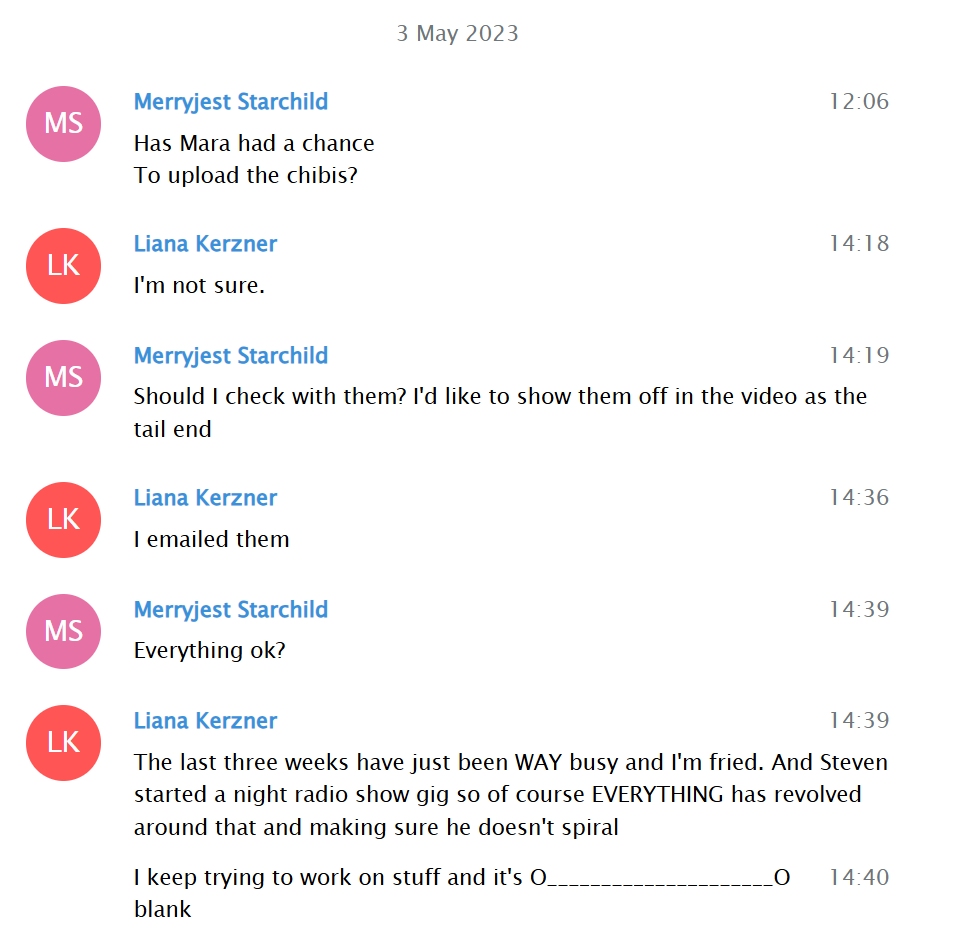
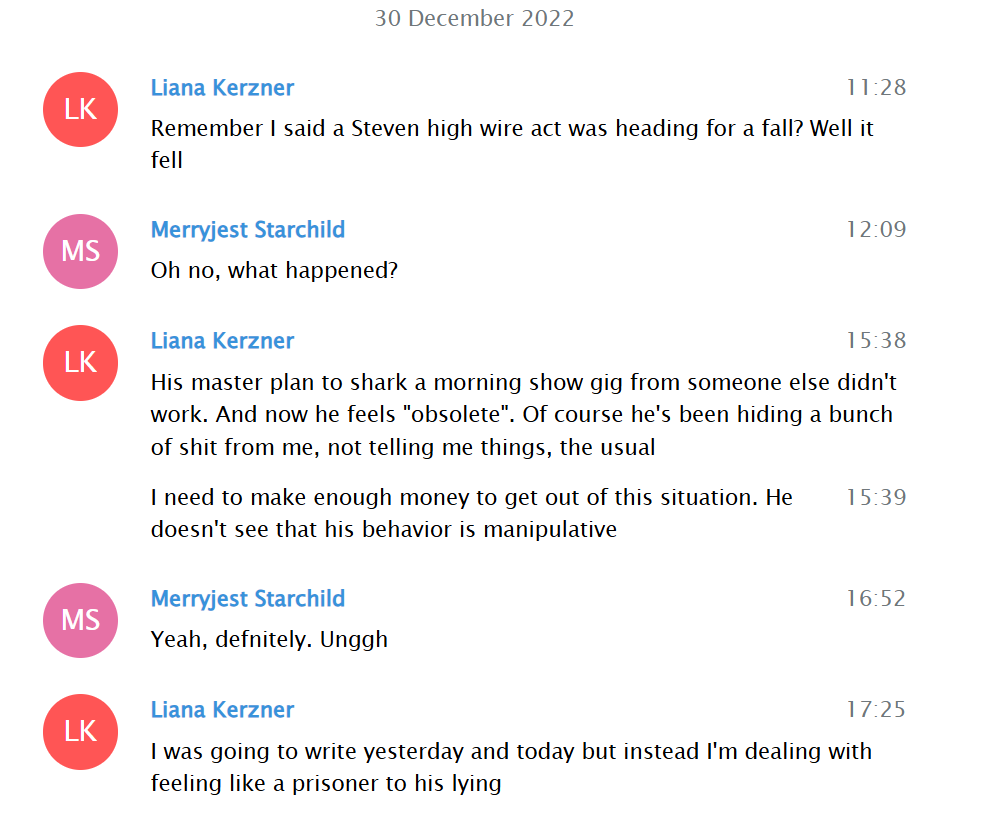
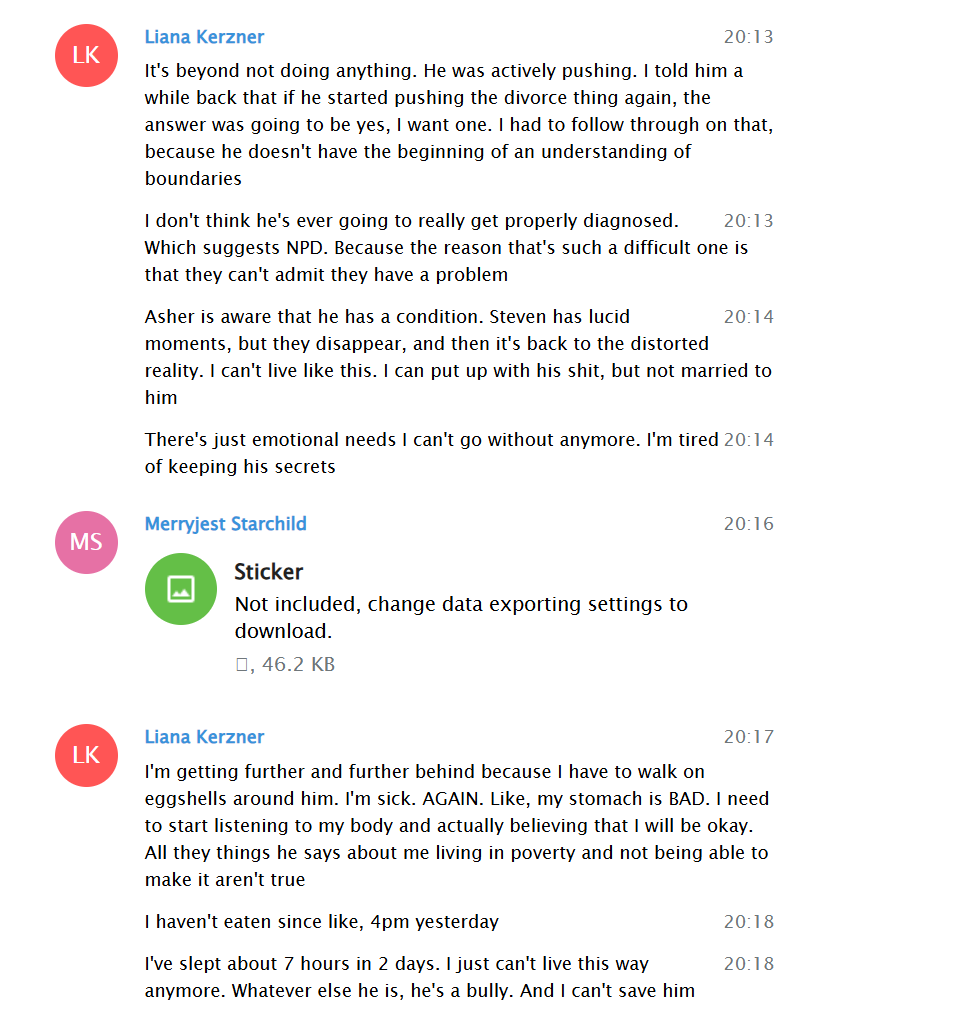
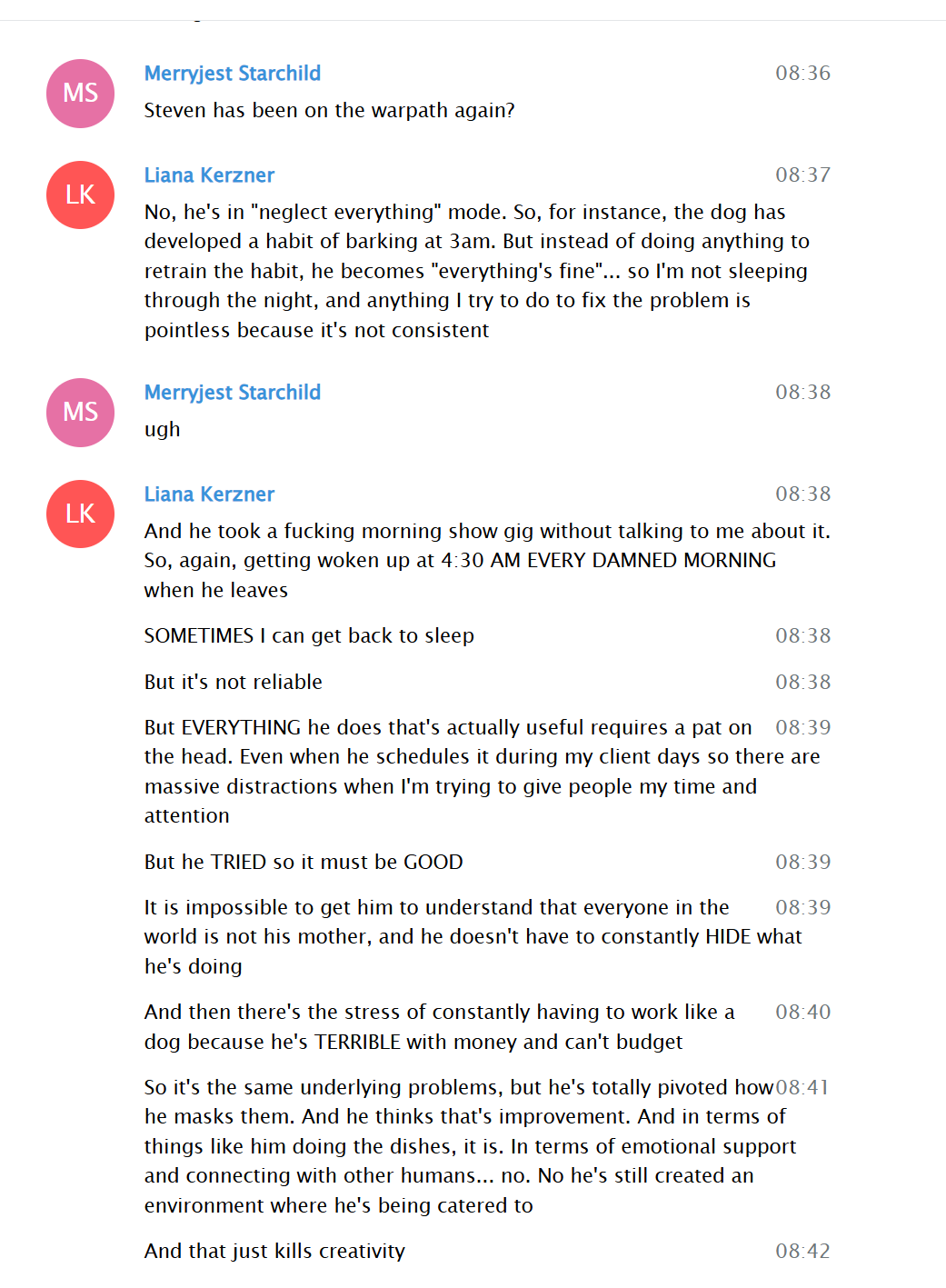
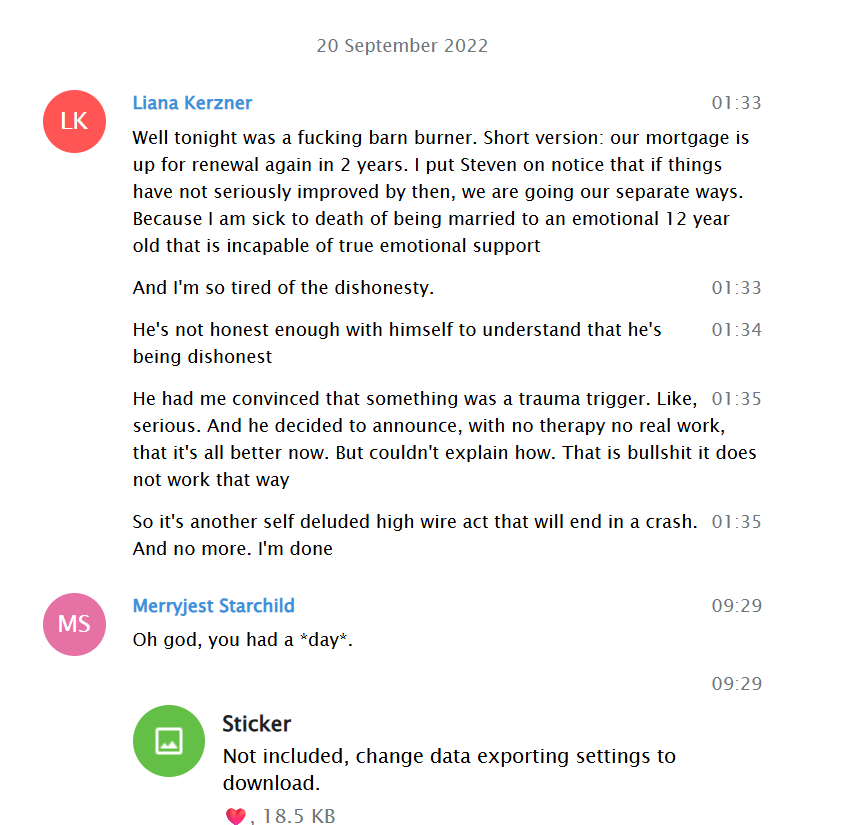
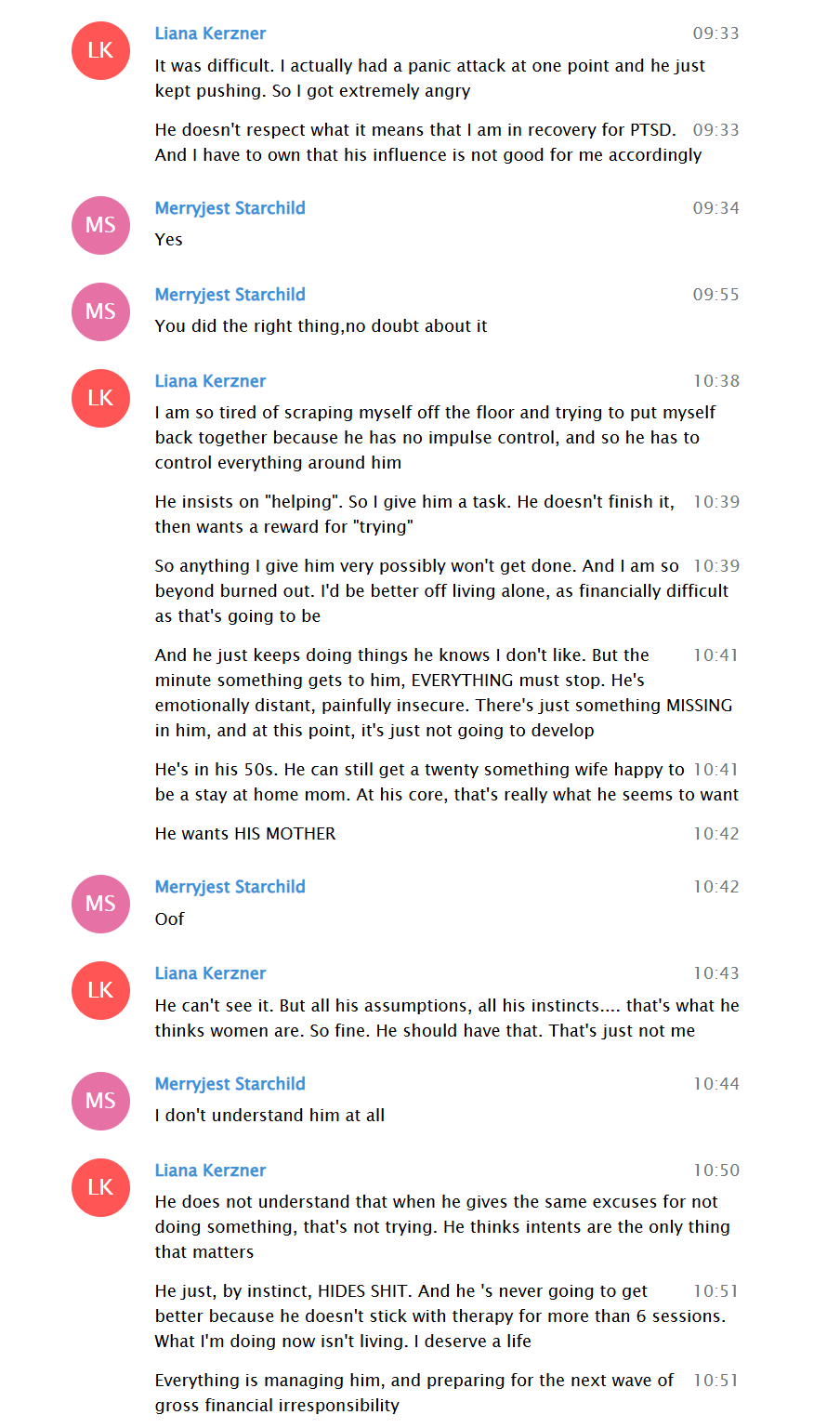
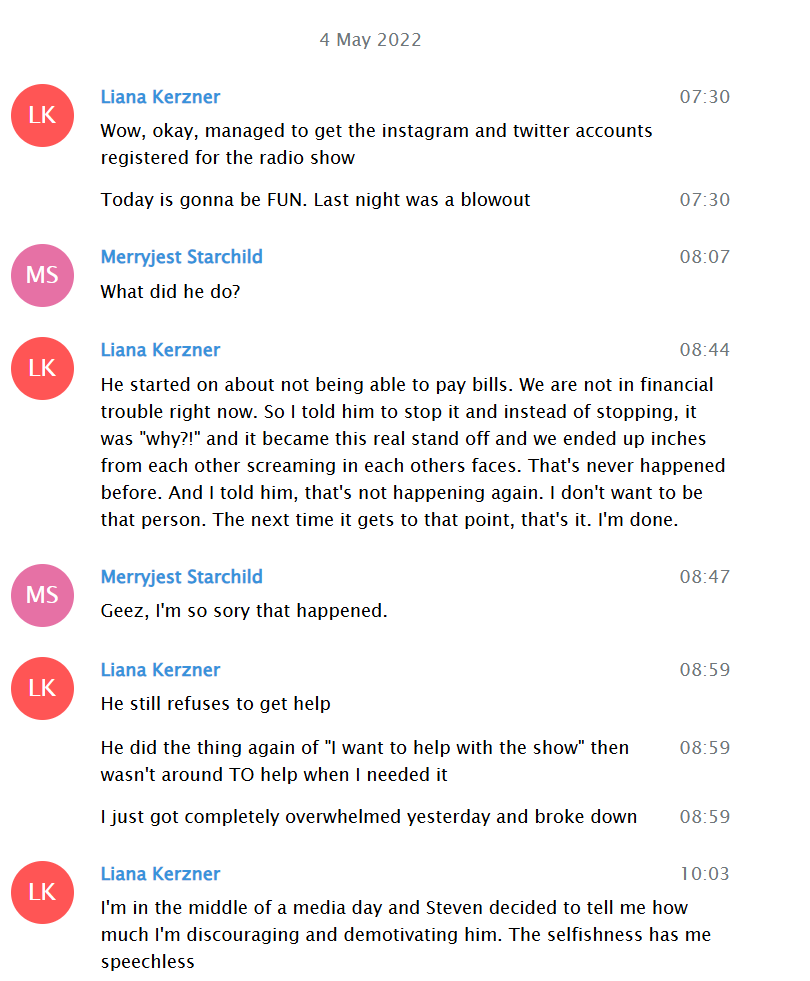
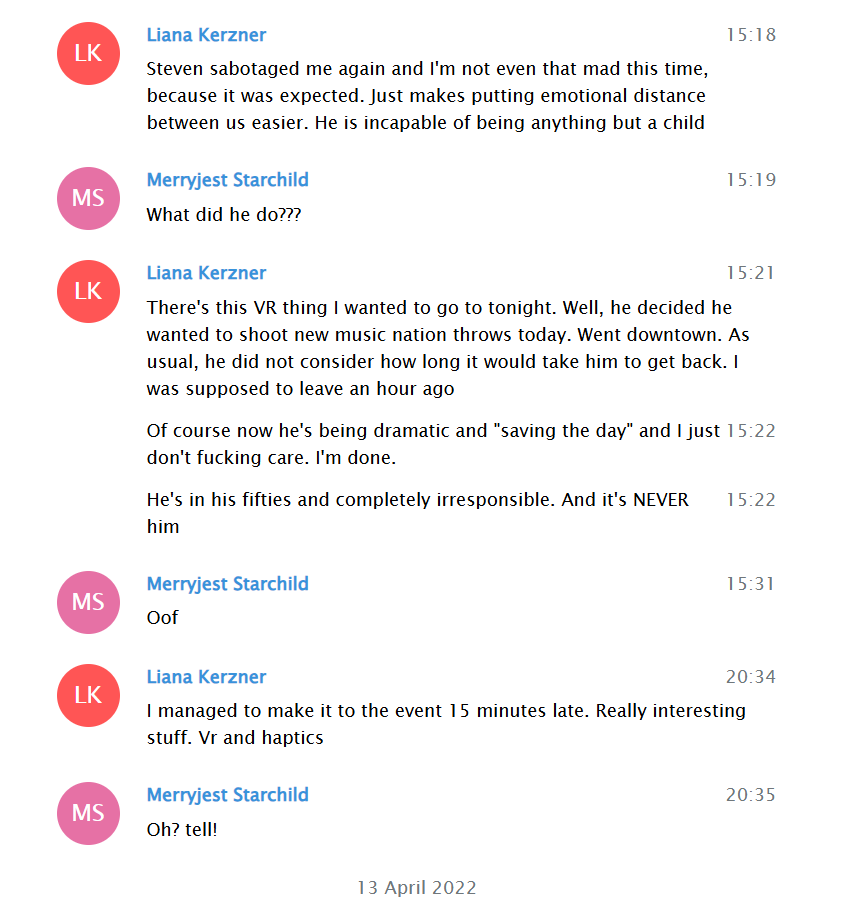
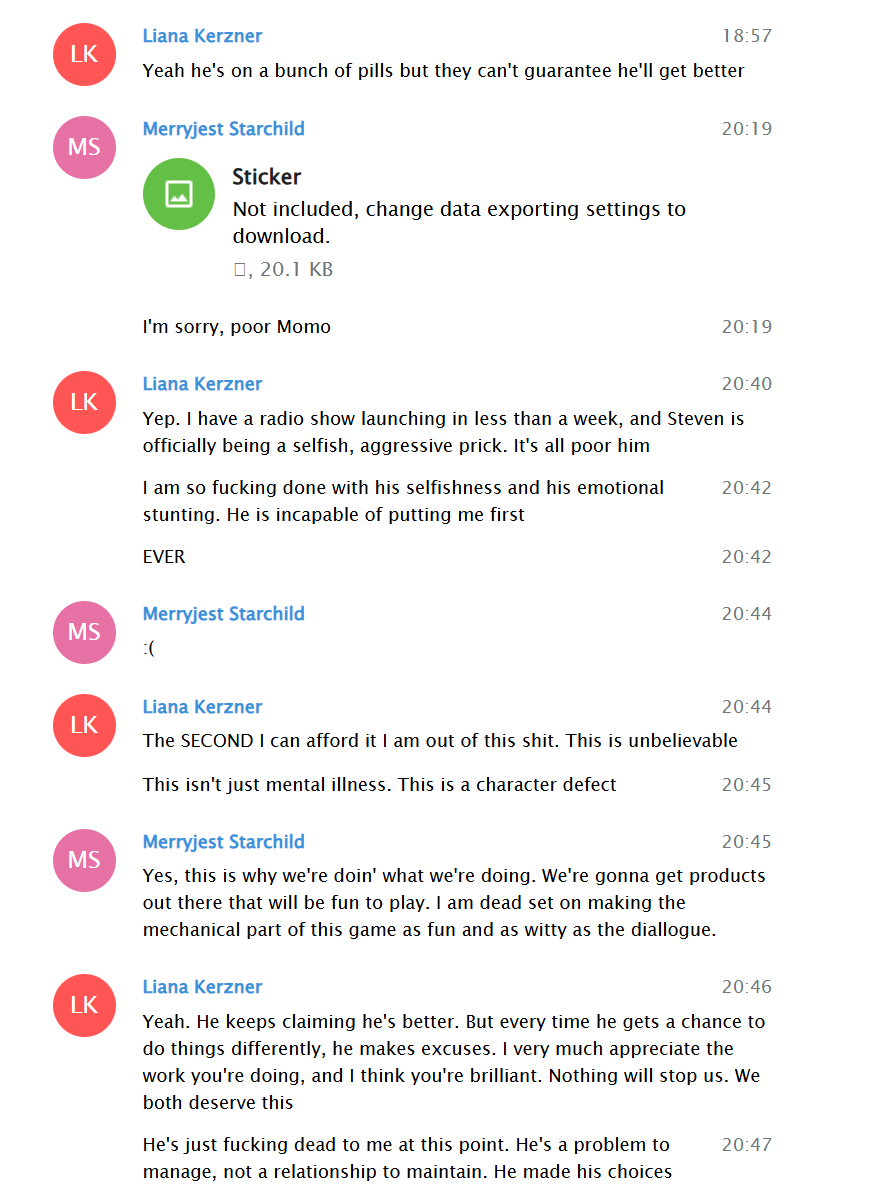
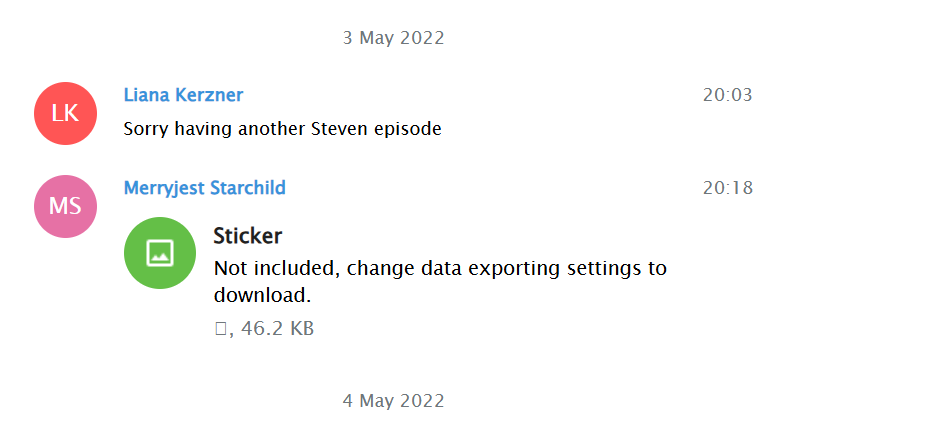
I explained the Ink formatting requirements to Kerzner, which are relatively straightforward. Nevertheless, very little material was produced using the format by her. On at least one occasion, Kerzner attributed this to conflict with her husband, Steven, stating that the stress of the situation had caused her to forget how to write in the format altogether. At other times, she stated that she was too emotionally depleted to write due to ongoing domestic crises, which she described in detail, including threats of self-harm from Steven, neglect of animals in the home and dereliction of domestic duties, and prolonged verbal confrontations.
These explanations were presented contemporaneously as reasons for a lack of progress on the writing. What follows is a small sample of instances in which Kerzner herself cited circumstances of this nature as contributing factors.

The Narrative Collapse
The existence of this evidence—evidence whose subject matter Kerzner obscured from Kickstarter backers and from the public while also very publicly saddling my husband’s mental health with the brunt of responsibility—undermines the structure of Kerzner’s narrative around the origin and cause of the delays. Kerzner's story is a selective reconstruction.
Stepping out from behind that lens and viewing her public claims alongside the contemporaneous record, it becomes difficult to ignore how consistently Kerzner attempts to pre-empt scrutiny by stigmatizing her critics rather than addressing the underlying facts. This is visible in what she claims about the project and also in how she characterizes those who dispute her account—casting us as “obsessed stalkers,” dismissing our responses as “diarrhea of the keyboard,” and using other similarly contemptuous framings intended to delegitimize a contradiction before it can be evaluated on its own merits.
I have repeatedly observed that, in Kerzner’s own descriptions of these conflicts, she presents herself as a flawed but well-meaning actor whose only acknowledged shortcomings amount to being too kind, too patient, or too understanding. These self-ascribed flaws function rhetorically as virtues rather than admissions of error and her responsibility for conflict or failure is externalized to all other parties but herself. And yet, sympathy and moral credibility are exclusively redirected to herself. This can be observed directly in the language Kerzner has chosen to use when characterizing both herself and others, and in the effects these framings have on her public reception afterward.
A concrete example of this can be seen in the public response to Kerzner’s cancellation video across Kickstarter, YouTube, and Patreon. In those spaces, she was widely praised for being an ally and for “standing up against transphobia,” and no substantive public challenge was raised regarding the handling of Kickstarter funds. This absence of scrutiny is notable given that Kerzner herself has acknowledged, in writing to me (as was seen earlier), that her husband, Steven Kerzner, took money from the Kickstarter funds without authorization and without being part of the project. Regardless of whether it was replenished at all (I cannot trust her claims after all she has done), it was her fiduciary duty to transparently disclose that information to the backers at the termination of the project, and she did not.
Despite the seriousness of that admission, she excluded that information from the public narrative. Kerzner retained the benefit of widespread goodwill while my husband was positioned as the primary cause of the project’s failure and the moral justification for its cancellation.
It is difficult to ignore how differently the situation might have unfolded had backers been aware that Kickstarter funds had been diverted within Kerzner’s household without proper authorization.
The sequence of events, the selective disclosure and distortion of material facts and the resulting asymmetry warrant serious scrutiny by anyone seeking to understand how the public narrative surrounding this project has been constructed exclusively by Kerzner.
Kerzner’s subsequent actions further reinforce the argument that this dispute is fundamentally about narrative control. On September 29th, after approximately eleven months of enduring what I document here as repeated distortions of events, I published a video addressing the fact that Kerzner had not been truthful in her public representations. That video was limited in scope and comparatively restrained, especially when set against the volume of material presented in this document. It contained a small selection of inaccuracies, but it nonetheless demonstrated, with supporting evidence, that Kerzner had engaged in a consistent practice of presenting one version of events to the public and to backers while the reality of the events was quite different.
The video wasn;t a comprehensive examination of the broader pattern, that is the purpose of this website. Rather, it highlighted several discrete instances in which Kerzner had made false statements about me to her Discord server, or had presented her audience with multiple mutually inconsistent versions of the same event.
Each of these instances afforded Kerzner an opportunity to clarify the record or accept responsibility for having circulated an inaccurate narrative. Given her repeated public emphasis on her own integrity and trustworthiness—claims she has linked to the confidence of backers and to personal associations with individuals in law enforcement—this constituted a clear test of whether she would correct the record when confronted with evidence.
Kerzner chose not to do so.
Instead of engaging with the substance of the documentation or addressing the inaccuracies identified, she took to Twitter on October 4th and, over the course of several hours, published a series of posts directed at me and my husband. In these posts, she disclosed additional private details about our lives, many of which were materially distorted, mischaracterized, or presented through strange and disfigured interpretations. The cumulative effect of this behavior was not to rebut the factual claims raised in the video but were intended to shift attention away from them by escalating personal exposure.
Whether the aim was to provoke conflict between my husband and me, or to discourage further speech through social pressure and the implicit threat of additional disclosures, it was nevertheless an escalation and not a factual response.
None of the specific misrepresentations identified in my video were addressed or corrected in these posts.
In the course of this escalation, Kerzner also contradicted a claim she had advanced for months: that our objections stemmed merely from her having “said no” to us. Instead, she implicitly acknowledged that the core issue concerned her decision to make details about our home life public as part of her cancellation narrative, and to present those details as a causal explanation for the project’s termination. This was followed by further escalation, in which she disclosed still more personal information:

There is much more to be examined in this phase of events, much of which will be addressed in the section immediately following the “Big Ugly Fight,” where the necessary context can be laid out in full. For present purposes, however, one point bears particular emphasis: Kerzner’s continued reliance on narrative control. Once again, she returns to my missed deadline as a central explanatory device, while making no reference to her own missed obligations. This omission is especially striking given that I was able to present a working version of a demo, whereas Kerzner never produced a completed script in finished form.
Consistent with her earlier framing, Kerzner again foregrounds my references to my husband’s mental health crises as a cause of delay, while omitting any mention of the numerous occasions on which she herself attributed her lack of progress to conflicts with her husband, Steven Joel Kerzner. The asymmetry is not subtle.
At this stage, Kerzner also adopted a dual rhetorical strategy. On the one hand, she asserted that I had falsely blamed my husband’s mental health for “everything,” framing this as a lie directed at backers and her. On the other hand, she then implied that I could not have meant those explanations sincerely, and suggested instead that they were a cover for alleged sexual misconduct, claiming that I was “yiffing with other men far too young” for me. These insinuations were presented publicly in a way that appeared calculated to provoke personal and relational harm.
This line of attack ignored readily verifiable context and instead cast the situation in a deliberately salacious light, one that resembled tabloid framing more than any good-faith engagement with facts. My husband and I are openly non-monogamous, a fact well known within our social circles, and the age difference between me and the individuals referenced is approximately eight or nine years. Notably, this is comparable to the age difference between Liana Kerzner and her husband, Steven Joel Kerzner.
The irony of this framing is difficult to miss. In her January 16, 2026 video discussing Gamergate, Kerzner stated, “People will believe a salacious lie far quicker and more firmly than they will believe the truth.” That observation is accurate—and its relevance here speaks for itself.
A Granular Look
It is important to note that over the fifteen-month period since the project’s cancellation, as of the time of this writing, I did not bring any of these matters concerning Kerzner’s domestic life or personal conduct into the public sphere, despite having ample time and opportunity to do so. Unlike Kerzner, I understand that there are boundaries that ought to exist even after friendships end, and that violations of privacy should not be undertaken lightly.
Nevertheless, in every instance where such boundaries were crossed, Kerzner was the initiating party.
Throughout the first six month period, we allowed Kerzner far more time than could reasonably be expected for her to act justly and correct a demonstrably skewed narrative. That extended restraint stands in stark contrast to the caricature she has promoted of us as “deranged stalkers” with “no impulse control” and “diarrhea of the keyboard.”
It is also essential to be clear that none of our actions occurred as initiations. Every disclosure we have made has been in direct response to a public falsehood advanced by Kerzner, or to conduct on her part that went well beyond acceptable bounds. As noted earlier, Kerzner was the first to violate privacy in every single instance beginning with her cancellation video— which, despite her claims, allowed multiple individuals to clearly identify us. Even then, we would not have had significant objections had Kerzner's portrayal had been accurate and professional. It was not.
In one branch of her subsequent Twitter tirades, she claimed that she withheld information from that video because, in her words, “YIKES the full truth of what went down is SUPER embarrassing.” That topic will be addressed in detail later. What is relevant here is that the only information she chose to disclose publicly was information she believed would embarrass us or place us at a social disadvantage while closely safeguarding her own narrative.
The progression is very consistent: The cancellation video (the contents of which were not disclosed to us prior to its publishing) included unnecessary, inaccurate and deeply unprofessional detail, centering my husband’s mental health struggles in a manner that invited stigma and moral condemnation. When we publicly objected to this distorted portrayal, Kerzner did not correct the record. Instead, she escalated, doubling down on her characterization of both of us and of Asher’s exchange with her, adding insults, name-calling, insinuations, and further allusions across her YouTube channel, Radio show, Patreon videos, and Discord server over the course of several months.
After approximately six months of Kerzner repeatedly describing the exchange with Asher as a “Big Ugly Fight,” with Asher cast as the “big ugly” party and subjected to escalating mental health stigma, Asher released the transcripts of that conversation, which will be examined in their own section.
At that point, Kerzner—who had spent months publicly commenting on a conversation her audience had never seen, and which formed the scaffolding of her narrative—objected that the transcripts constituted a violation of privacy, a betrayal, and a distortion.
Subsequently, Asher disclosed that Kerzner had violated the confidentiality of one of her mental-health clients by sharing the private mental-health history of Mitchell Jura with him after her peer counseling relationship with him had ended acrimoniously. This was based on Kerzner’s own communications with Asher. It is one of several events that led us to conclude that Kerzner’s conduct is unethical and incompatible with her role as a mental-health advocate, a concern that will be addressed in detail in the section devoted to the aftermath. Kerzner’s response was to characterize the public disclosure of her breach of a client’s privacy as a violation of her own privacy. It is our understanding, as per Kerzner's own words in one of her episodes, that she signs confidentiality agreements with her LianaKares clients. This suggests that she has a tendency to violate her own confidentiality agreements when faced with conflict.
Then, at the end of September, I released my own video documenting mischaracterizations, false statements, and contradictory portrayals Kerzner had made about me in her Discord server of over one hundred members, accompanied by direct evidence showing those contradictions. As before, Kerzner declined to address the substance of the material. Instead, she embarked on the pattern of public disclosure already described, selecting details she appeared to believe would function as shame-inducing or reputation-damaging, and using them in an effort to undermine our credibility rather than engage with the facts.
It is this sustained pattern—of evasion, escalation, and diversion whenever accountability is requested—that has brought us to this section and those that will follow.
At this point, I am obligated to make full disclosure of the broader pattern we have observed, one that stretches back years and was not initially apparent to us.
I am also obligated to complete the full image that Kerzner has left vacant by her own selective retelling of the timeline, and her initial and unnecessary desire to reveal personal details— but only those of third parties, not her own.
Kerzner’s domestic and emotional life was, by her own repeated descriptions, marked by ongoing conflict and dysfunction. She spoke frequently of being unable to leave her husband for financial reasons, and of fearing that he would intentionally neglect their animals in retaliation. Her substantial delays in script development—substantial when measured against my eventual output—were repeatedly attributed by her to these domestic circumstances.
Yet none of this context appeared in the cancellation video or in her subsequent public commentary.
There was no mention of her missed deadlines, the mental-health crises in her household, or the fact that her husband took Kickstarter funds for his own use while not being part of the campaign, an act that, according to sources I have consulted, raises serious legal concerns when campaign funds are handled by non-authorized third parties.
By the time my video was released, Kerzner had already begun threatening us with legal action through Dr. Mark Bourrie (though we were unaware of it due to the fact that we had not seen Bourrie's first e-mails). In context, this constitutes a clear attempt to intimidate us into silence through the prospect of litigation. The timing is not coincidental: this escalation occurred precisely as we began releasing substantiated information in response to sustained public falsehoods.
That escalation has continued.
In a recent YouTube episode, Kerzner implied that throughout the five years of our friendship, both of us engaged in ongoing abuse and mistreatment toward her, characterizing our conduct as occurring on a daily or weekly basis:
"People will hound you to the ends of the earth sometimes, but it's still a choice. And, you know, the fact that I still believe that being harassed by these people is better than having to deal with them, you know, daily or weekly says a lot about how bad the daily or weekly treatment was, right?"
— Being Understood... and Other Stories (Feedback Friday)
An allegation of this severity leaves no room for partial response or rhetorical rebuttal. Claims of abuse are categorical. They either correspond to documented reality or they do not. The only meaningful way to respond is through evidence.
Accordingly, Asher’s sole viable option is to release the complete record of his communications with Kerzner over the relevant five-year period
, so that the claim can be evaluated against the actual contents of those exchanges.
It is fully anticipated that Kerzner will characterize this disclosure as a violation of privacy, while disregarding the fact that it is a compelled response to a public allegation of abuse. When a person asserts that another has engaged in sustained mistreatment, the evidentiary record of their interactions becomes directly relevant. Publishing his own personal conversations is emotional torture to Asher, and yet he feels he must do this or he will allow Kerzner to continue to portray a false image of their friendship, unchallenged, with all of the stigma that she is capable of layering on him.
The structure Kerzner has created is fundamentally asymmetric. The accused must either remain silent and accept defamatory portrayals or disclose private communications to rebut the accusation and then be condemned for making those disclosures. This is a coercive mechanism. Silence in a situation like this results in reputational harm, while rebuttal is framed as further wrongdoing. This setup effectively immunizes the initial allegation from challenge and would allow for the abusive narrative to continue. Asher, at great emotional pain to himself, has chosen to not allow this to continue.
At present, I am not releasing my own records. However, should Kerzner persist in advancing these claims in the face of documentary evidence demonstrating their falsity, I will have no remaining alternative but to disclose my communications as well. Those records consist of material that Kerzner herself voluntarily shared with me, including matters of a deeply personal nature. This is not an ideal course of action, but when confronted with falsehoods of this severity, the truth is the only viable defense.
We reject the premise that we must accept being labeled as her abusers without basis. We also reject the rules of the disclosure trap Kerzner has attempted to impose. Any material that is released will be released as a necessary and proportionate response to false statements she has chosen to make publicly.
Kerzner will be held responsible for whatever emotional damages we incur in whatever we need to do to clear the record from Kerzner's manipulated narrative.
As I have stated previously, I do not advance claims that I cannot substantiate. The purpose of this document is not sensationalism or retaliation. Like anyone targeted by a sustained smear campaign, our sole interest is in the cessation of falsehoods and the correction of narratives that have been rendered unjustly and structurally one-sided.
The Disclosure Trap
The pattern evident throughout this dispute can be described as an asymmetric disclosure trap.
An asymmetric disclosure trap arises when one party repeatedly makes public accusations, insinuations, or character claims about another (however veiled), while simultaneously asserting that any attempt by the accused party to rebut those claims with primary evidence constitutes an unethical or abusive violation of privacy. In such a configuration, silence is intended to be construed as tacit admission, and disclosure is set up to be seen as a moral transgression.
The initiating party positions itself in such a way as to retain unilateral control over what information may be disclosed without sanction. They are free to selectively reveal private details when those details support their narrative, yet demand inviolable privacy when disclosure would expose contradictions, omissions, or falsehoods. The responding party is thus denied any neutral avenue for defense. They must either accept reputational or character damage without response, or disclose private communications and be condemned for doing so. The trap does not depend on the truth or falsity of the accusations alone, but on the structural conditions under which rebuttal is made impossible without penalty. This is the situation created here, and one that repeats itself across multiple Kerzner conflicts over the years, as we will see.
Our Domestic Situation
I have already presented material demonstrating that the conditions under which delays occurred in the project were not as Kerzner publicly represented. Rather, her account relied on significant omissions that served to concentrate responsibility on a single party, while excluding context that would have complicated that assignment of blame.
It is therefore necessary to address, carefully, the nature of our friendship. During the roughly six years that Liana Kerzner and I were close friends, we confided in one another in the manner that close friends often do. One area of shared discussion involved frustrations we were each experiencing in our respective marriages at the time. Kerzner frequently described her marriage as deeply unhappy and disclosed, from an early stage, that her relationship with Steven J. Kerzner was significantly dysfunctional. She attributed much of this dysfunction to what she described as his longstanding, undiagnosed mental health issues, and she shared her belief that these issues had gone unresolved due to a pattern of failed or prematurely terminated therapeutic engagement.
These descriptions, it must be emphasized, are Kerzner’s characterizations as she presented them to me at the time.
In retrospect, and in light of the volume of demonstrably false statements Kerzner has since made about other aspects of this situation, I have no reliable means of determining which, if any, elements of those private disclosures were accurate. What I can attest to, however, is that on multiple occasions Kerzner herself attributed project delays on her end to the emotional toll of instability in her household, explanations of which some examples have already been presented above. Those explanations were contemporaneous and explicit. They are no less real than the occasions on which I allowed my own domestic challenges to affect my capacity to function effectively.
Responsibility deals squarely with how one responds to difficulty. I am responsible for my own emotional reactions and for the decisions I made in managing them. For that reason, I can state with confidence that my husband’s crises, taken alone, were not the primary cause of my delays. The determining factor was how I chose to handle the circumstances I was facing.
Kerzner, however, remains committed to a narrative in which responsibility for delay is unilateral and individualized, rather than shared and contextual. That insistence is what compels the disclosure of material she sought to keep out of public view through omission. Had the situationbeen presented honestly and in full from the outset, such disclosures would not have been necessary.
Just like Kerzner did, Asher and I struggled. There was yelling, and those were moments of absolute despair for Asher. I was at a complete loss to understand, much less help. Asher's depression had grown so powerful that it seemed to sabotage every endeavor, which would be abandoned, only to create a mounting body of frustration and perceived failures. This, combined with his feelings of being invisible and disregarded, made for a bleak and anguishing situation.
Asher was suffering, but I allowed myself to become so overwrought and burdened by the emotional weight that I did not communicate well, if at all. Liana and I would have conversations complaining about our situations —as she herself faced significant hurdles with Steven's mental health status, claiming that he must have some undiagnosed condition but which therapists always seemed to miss— and at times even engaged in some despair spirals. It was certainly not healthy, because it only reinforced the feelings of isolation instead of resolving them. At one time or another we both even spoke about leaving at different times, but I recognized — and so did Kerzner, I think— that that was only venting at what we each felt was a hopeless situation.
But there is a big difference between an expression of an emotion at times of inordinate pressure, and the actual serious consideration of a course of action. In these matters, however, Kerzner was no help— indeed, I would say that a great deal of the worsening situation happened because I adopted her method of conflict resolution... with predictable results.
I must stress one thing here, at this point: Adopting Kerzner's methods and following her advice fall strictly under my responsibility and my bad judgement. Liana did not force me to follow her advice. Nevertheless, my dynamic soon began to reflect her dynamic, and every show of anger from Asher was processed as a personal affront, which would drive me to indignation and, 'establishing a boundary' came with the expectation of modifying or controlling his behavior. The both of us fell into being reactant off each other. This guaranteed that the situation would only deteriorate, as it often did, into yelling and arguments. All throughout, it always ended with Asher never feeling listened to or acknowledged, which only deepened the rift between us. In this microcosm, I now see reflected the larger constellation of the numerous people with whom Kerzner has had conflicts, an ever-growing expanse of severed relationships with unfinished business and unresolved arguments, kept incensed by mutual resentment and grievances.
I was fortunate enough to have a good friend pull me aside and have a long talk with me about things. Fortuitously, this was only a few days before Asher approached Kerzner to apologize, and the 'Very Ugly Fight.' He provided a fresh outside perspective, and he urged me to follow a different approach and to really rethink how I approached our conflict. Ever since I stopped following the advice and behavior Kerzner herself modeled, our relationship has improved and the ragers , as Kerzner called them, stopped after a while. We still have arguments, as any couple does. To be honest, I still have instances in which I find myself falling back on the old reflexes— reflexes which, I now recognize, are a desire for control in the face of uncertainty. Control that, I am reasonably confident to think, Kerzner herself desires.
The difference being that I did not have a large audience and a Discord server dedicated to myself that would reinforce my least healthy interpersonal impulses by agreeing with me and treating my words with authority. The control I sought to exert in my relationship —to its detriment— is probably the same level of control that Kerzner exerts over her narrative, and within her community. It is my opinion that the most unhealthy thing that Liana Kerzner can have, is an audience.
That is something you will see in the following sections.
