THE PAX INCIDENT
BACKGROUND
My friendship with Kerzner began shortly after I reached out to her a second time, following my discovery of her then-in-progress series Lady Bits. I had first become aware of her work through an essay she wrote about Frank Cho's work on her old website , which no longer exists. After reading that essay, I sent her a brief message on Twitter at the time, complimenting the article and asking a few questions. She did not respond, and I thought nothing of it.
Some time later, I began watching Lady Bits and found the series entertaining. One particular skit, featuring her character Beelzeboob, stood out to me. As a creative aside, I recorded a short musical arrangement—a mock Gregorian chant with pipe organ accompaniment, praising Beelzeboob in intentionally poor liturgical Latin—and sent it to her. Kerzner responded enthusiastically and initiated further conversation. She subsequently used the recording in the next episode of Lady Bits.
From there, our interactions became more frequent. We collaborated on a parody related to The Sims, and Kerzner’s reaction to my performance has already been referenced on the Accountability page. She suggested several additional musical parody ideas, some of which we recorded together over time.
During this period, Kerzner mentioned that she was a fan of the Quest for Glory series. By then, I had already been online friends with Lori and Corey Cole, having connected with them on Facebook after learning about The School of Heroes a community-oriented project inspired by the values and themes of Quest for Glory. When Kerzner told me she intended to feature Lori in an episode addressing women’s involvement in gaming during the 1970s, I offered to reach out to Lori to see if she might be available for an interview. Although Kerzner did eventually interview Lori at a later date, Lori was unavailable at the time due to preparations surrounding the launch of Hero-U: Rogue To Redemption, a spiritual successor to Quest for Glory developed by Lori and Corey.
Approximately a year after the game’s release, Lori and Corey began preparing a Kickstarter campaign for their next project, a visual novel set in the same universe titled Summer Daze at Hero-U. They were also planning to showcase Hero-U at PAX 2019. Because of my involvement in the community, I was aware that members of the Classic Gamers Guild were organizing to volunteer at the booth and assist with various event logistics.
I had become friends with one of the community managers, who also did community management for Lori and Corey, whom I will call D . It was decided that I would come to PAX and be part of the volunteer force to help with the booth.
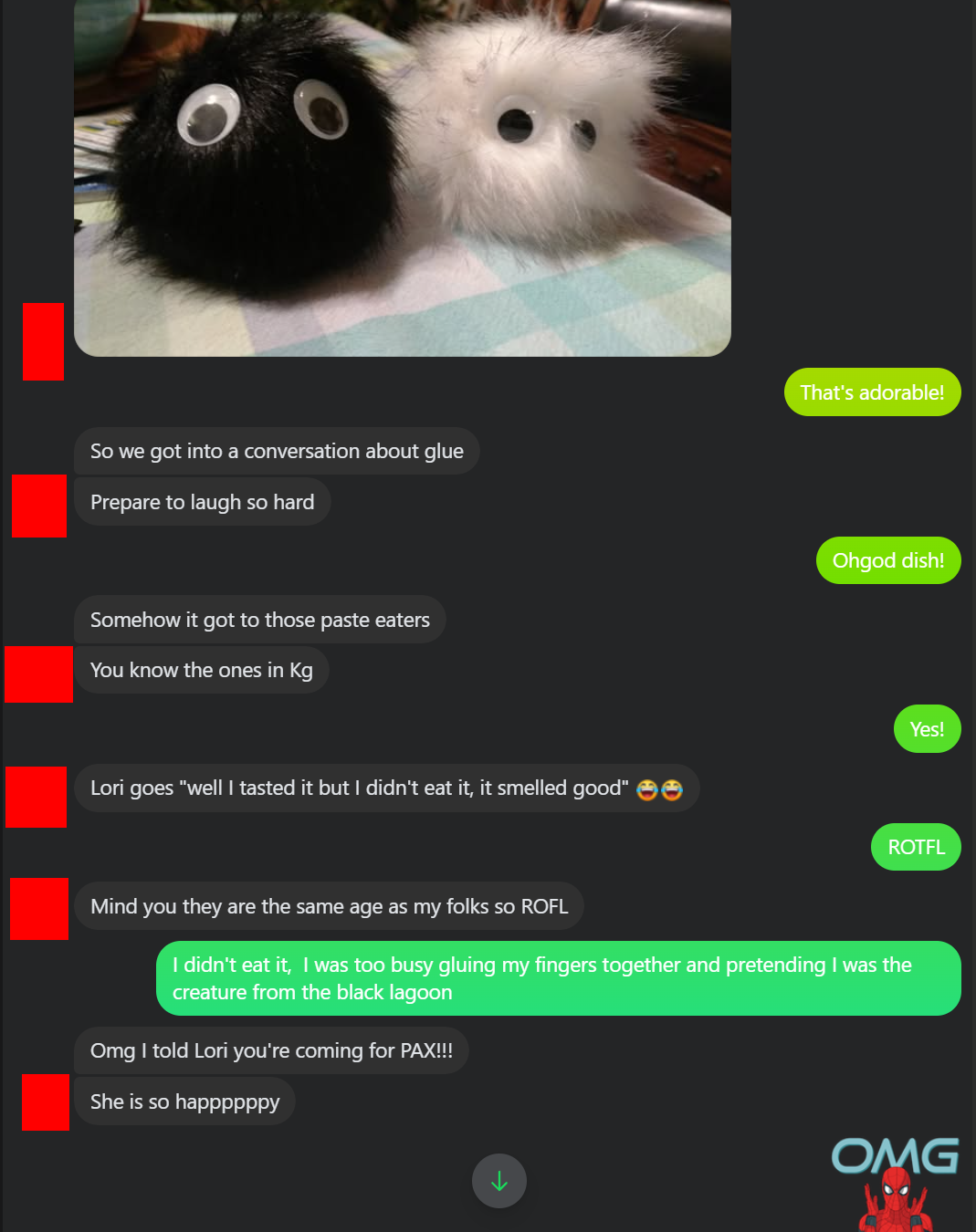
Along the way, I suggested that Liana could come as well. Liana had previously done some publicity for Hero-U by livestreaming a play-through of the game, and so she was already in D 's radar.

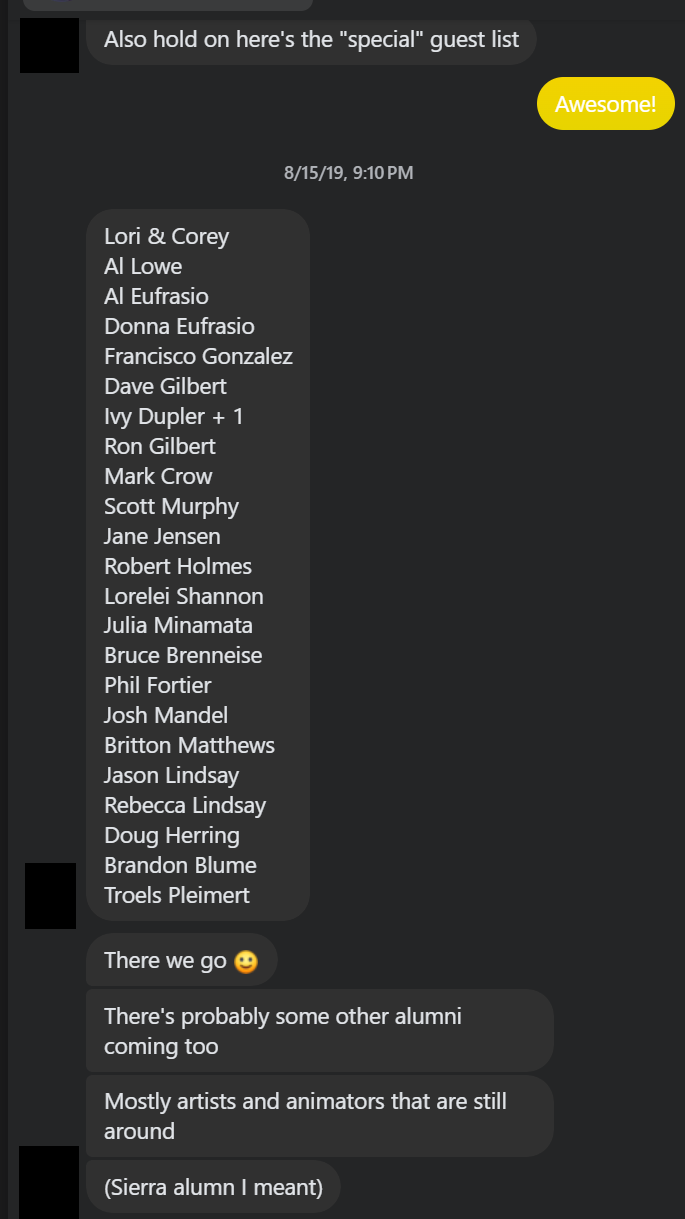
It was therefore settled that Liana, Asher, and I would travel to PAX together and participate as part of the volunteer force. As an added element, and because a social event was planned involving former Sierra On-Line alumni, Liana proposed that we put together a small musical performance in the vein of some of the parody pieces we had previously collaborated on. Liana and I prepared the material that would be performed, and at that point everything appeared to be proceeding smoothly.
ARRIVAL IN SEATTLE
After arriving in Seattle, settling into our Airbnb, and resting for the night, Liana, Asher, and I set out to meet Lori and Corey Cole, D, and the other volunteers who had come in to help prepare the Transolar booth for the first day of PAX. Timely setup was important, as the goal was to have the booth fully operational in advance of press and attendee traffic through the exhibition hall.
At this stage, a significant breakdown in communication occurred. D, who had coordinated the Coles’ logistics for the convention, was unable to establish contact with the truck carrying the booth assembly materials. At the same time, we were unable to obtain clear information about the location of the appropriate loading dock for the convention center. As a result, the group spent approximately two hours moving around the area surrounding the venue, attempting to resolve the situation. Frustration increased as the optimal window for setting up the booth narrowed and ultimately passed.
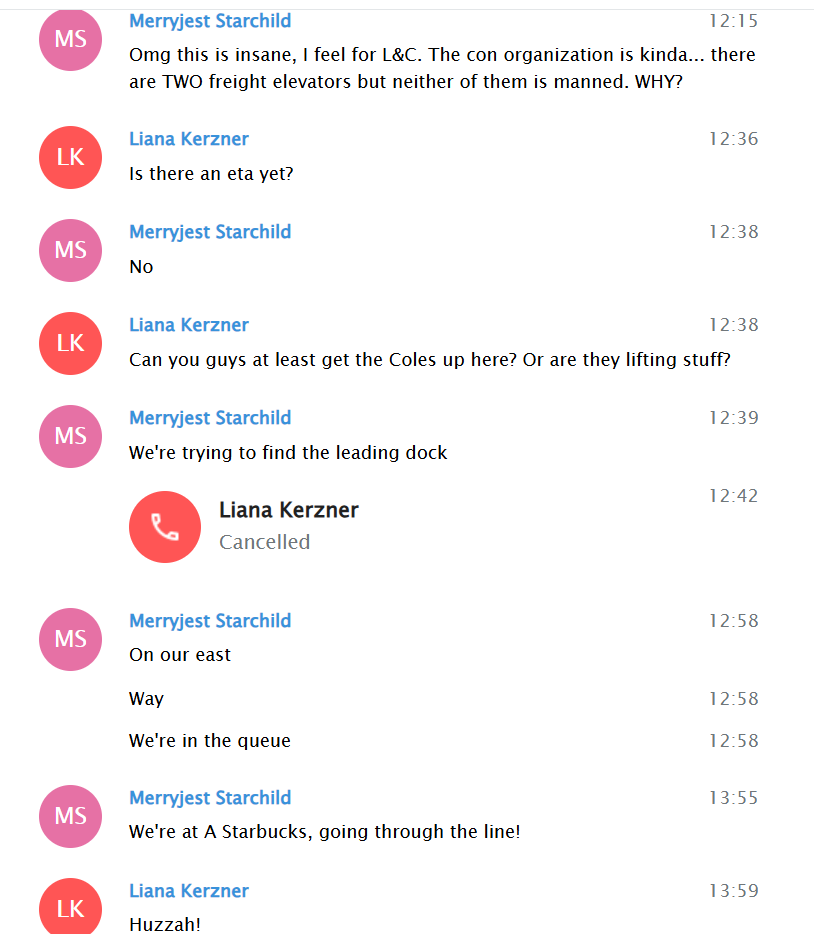
Communication with the truck was eventually established, though much later than was ideal—close to noon. Once the truck arrived in the parking area, Asher and I were directed to assist Lori and Corey Cole, along with the other volunteers, in setting up the booth itself. Liana remained in the parking lot with D to help unload the equipment. This detail is important, as it marks one of the periods during which I cannot account for Liana’s actions firsthand.
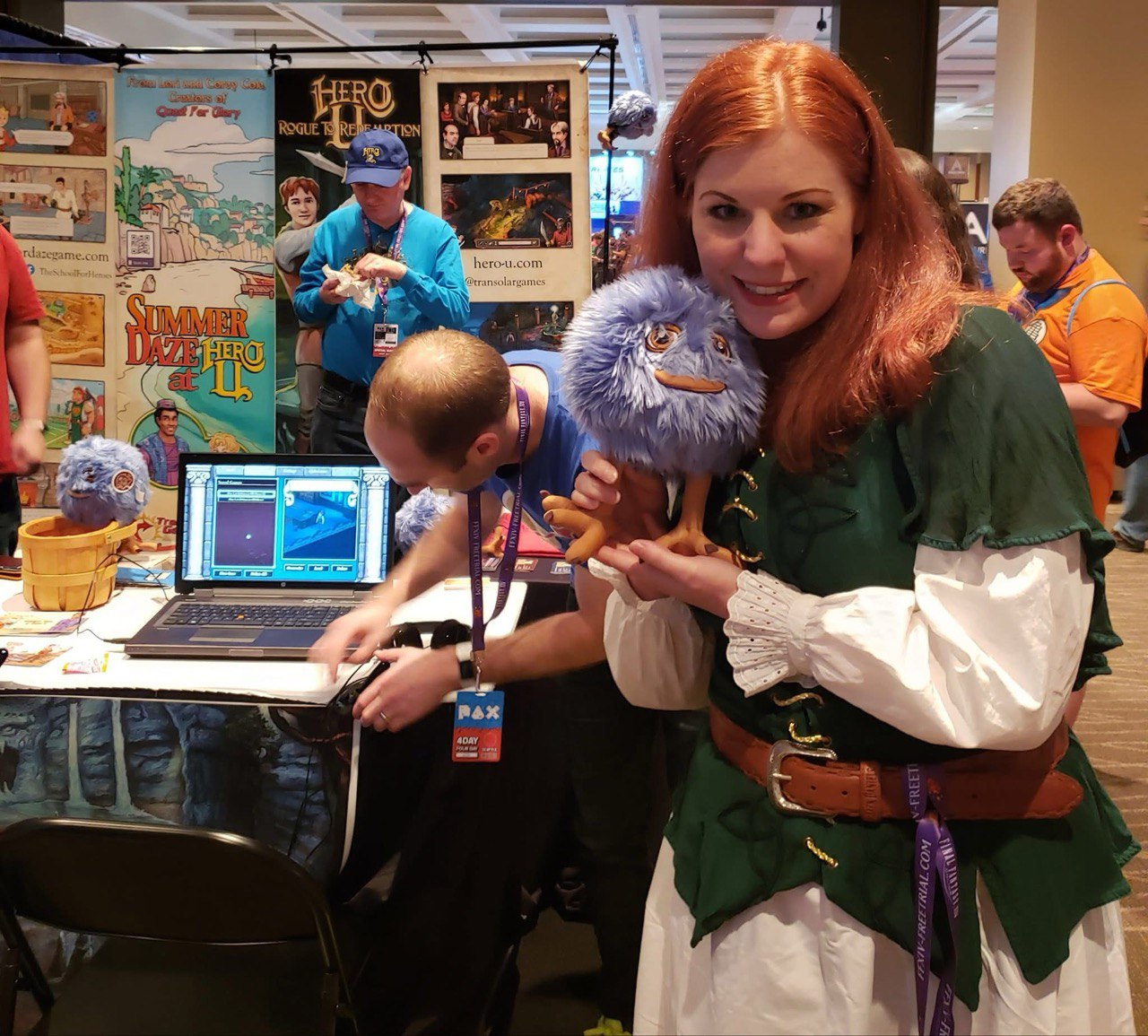
Despite missing the opening hour of press traffic, the Transolar booth did attract a steady stream of attendees interested in trying the Summer Daze demo. Liana dressed as Moira Glennshannon, the Paladin healer from Hero-U, to staff the booth and draw in players. Apart from the initial complications on the first day—which may have cost the Coles some early press exposure—operations appeared to stabilize and proceed without further issue.
From that point forward, responsibilities rotated among the volunteers. At times I staffed the booth; at others, I ran errands to secure food and drinks for those working it. In between shifts, Liana and I rehearsed for the planned performance, or we explored Seattle and the PAX show floor with Asher when we were off rotation.

THE PERFORMANCE
On the morning of the scheduled performance, Liana reported waking with an irritated throat and stated that she believed she had laryngitis. She raised these concerns with me during breakfast at the Airbnb, expressing worry that she might be unable to perform.
I conducted a brief, informal assessment. While I am not a medical professional, I do have over two decades of experience as a classical singer, including a master’s degree in voice with a concentration in vocal pedagogy. As a result, I am well acquainted with the mechanics of the voice, common vocal strain patterns, and standard practices for vocal care and preservation.
After examining Liana and listening to her sustain a consistent speaking tone with her usual resonance, I concluded that while her throat was inflamed, her symptoms were more consistent with pharyngitis rather than laryngitis. Pharyngitis involves inflammation of the back of the throat and is typically associated with soreness, irritation, and difficulty swallowing, but does not involve inflammation of the larynx itself. Her voice box was not compromised; had it been, she would have presented with hoarseness, diplophonia, or an inability to phonate clearly.
The fact that she continued to use her voice without degradation throughout the day further supported this assessment. This detail will become significant later.
I provided her with several gentle vocal and breathing exercises, along with core engagement techniques to support abdominal breath control and reduce strain. These were intended to counteract any compensatory tension caused by prolonged speaking in a loud conference environment—a common issue in such settings. The exercises appeared to reassure her.
During the day, I noticed that D seemed intermittently absent, particularly during times when Liana was on rotation at the booth. At one point, Liana told Asher and me that D had realized she had “fucked up” and that the Coles were furious with her over the problems that occurred on the first day. I now have reason to question the accuracy of this statement, as I do several others made during this period.
It was reported that D had barely slept in the days leading up to the convention due to last-minute preparations, and that she was severely sleep-deprived. This context made the logistical difficulties of the first day more understandable. Although there was a palpable tension surrounding D, I believe there were aspects of the situation that I failed to fully perceive at the time, in part because I was focused on booth responsibilities or touring the convention floor when off rotation. This was my first trade show in this industry, and Asher and I hoped it would not be the last.
After the day at PAX concluded, we traveled to the location of the evening party, which was hosted at the home of one of the volunteers. The gathering was well attended, and we spent several hours meeting people and conversing. A number of former Sierra On-Line alumni were present, though some—such as Jane Jensen—were unable to attend. Asher spent a significant amount of time speaking with Al Lowe about his experiences with early computer systems and found the exchange enjoyable. Several in-progress game demos had been set up in the basement for members of the gamers’ guild to showcase their work, and Asher found that many attendees were receptive to and interested in his ideas.
During this time, however, I was unable to locate D. Liana wanted to find her so that she could organize the room and clear space for the performance. Eventually, Liana told me that she had located D in one of the rooms, where D appeared to have been crying. Liana stated that she informed D that the performance needed to begin and that her assistance was required to settle the room. D did not, however, appear in the main area following this exchange.
Ultimately, Liana raised her voice and called for the room to settle, and the performance began. Her earlier concerns about being unable to phonate proved unfounded. Consistent with my earlier assessment of pharyngitis, she was able to sustain pitch and sing throughout the full fifteen-minute medley.
She was also able to converse normally for the remainder of the evening. As the party began to wind down, we gathered at the dining table, where Lori and Corey shared a number of stories, including an anecdote about how LucasArts had been able to reverse-engineer Sierra’s adventure game engine due to an error made by Ken Williams when showing off his engine's debug feature. The conversation eventually turned to the upcoming Kickstarter campaign for Summer Daze, at which point Liana spoke at length with Corey about campaign strategy, offering suggestions and proposing to assist with aspects of planning and execution. At no point during these discussions did her voice falter, weaken, or shut down despite continued use well into the night.
The sole disappointment Liana expressed in connection with the performance was that Al Lowe, creator of the Leisure Suit Larry series, did not remain to watch it. She had dedicated a portion of the medley to one of his games and had asked him to stay, but for reasons unknown to us at the time, he chose to leave before the performance began.
I did not encounter D again that evening. However, as the gathering had expanded across multiple rooms, the basement, and both the front and back lawns, I assumed she was elsewhere among the guests. The night concluded with the three of us returning to our Airbnb in Kirkland, where we continued talking late into the evening.
THE BLOWOUT
The following morning, Asher experienced an upset stomach and remained at the Airbnb. Feeling unsettled and slipping into a period of despondency myself, I joined Liana at PAX for table rotation. During the day, discussion arose about holding a dinner gathering at the other Airbnb where Lori and Corey were staying, and a list of groceries to be purchased was circulated.
While I was out fetching black tea for Liana, I received the following message on Telegram:
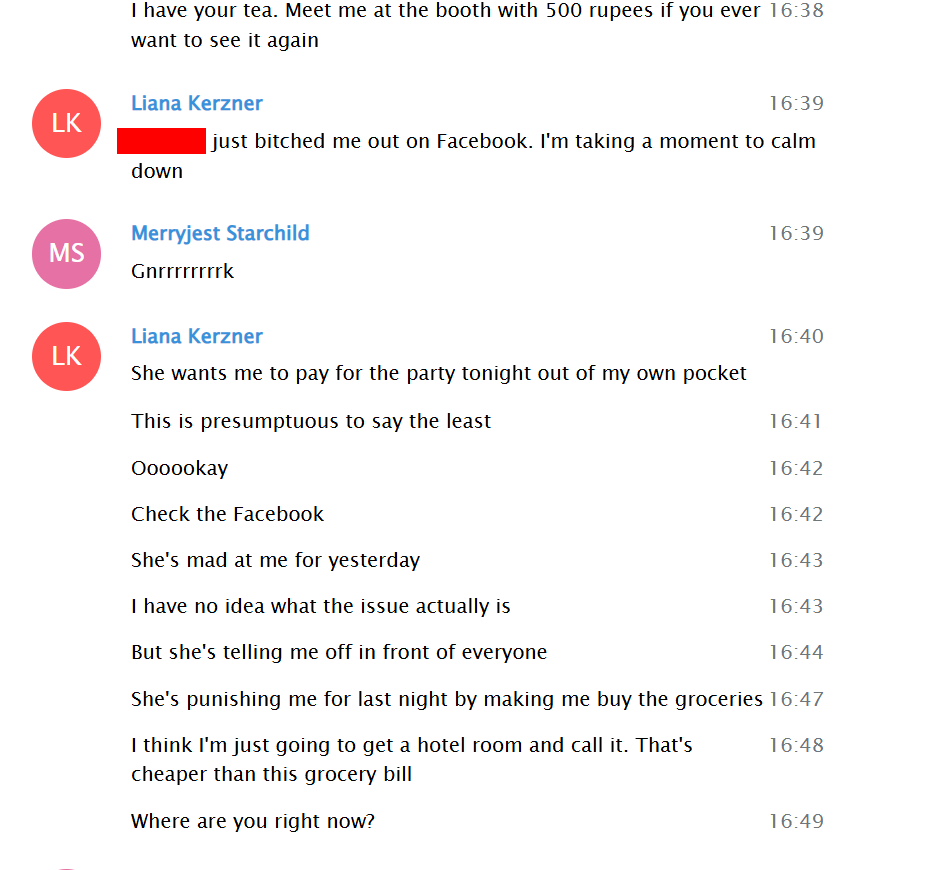
I then opened the Facebook group where the related conversation was taking place. It took some time to load, as maintaining a usable signal anywhere on the convention floor was extremely difficult.

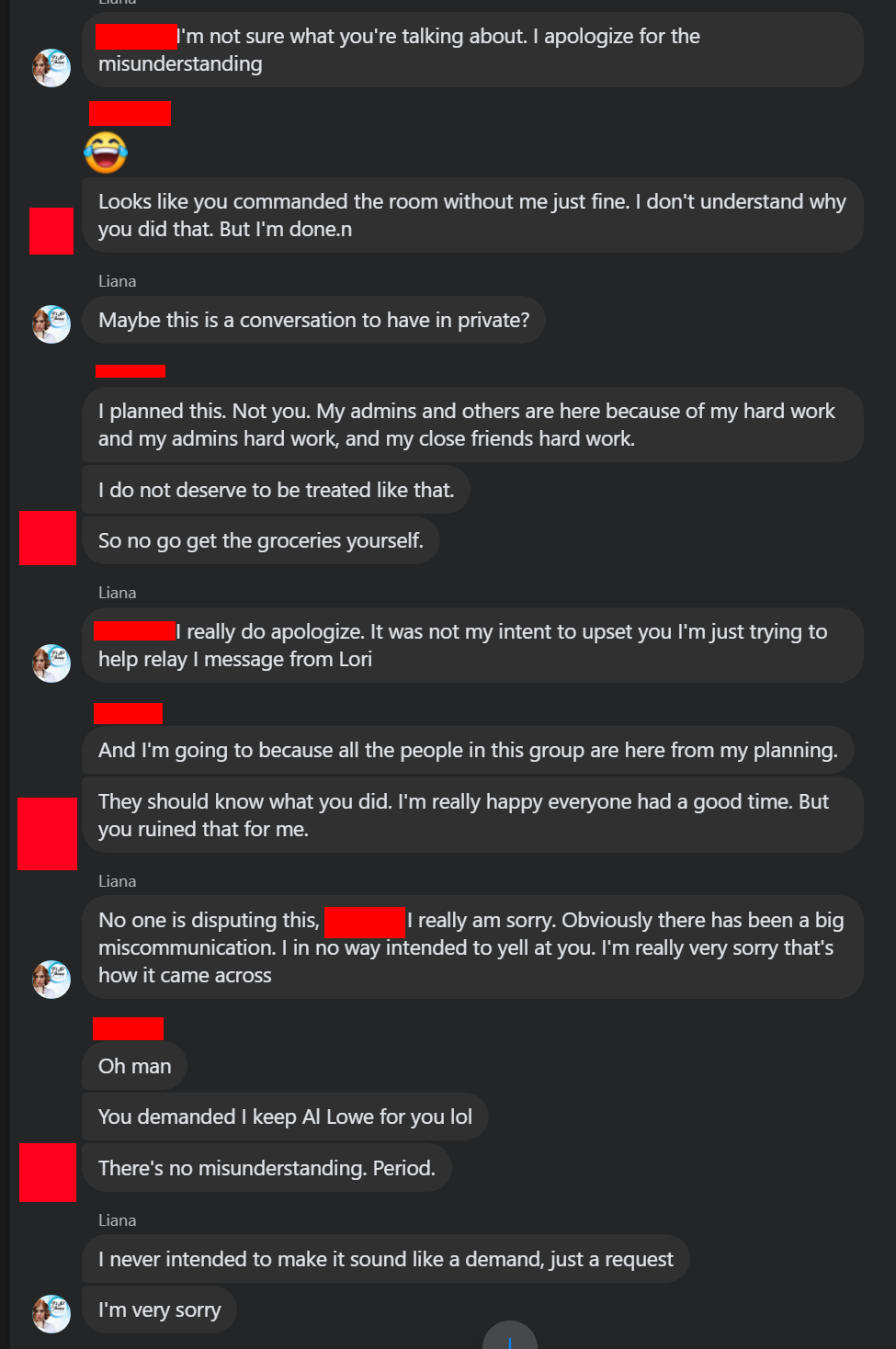
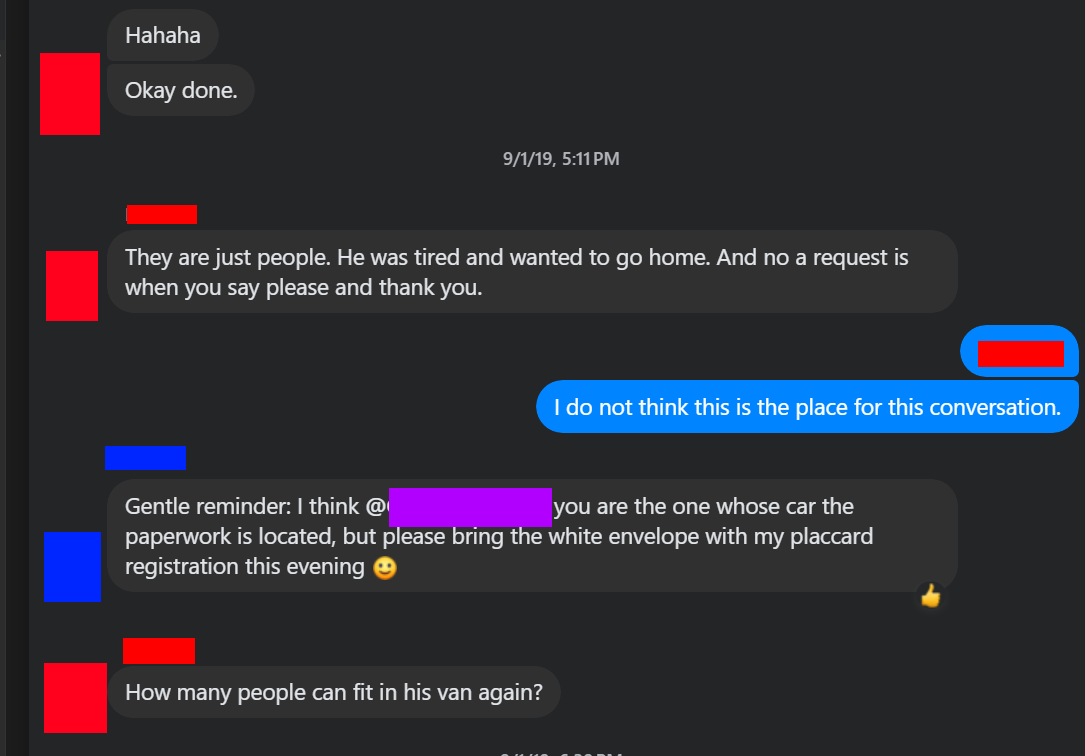
The situation was unmistakably tense. What had begun as a disagreement between Liana and D had escalated into a public exchange. I attempted to encourage both parties to move the discussion into a private channel. At the time, I did not realize that my intervention came across as dismissive, or that it signaled to D that I was aligning myself with Liana’s position. Eventually, the groceries were procured.
The dinner gathering at the other Airbnb proceeded without incident. Lori prepared a large quantity of pasta, enough to feed everyone, and smaller conversations formed throughout the space. Asher, Liana, and I sat with Lori and Corey and talked. At one point, I briefly saw D enter the room while speaking with another volunteer. She appeared visibly stressed and did not acknowledge my wave, instead continuing further into the house.
As the evening drew to a close, the Airbnb owners arrived and demanded that the gathering be dispersed. Although the party was quiet and subdued, it was clear that the owners had been monitoring it; they parked outside and filmed the group with their phones. The situation was surreal and deeply uncomfortable. Given the tensions of the day, I could only imagine how humiliating this must have felt for D, compounding an already difficult series of events.
What follows is my contemporaneous account of the events that occurred afterward, reproduced verbatim and written shortly after they took place, while the details were still fresh in my mind:
(What follows is reproduced verbatim from my personal account to Lori, written shortly after the events described. It has not been edited or altered in any way outside of replacing names with monograms, and is included here solely for factual continuity.)
"The three of us walked out. [T] had offered to drive us back to Kirkland, so we were going to linger a bit until he was ready- he was gathering the party, in short. I saw [D] outside, and she looked somewhat out of sorts, so I approached her and put my hand on her shoulder and smiled at her. She glared at me and said "Don't touch me" very forcefully.
I was puzzled and asked her what was up- since the only thing I had said during the blowout was "I don't think this is the place to have this conversation."
She said "Just go!" to me and turned around.
At this point Liana and Asher were walking past me towards the driveway. [D] faced Liana and said "And you, bitch" Liana stopped, she looked taken aback and Asher was puzzled. [D] said "I got a text from [B] that proves Al Lowe left because of you." She was saying this loudly and very aggressively.
Liana said "[D], do you want me to show up to the booth tomorrow?" and [D] answered "I don't want to see your fucking face around here anymore," to which Liana replied "As you wish."
We three made our way hastily to the front of the property and hailed an Uber- we didn't want to wait for [T] to be ready in order to avoid any further blowouts.
The next day, Liana did not attend the convention for obvious reasons. I went to the booth with some trepidation, but I was determined to do my bit. I also wanted to cover the panel for Adventuregamers as well as the demo. That went without any issues. "

"After I was done, we did the things to get ready for our trip back and then we decided to take in some of Seattle to relax from all the tension. While we were waiting to board the ferry, I noticed that [D] had ejected Liana and I from the AirBnB chat group without telling us. Then I received a notice from someone in the group, [S], that [D] was talking about the incident."


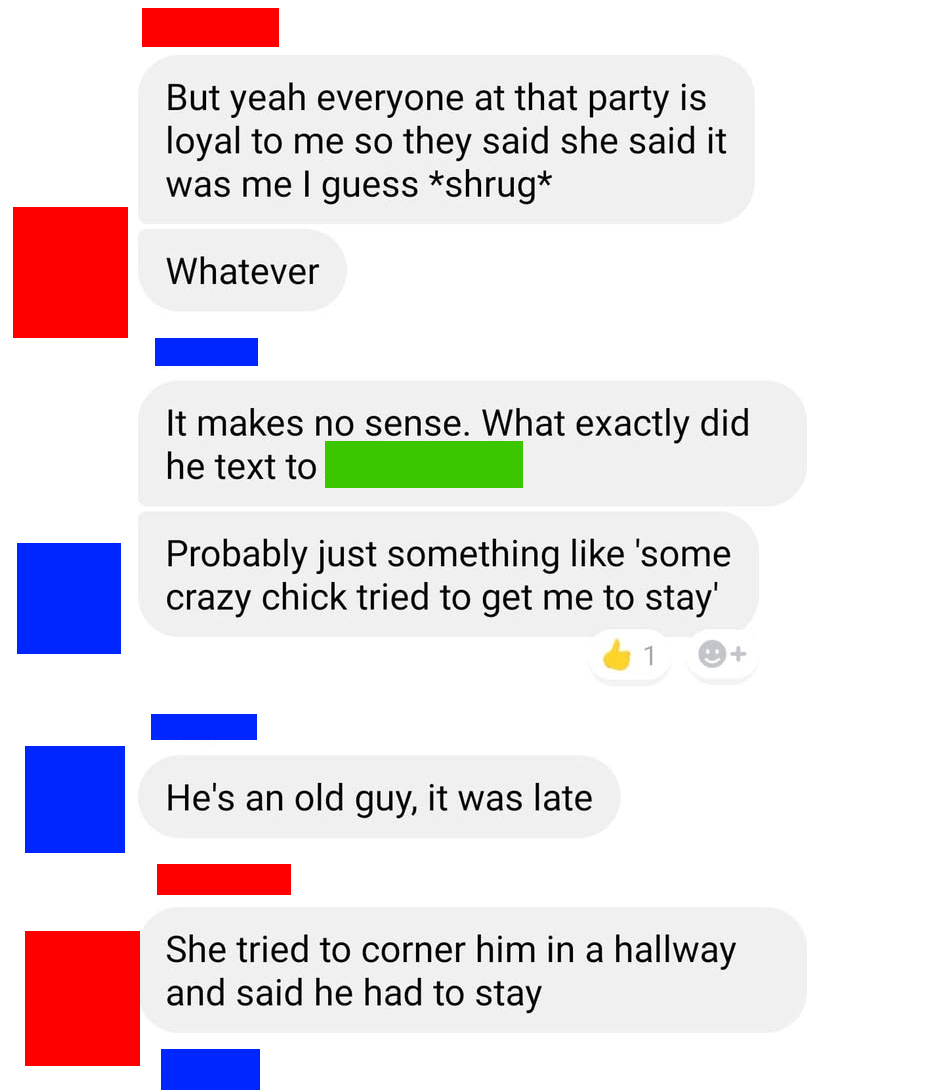
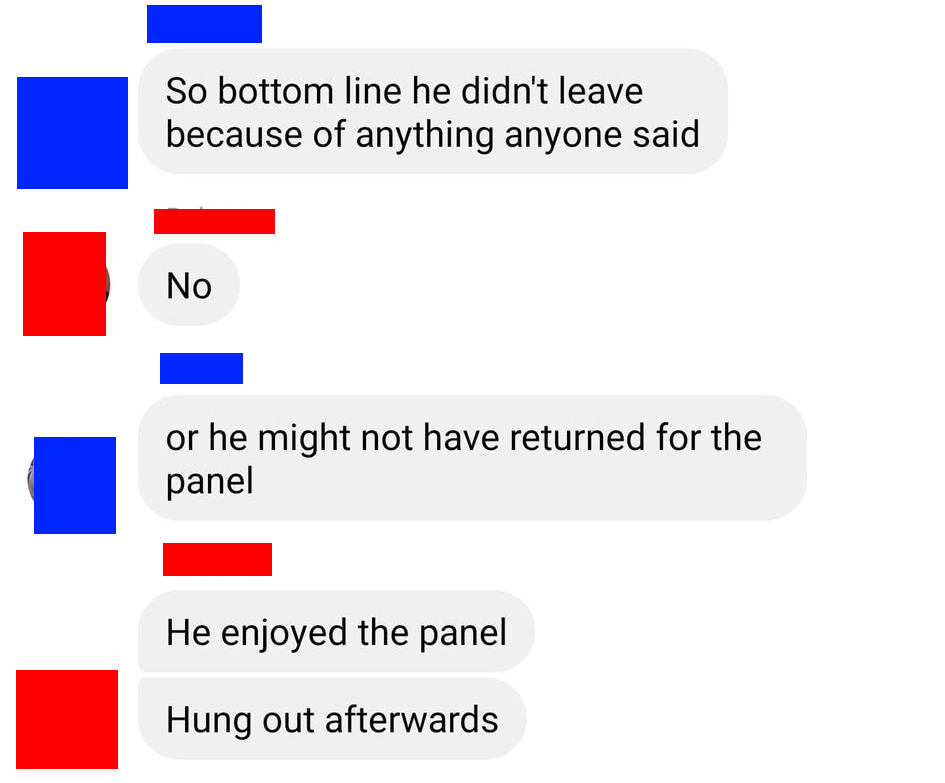
"Liana and I looked at each other, and decided there wasn't anything we could do about this- we were removed from the group, and we couldn't defend ourselves... and in the state [D]was in, that would have made things worse anyway. We continued to go around with Asher's friend, and then at the Space needle we noticed that [D]had removed us both from the [Facebook Group], banned us, and then unfriended us and blocked us without a word.
This was very hard on Asher, incidentally, because at the party he thought to himself "I would like to join this group"- and he never joins anything. Because he felt he had found people who could appreciate him. But [D]'s abuse of power soured him a lot.
At this point we had no idea what was going on, and we decided that it wasn't ours to know- we had been given the boot, so we proceeded to just enjoy our company and take in the city. Then we received a message from someone else in the guild, [ J ], who said she didn't agree with what had happened and that she was going to add us back to the guild. Then the next day she told both of us that [D]was re-adding us as a friend and that she wanted to apologize and talk about what happened. I thanked her for the heads-up and [D]sent both of us a friend request."
I was not made privy to the full contents of D’s exchange with Liana at the time—not until much later, in fact. Had I been given the complete conversation, I would likely have understood the situation very differently. Instead, Liana shared only selective portions of the interaction: fragments she felt supported the point she wished to convey. Even within those partial disclosures, however, there were elements I failed to fully register at the time that, in retrospect, should have prompted greater scrutiny.
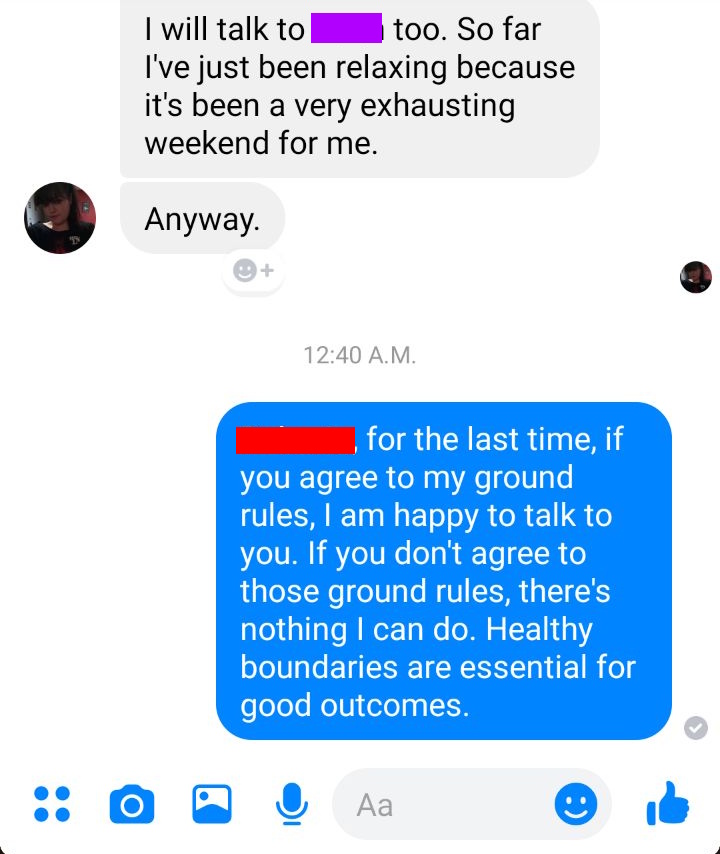

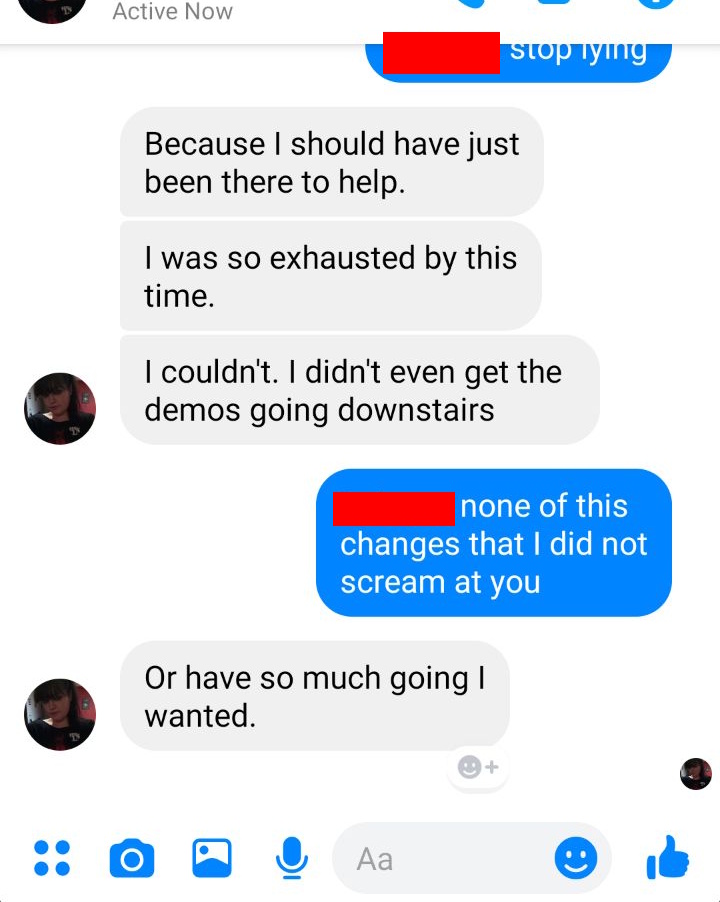
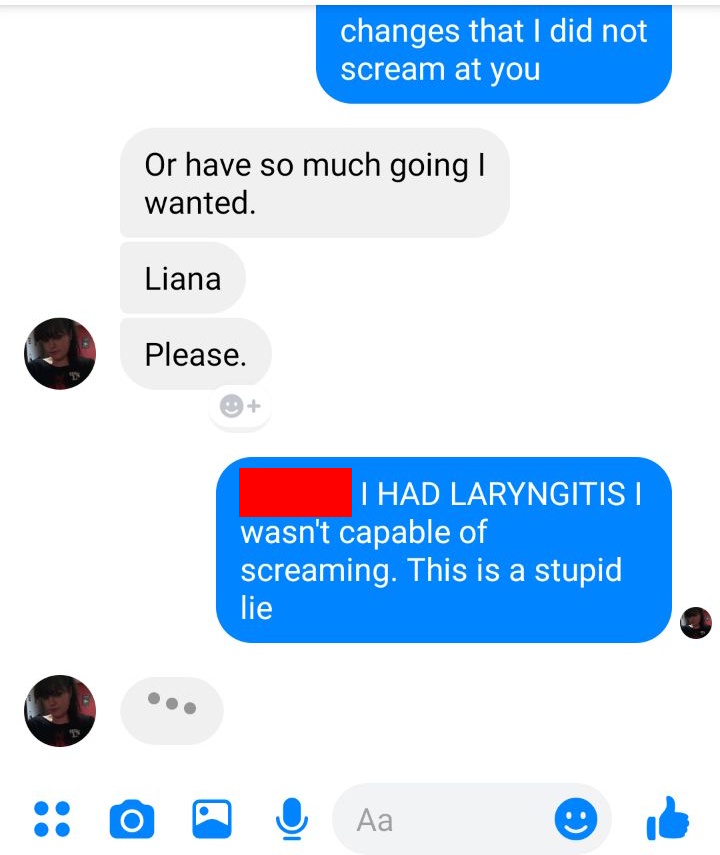
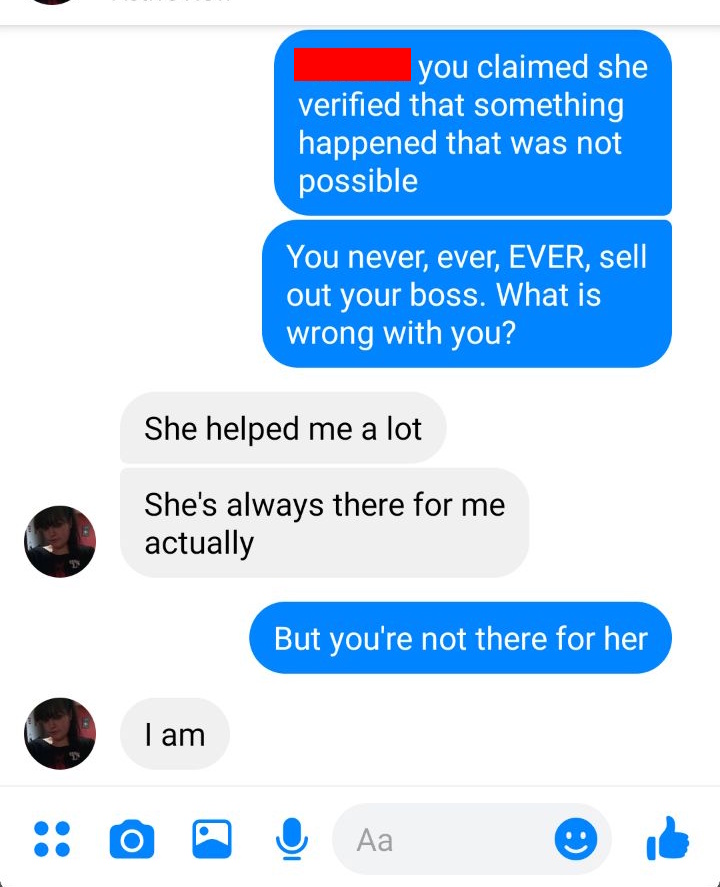
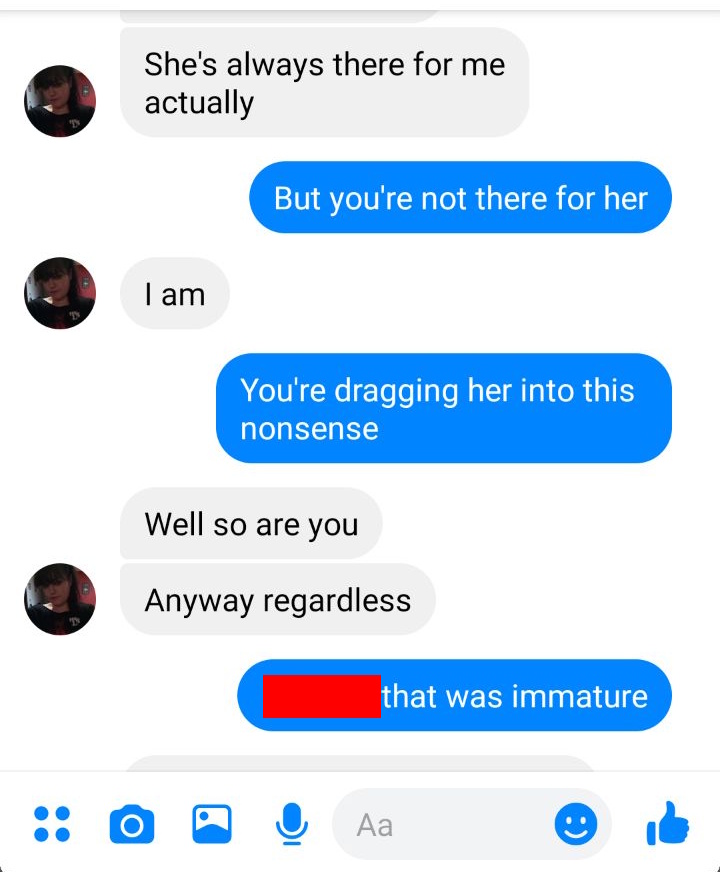
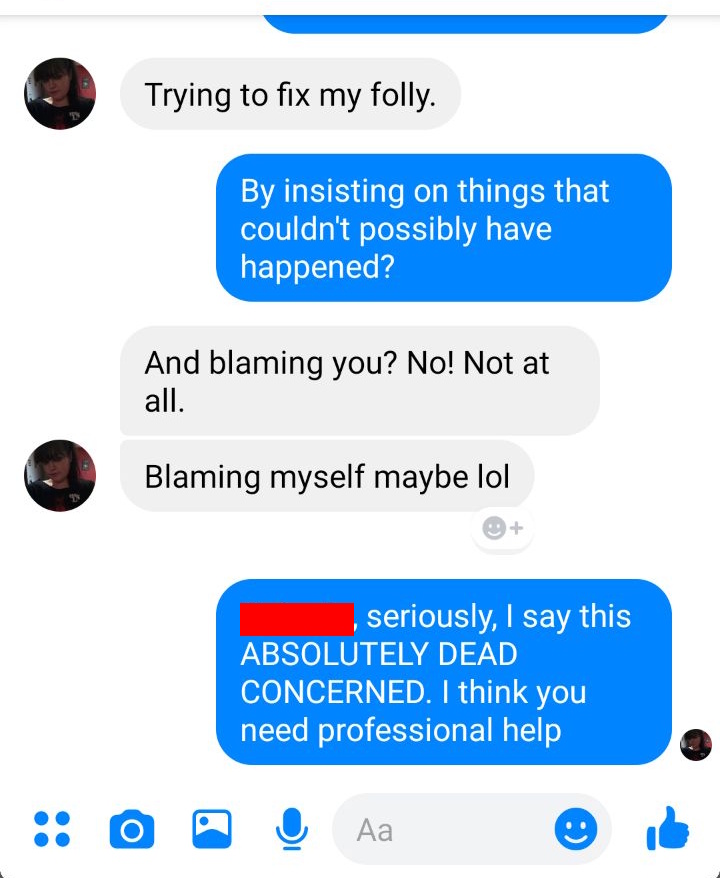


In the exchange shown above, Liana categorically denies that she screamed at D. As I have noted previously, there were multiple periods during which I could not directly observe Liana’s actions. One such period occurred when she remained alone with D in the parking lot at PAX, near the van. Another occurred later at the party, when Liana went in search of D and reported back to us that she had found her crying.
At the time, I assumed that D’s distress was the result of cumulative stress, exhaustion, and the emotional fallout from the chaotic first day of the convention. In light of subsequent events, I have been forced to reevaluate that assumption.
Not long after PAX, it was alleged to me—as will be shown later—that Liana did, in fact, scream at D at the party when she went to locate her in order to have the room cleared for the performance. It was further suggested that Liana’s account of finding D already crying may have been intended to preemptively explain D’s later emotional volatility, anticipating that I would attribute it to prior stress rather than to a direct confrontation.
It was also alleged to me that Liana cornered D in the parking lot at PAX and subjected her to verbal and emotional abuse. Of those instances, I only have accounts, obviously, and not screenshots.
What makes this particular exchange especially troubling is Liana’s repeated insistence that it would have been impossible for her to have screamed at D. As I have demonstrated through video evidence—and as is supported by my own professional experience and observation informed by decades of formal vocal training—Liana was fully capable of projecting her voice at significant volume. She was not only able to speak, but to sing sustained passages at volume for an extended period of time. The musical performance lasted approximately seventeen minutes and is fully documented on video. At no point did she lose her voice.
There was a single minor vocal crack during the Gabriel Knight segment, which was not indicative of laryngitis but rather a momentary lapse in vocal technique. It had no bearing on vocal capacity or endurance.
Accordingly, Liana’s claim that screaming would have been impossible for her is factually unsupported. The alternative argument—that she could not have screamed because her voice would have been fatigued after the performance—is also untenable, as the alleged incident would have occurred prior to the performance.
What is particularly disturbing is that Liana positions this claim of impossibility as the central pillar of her denial, and then proceeds to undermine D’s credibility by asserting that the event D recalls did not occur at all. In doing so, she explicitly calls D’s mental state into question, culminating in the statement: “I think you need professional help.”
This constitutes a textbook example of gaslighting: the practice of psychologically manipulating someone into doubting their own memory, perception, or sanity. Based on the broader pattern of behavior that will emerge throughout this document, I now have reason to believe that this was neither an isolated incident nor an aberration, but part of a recurring and deeply concerning pattern in Liana Kerzner’s handling of conflict.
BREAK: IMPORTANT POINT
It is necessary to pause the narrative here in order to make several observations, particularly in light of Liana Kerzner’s recently assumed role as an advocate against mental health stigma and as a provider of services she bills as affordable alternatives to therapy.
At this juncture, there are two conflicting accounts, and—so far as I can see—only two plausible interpretive possibilities.
The first possibility is that Liana is telling the truth: that she did not scream at D, and that she genuinely believes D was experiencing some form of dysregulation or impairment that led her to misperceive the event.
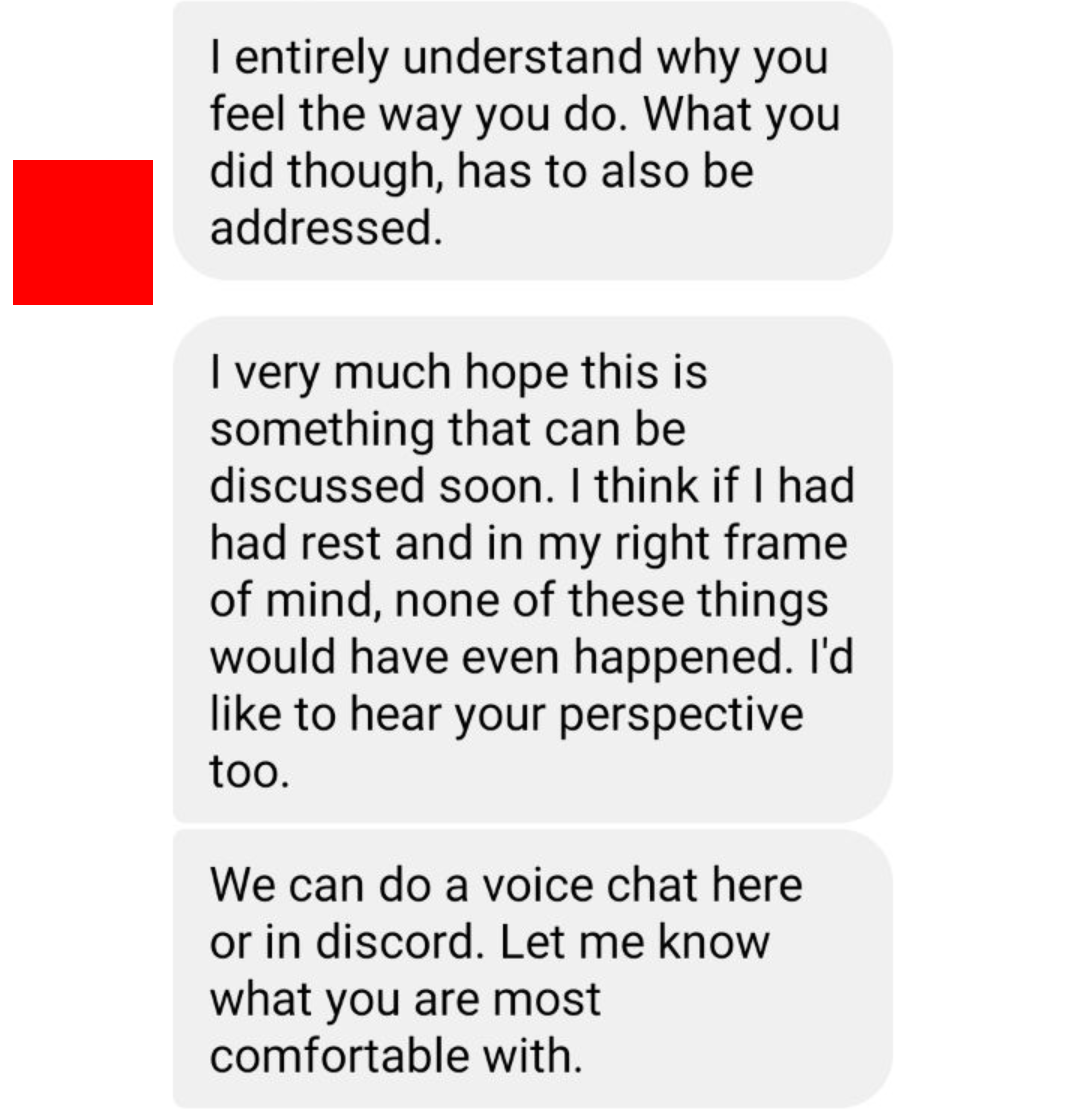
Even if we accept this first possibility in full, it remains undeniable that D was profoundly distressed by her perception of what occurred. The incident mattered enough to D that she opened her attempt at rapprochement with Liana by referencing it explicitly.

It is also important to note that D was operating under significant sleep deprivation throughout PAX, a condition that could plausibly have contributed both to perceptual inaccuracies and to heightened emotional reactivity. At this point, I will apply standards that Kerzner herself frequently articulates.
At no point did Liana meaningfully address the substance of the complaint raised against her—a pattern that will recur. Instead, she responded by asserting that the perception was not her intention, paired with a cursory apology. However, an expression such as “that wasn’t my intention, I’m sorry” is not equivalent to an inquiry aimed at understanding the other party’s experience, such as: “That was not my intention, and I would like to understand what I did that led you to that conclusion.”
In private communications, Liana went further, accusing D of intentionally sabotaging the performance and of using other Transolar team members to “spread gossip to the Coles.”

As shown here, Liana ascribed motivations to D based on her own conclusions rather than on D’s expressed emotional or mental state. Minor logistical issues were reframed as deliberate acts of sabotage. At the time, much of this passed me by unnoticed. It was only upon later review, with the benefit of hindsight, that the pattern became clear. Liana also dismissed outright the possibility that D’s emotional volatility could have been influenced by sleep deprivation.
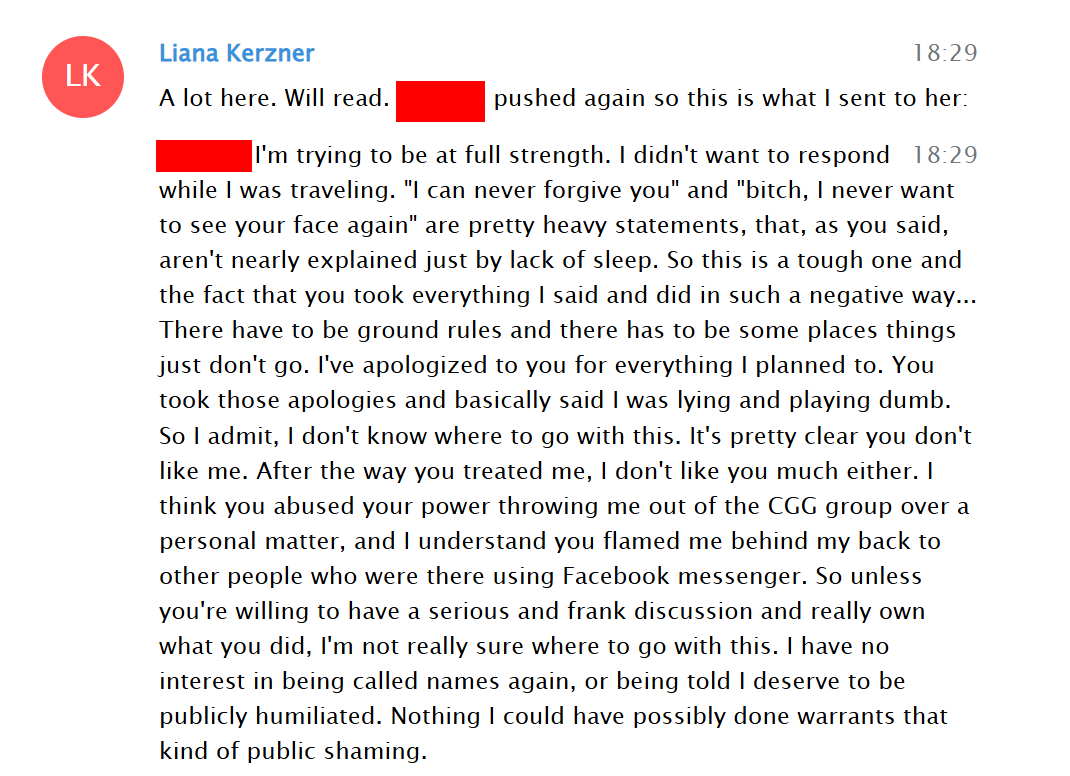
By the time PAX began, D had reportedly been awake for approximately forty-eight hours. Severe sleep deprivation of this magnitude is known to result in profound cognitive impairment, including—but not limited to—hallucinations, extreme anxiety, depersonalization, emotional dysregulation, and breakdowns in executive function. Liana Kerzner often references her background as a peer counselor in high school as a foundation for her mental health commentary, yet in this instance she rejected the possibility that sleep deprivation could meaningfully affect perception or emotional regulation.
Instead, her response demonstrated a striking lack of empathy toward an individual who was plainly in distress, coupled with the attribution of malicious intent.
This bears repeating: across her body of public work, Kerzner exhibits a recurring tendency to assert that her interpretation of another person’s motives or mental state is the definitive explanation. On her YouTube channel, radio program, and social media platforms, she routinely presents conjectures about others’ internal states—particularly critics or those in conflict with her—with stated certainty. This is a dangerous tendency in anyone operating in proximity to the mental health sphere. Licensed clinicians are trained to avoid precisely this practice because of the harm it can cause. Yet Kerzner engages in it freely.
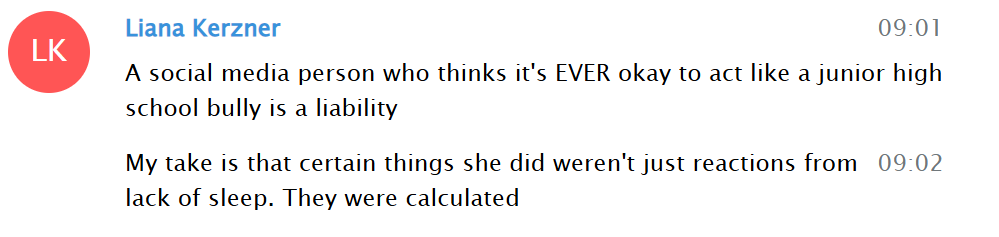
All of the above analysis proceeds on the assumption that the first possibility is correct: that Liana did not scream, and that D’s experience was shaped by severe exhaustion and emotional overload.
The second possibility is far more troubling—and, based on the evidentiary record, appears more likely. In this scenario, Liana did raise her voice or scream at D and then attempted to undermine D’s confidence in her own memory by insisting that such an event could not have occurred.
This would constitute gaslighting.
This is why it is necessary to pause the narrative here. Regardless of which possibility one accepts, the implications are serious. Either scenario raises profound concerns about judgment, empathy, and ethical conduct—particularly for someone positioning herself as a mental health advocate and authority.
THE KICKSTARTER
Liana had volunteered to assist Lori and Corey with the Kickstarter campaign. In the aftermath of PAX, tensions remained high. Although apologies had been exchanged, Liana was not inclined to trust D and continued to harbor resentment—toward D herself, toward the fact that Al Lowe had left before the performance, and toward what she perceived as the Sierra alumni turning against her.
I have stated elsewhere that the extent to which I trusted Liana is something I now regard as one of my cardinal errors—an abdication of my own responsibility and judgment. Regrettably, that trust extended into how I accepted and internalized Liana’s increasingly negative assessments of D’s character and stability. I am not proud of this, and I accept a significant share of responsibility for how events unfolded as a result.
In the immediate aftermath of PAX, I experienced a persistent sense of unease. Had I taken that discomfort seriously, rather than suppressing it, matters might have unfolded very differently. Asher, during our ride back to the airport, expressed misgivings of his own—carefully but clearly—raising the possibility that Liana may have said or done something to D in the garage while they were alone. This was before any mention had been made of an alleged confrontation in the parking area; at that point, the only claim we were aware of was D’s assertion that Liana had screamed at her during the party.
Foolishly, I dismissed Asher’s concerns, reassuring him that Liana could not have behaved in such a way.
I recognize now that I adopted an avoidant posture—one that mirrored the ways I had avoided direct and difficult communication in my own marriage. I did not want to scrutinize the emotions or behavior of someone I regarded as a close friend. At the time, and for some time afterward, I genuinely believed that Liana understood me, that we were aligned in fundamental ways, and that the things she told me about herself and others were reliable. That belief would later be proven false, but in the moment it created a blind spot. Feeling emotionally alienated from my husband as a result of my own failures in communication—a dynamic that bore uncomfortable similarities to what Liana described in her own marriage, and which I suspect we inadvertently reinforced in one another—I chose the comfort of an illusion over the discomfort of confronting reality.
As noted, Liana remained deeply resentful that Lori and Corey had decided to keep D involved. This puzzled me at the time, given what I knew of the Coles and their character. The broader community likewise did not appear to distance itself from D. Liana rationalized this in the following way:

It is difficult not to read that message now as Liana intentionally expecting that her performance would destabilize an emotionally-unstable individual.
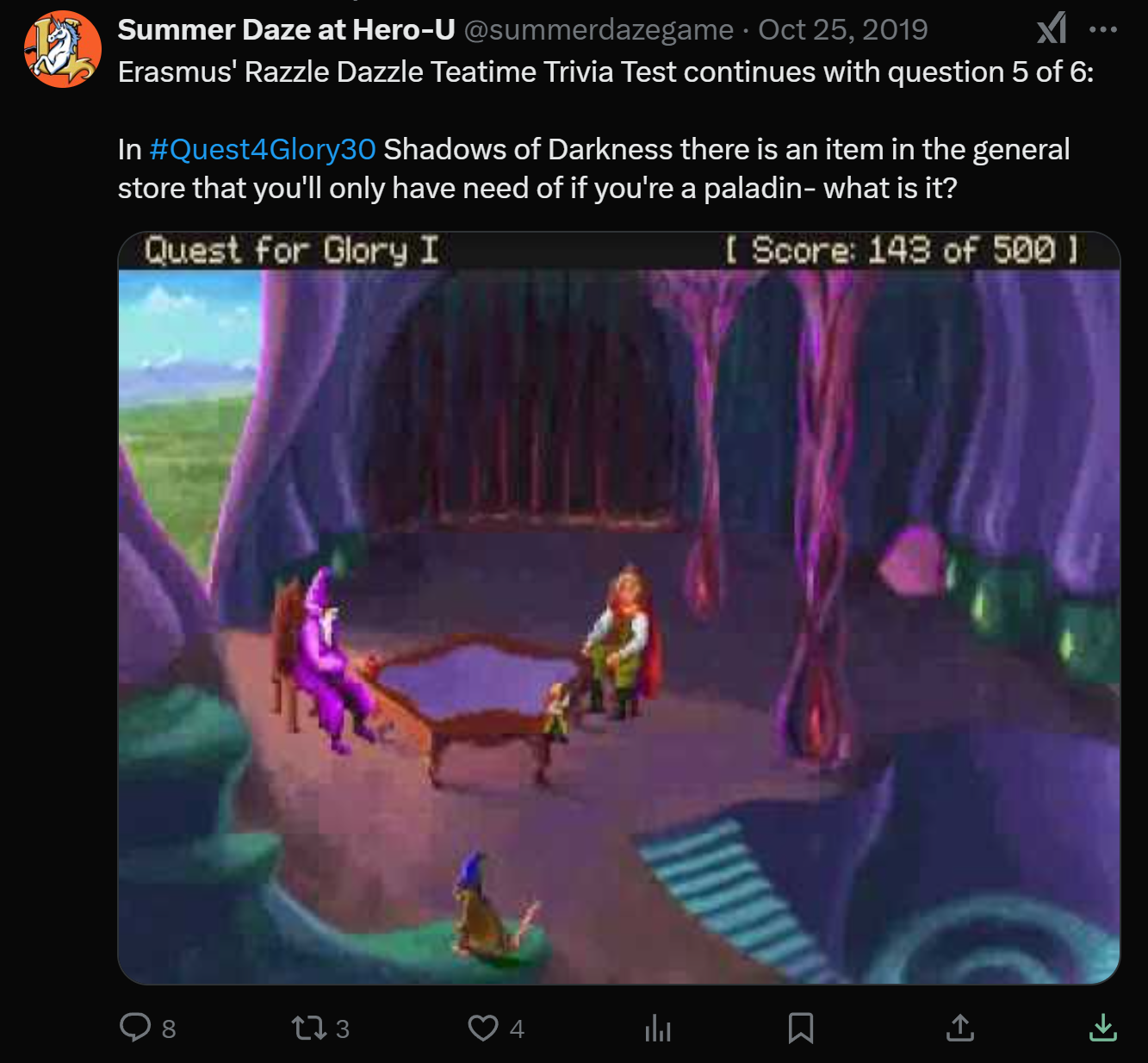
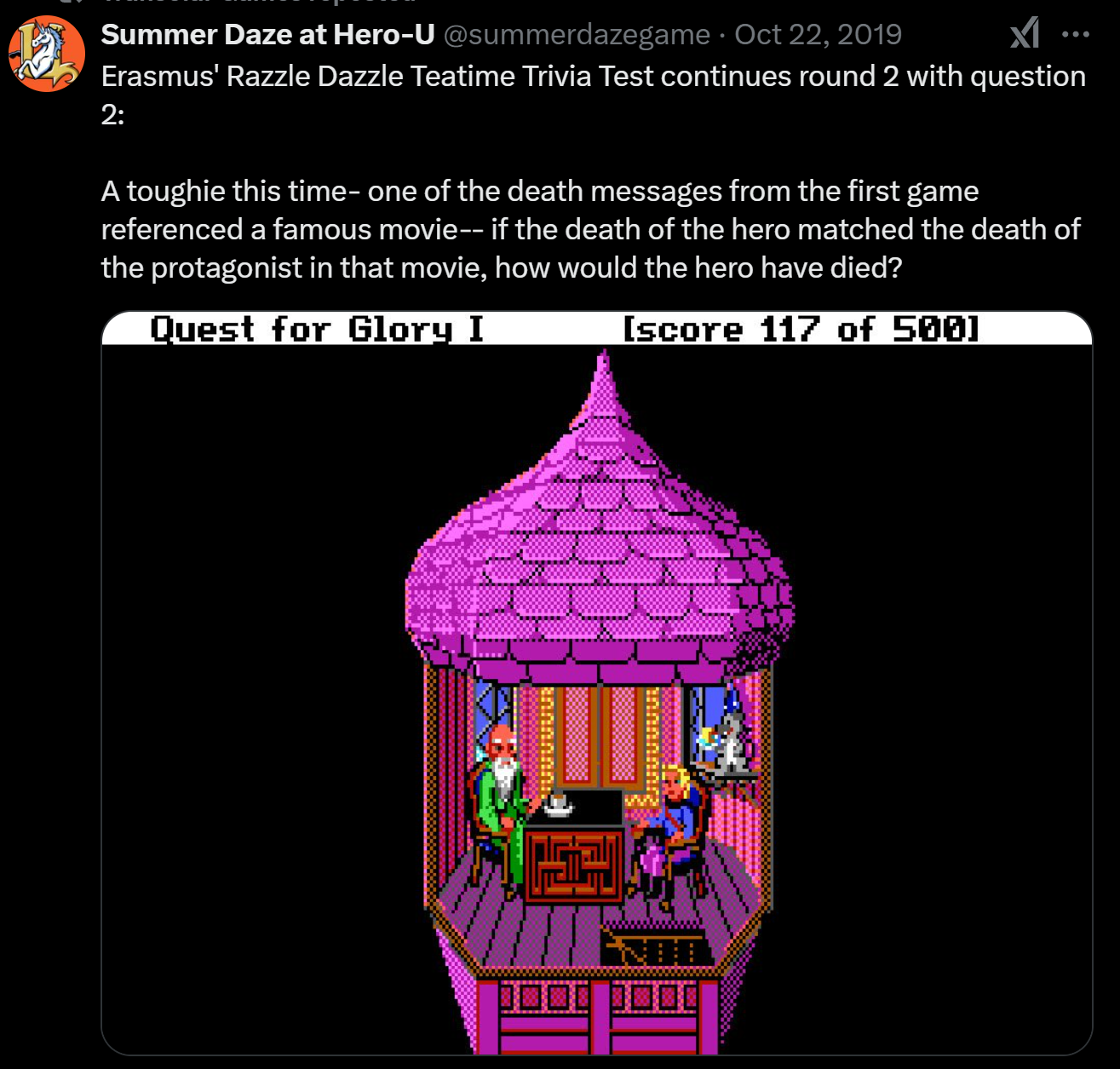
During the Kickstarter campaign, I volunteered to manage the game’s social media presence. I ran multiple Twitter-based promotions, including trivia contests, and tracked participation for prize distribution.
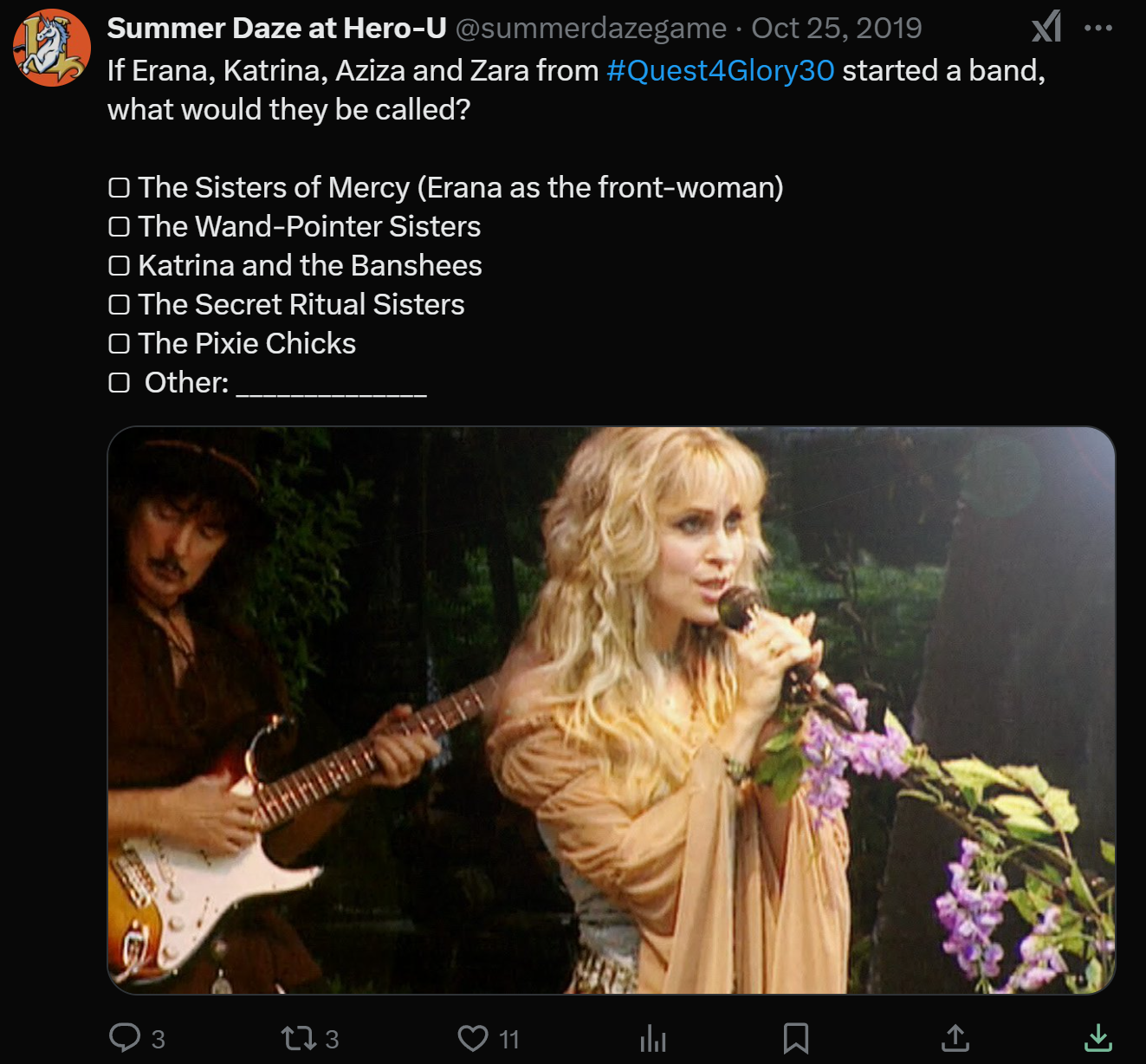
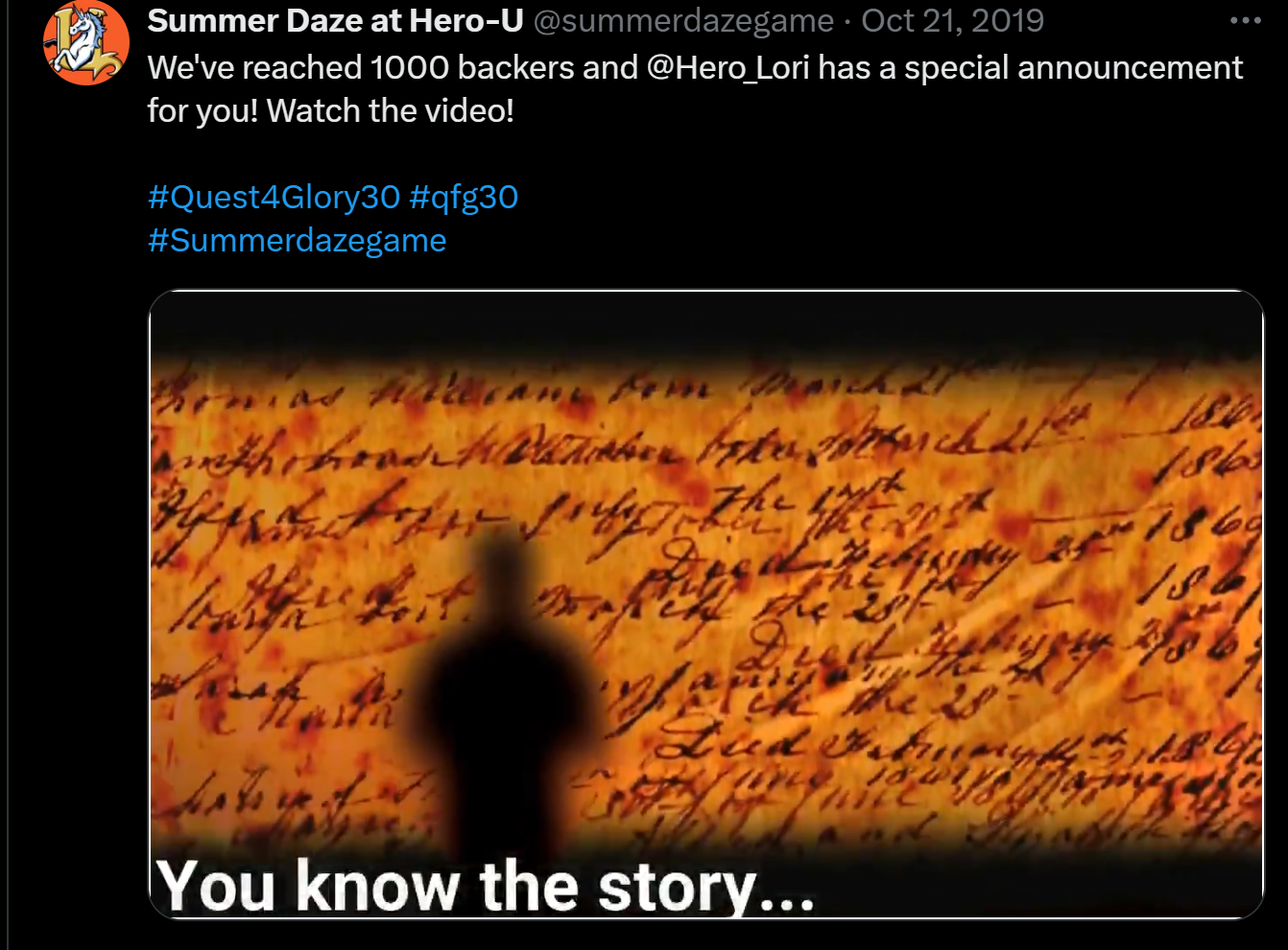

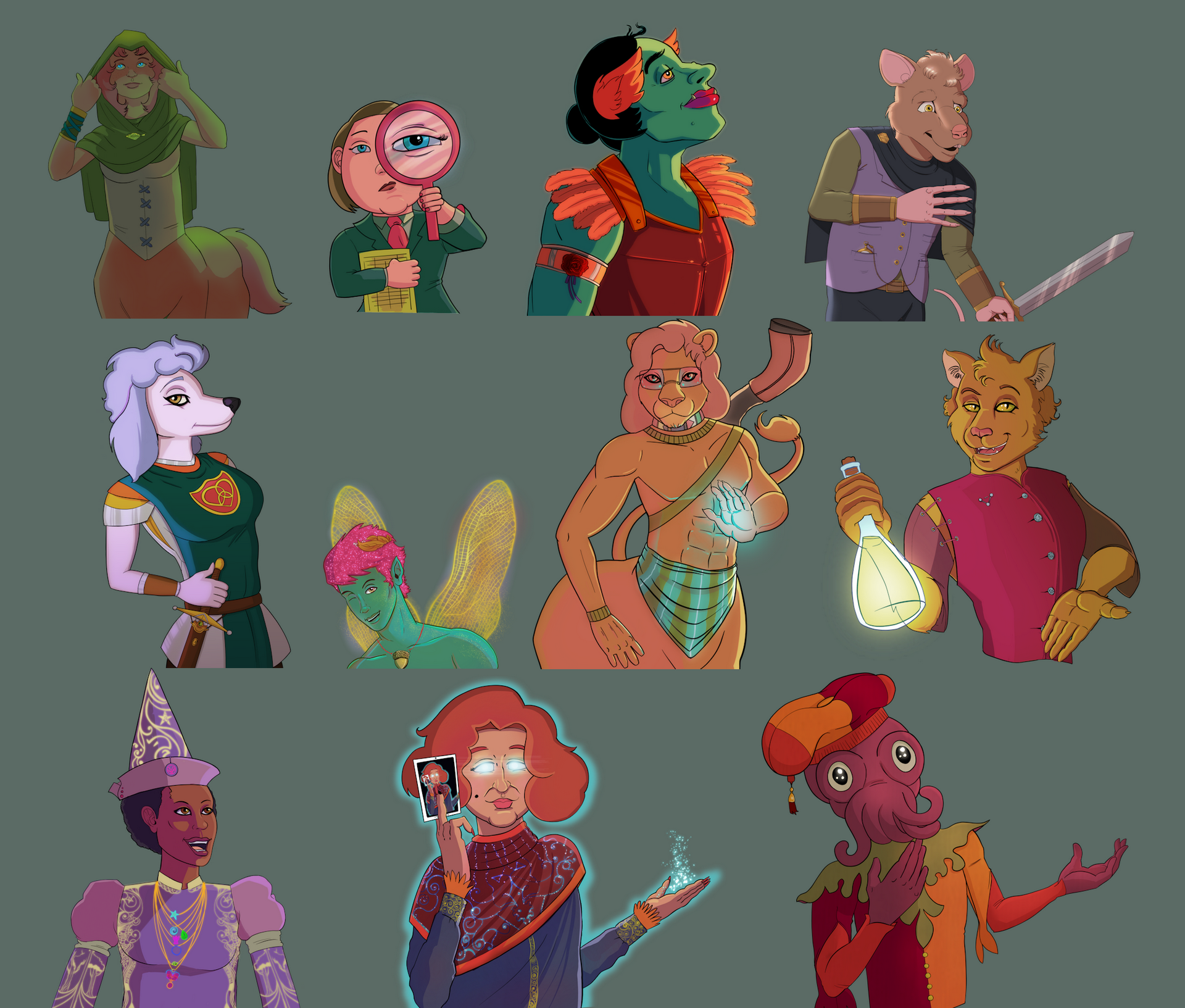
One of the campaign incentives was the opportunity for backers to participate in a tabletop Dungeons & Dragons session game-mastered by Corey, using an adventure module he himself had written in 1981. Liana and I agreed to assist Corey by participating in the sessions as experienced players, with the intent of helping guide participants who were new to tabletop roleplaying.
To support this, we designed a set of pre-generated characters from which players could choose. I created artwork for those characters, though my artistic skill at the time was significantly less developed than it is now.
Despite the campaign’s eventual success, the process itself was not smooth. Liana drafted press releases for Corey, which he subsequently edited. Liana interpreted these changes as disrespectful and as a rejection of her input rather than a collaborative revision.
Liana came to believe that the campaign failed to reach additional stretch goals because Corey did not follow her advice or adhere strictly to her proposed plan. How accurate that assessment is, I cannot say with certainty. However, based on the evidence already presented, it is clear that Liana is not a reliable narrator even of her own experiences—a pattern that, regrettably, only intensifies from this point onward.
As her frustration over D’s continued presence during the campaign and livestreams grew, Liana began to suggest that there might be something inappropriate occurring between Corey and D:
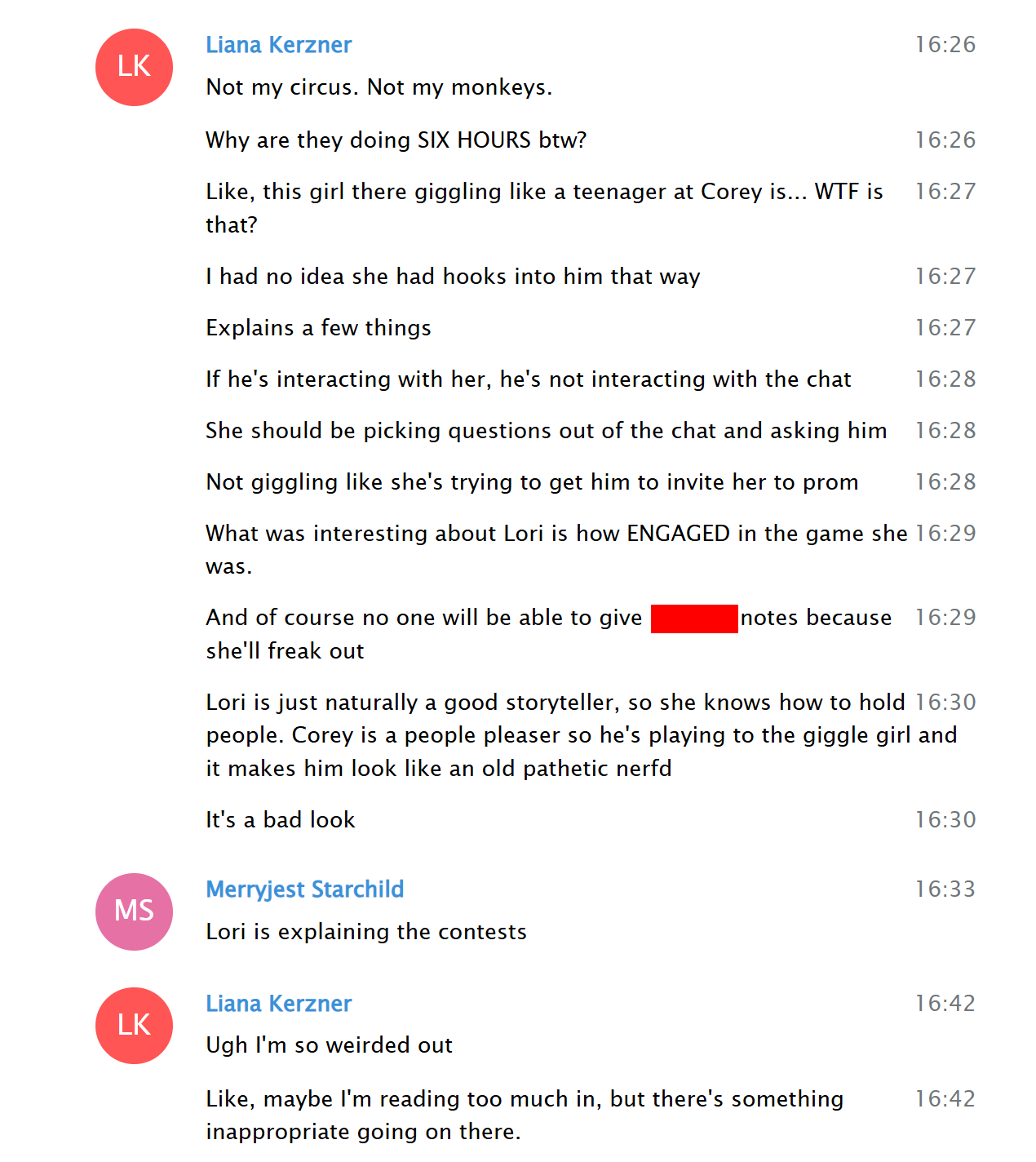
I was not sure about Liana’s conclusions, though at the time I partially echoed the framing she had already supplied. I suggested that Corey might simply enjoy the attention of someone who admired his work. In my view, Lori and Corey Cole have never received the recognition they deserve for their contributions to the industry and to gaming history. Nevertheless, Liana escalated her speculation, at one point asserting that Corey routinely ran roughshod over Lori and implying that Lori exhibited the hallmarks of an abused spouse.
One thing that will become evident in the record is how often Liana Kerzner accuses the men who enter into direct or indirect conflict with her of being abusive spouses.
I did not know how to process or respond to these claims. They left me deeply unsettled, while also having no full way to resolve them. I trusted Liana and her judgement.
Ultimately, the Kickstarter concluded successfully, and Summer Daze at Hero-U was funded. The next phase was meant to involve fulfillment of backer rewards. I was particularly looking forward to the tabletop sessions.
Those sessions, however, would never take place—because of what followed after the campaign’s conclusion.
"RUINING THE COLES"
On August 4th, 2020, I had the following interaction with an account that contacted me on Twitter after I challenged someone who claimed that Liana was supportive of Comicsgate.
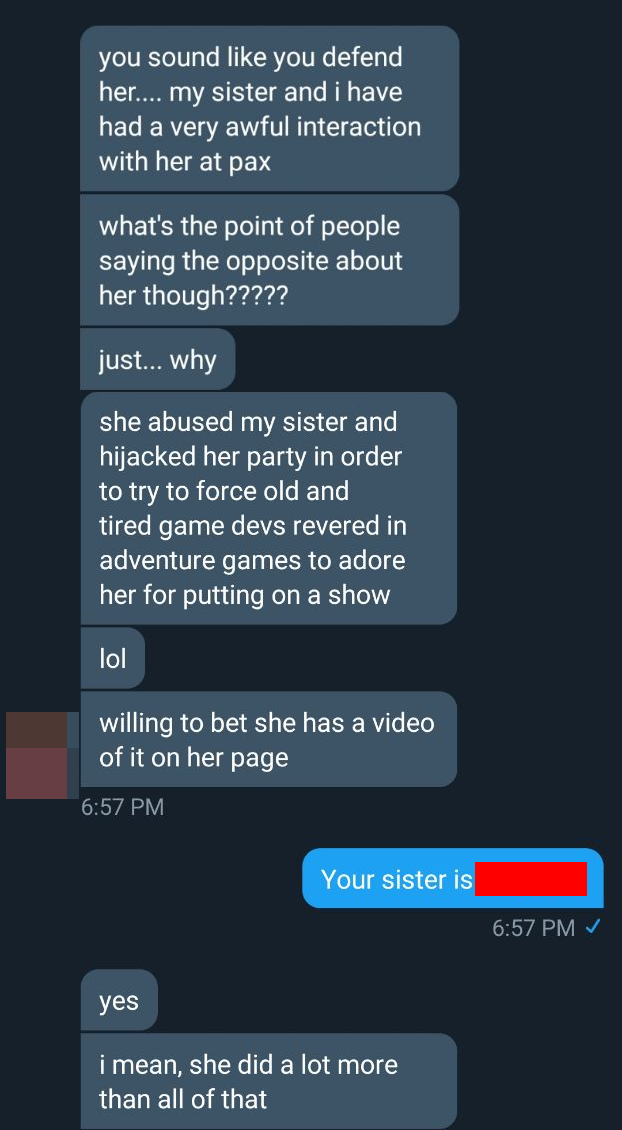
D’s sibling advised me to contact Kim Crawley , who, according to him, would be able to share a history of Liana’s abusive behavior. The sibling—whom I initially believed to be D’s sister and later learned was her brother—told me that he had read chat logs and spoken with multiple people who corroborated that Liana had abused D. When I relayed this information to Liana, she responded by claiming that D’s sibling was himself abusive and even a domestic abuser.
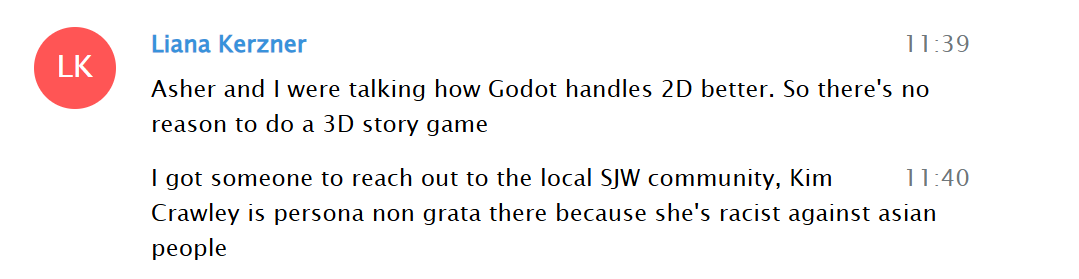
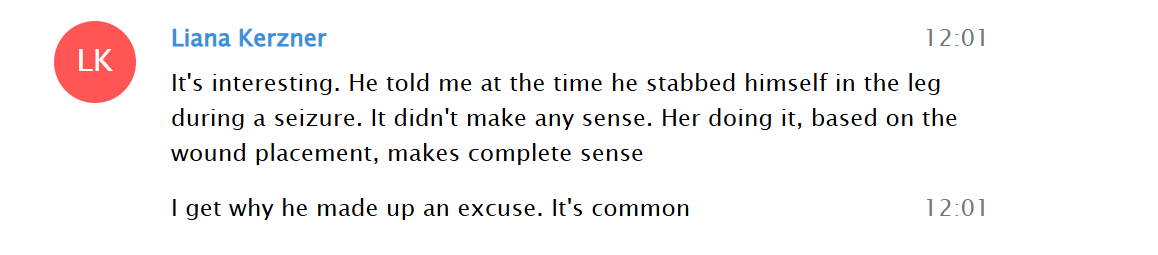
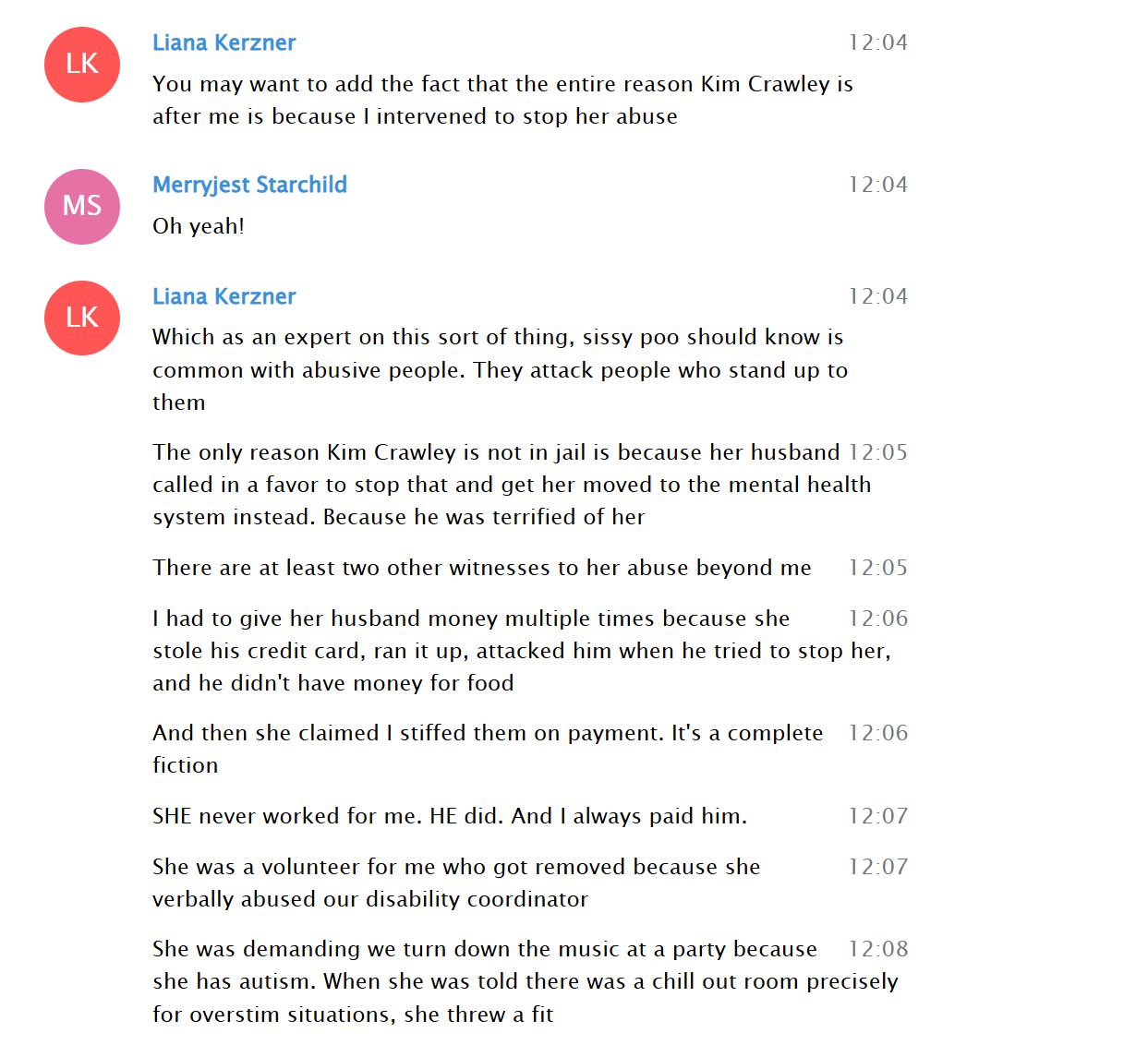
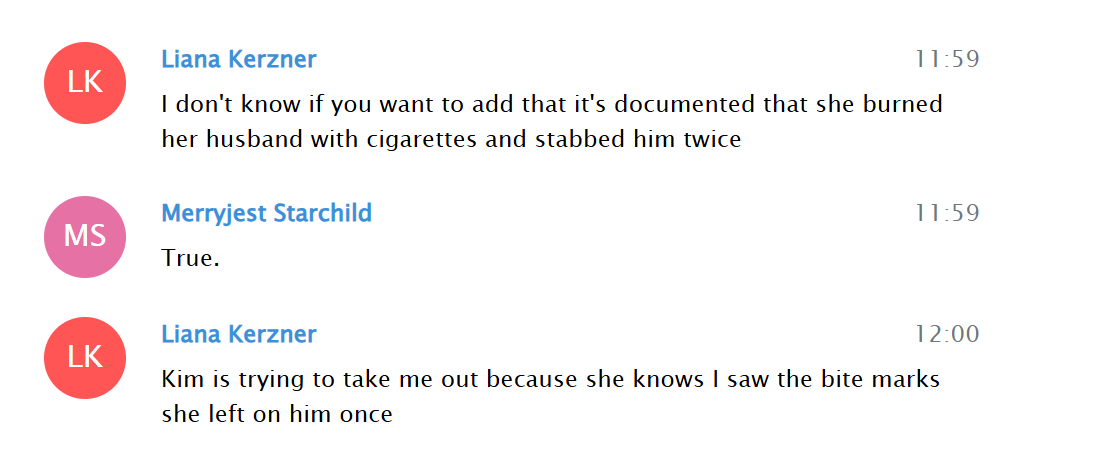
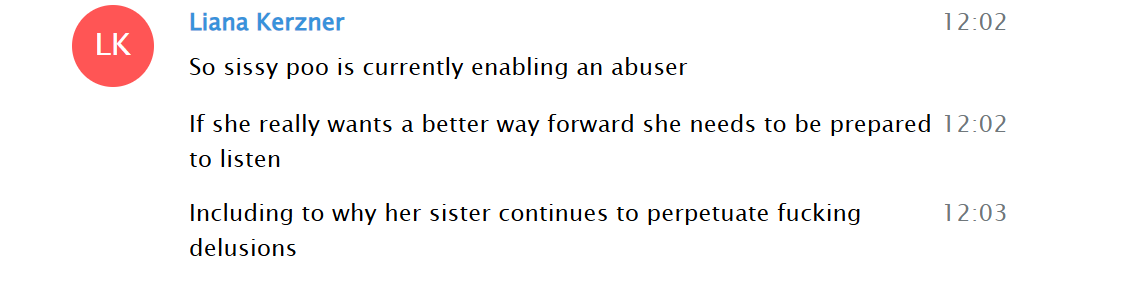
I was never provided with the documentation Liana claimed existed. At the time, because I trusted her implicitly, I did not press the issue or insist on seeing it. In the years since, I have attempted to locate any corroborating evidence of this documentation and have found none. I have not contacted Kim Crawley for comment, nor do I intend to do so at present.
In hindsight, I should have been more attentive to the fact that this was the second individual who had expressed opposition or concern in some form and whom Kerzner had subsequently characterized as abusive. When it later became clear that D’s sibling was male, Liana shifted her framing considerably:


I am deeply uncomfortable with how readily I followed Liana’s interpretive framework at the time. As I have noted previously, her habitual strategy is to assert other people’s motivations and internal states with confidence, often in disregard of what they themselves have stated. As a media personality, she understands the power of image and how credibility is shaped by it. For decades, she has cultivated a public persona of compassion, competence, and advocacy across multiple causes. It is not hyperbolic to say that many people trust her implicitly because of this image. I did.
Public image, however, is not truth. It is a curated construction. Human beings are complicated and imperfect; even good people have moments of cruelty, misjudgment, and fault. What distinguishes ethical conduct is accountability, not the maintenance of a spotless narrative.
A public image, by contrast, requires careful grooming of facts: filtering the unflattering, minimizing contradictions, and—when necessary—controlling the narrative even when facts resist it.
Thus, a brother advocating for his sister—someone he believed had been abused by a figure with a large platform—was recast as a man accessing confidential information to carry out a misogynistic vendetta.
He was her brother.
And he was present at the party as well.
Liana’s ability to appropriate and overwrite the narratives of others is, I now recognize, formidable. Perhaps this is one of the lessons that remained with her from her formal training in communications.
Late on the night of August 9th, we were speaking. I attempted to reassure Liana. It was during this conversation that I mentioned the Ultima Dragons reunion. PAX had been an embittering experience for her; she was deeply disillusioned with the Coles, with the Sierra alumni as a group, and especially with Al Lowe for leaving the performance early. In that context, I suggested that attending an Ultima Dragons reunion might give her an opportunity to meet Richard Garriott (“Lord British”) in a casual social setting rather than as part of a formal interview—an interview she has repeatedly claimed she undermined herself by fangirling.

This is the context behind the statement I later referenced in my video, where Liana told her Discord server that she only pretended to think the Ultima Dragons were “cool” in order to make me feel important. In doing so, she transformed a sincere attempt at connection and consolation into a retrospective act of mockery, while also asserting that she had been dishonest with me at the time—an assertion her audience appears to accept without reflection. They should not.
At that point, Liana and I were not collaborating on a game. Song of Sparklemuffin did not yet exist as a project. There was no professional incentive at play. So why would she claim she feigned interest merely to placate me? Why would she imply that her approval held greater weight for me than my longstanding admiration for—and direct interaction with—Richard Garriott, a foundational figure in the industry she herself has yet to meaningfully shape?
Why lie, then?
In my opinion, she did so because she believed I might be useful to her. As an artist, composer, and singer—skills she has since disparaged, as is her pattern with those who fall out of favor—I was a resource. So long as I remained useful and tractable, it was advantageous to appear agreeable. This is my interpretation, but the pattern supports it.
Her audience would do well to reflect on this episode and ask themselves a simple question: how can they be confident that what she tells them about her own beliefs, motivations, or feelings is true? This exchange establishes a precedent suggesting a willingness to misrepresent even low-stakes matters—where no project, collaboration, or conflict was present—simply to preserve future utility.
Liana frequently proclaims her integrity and honesty. I have already documented eleven separate instances in which she was demonstrably untruthful. That count is not complete.
Her audience should also consider the next statements she made:
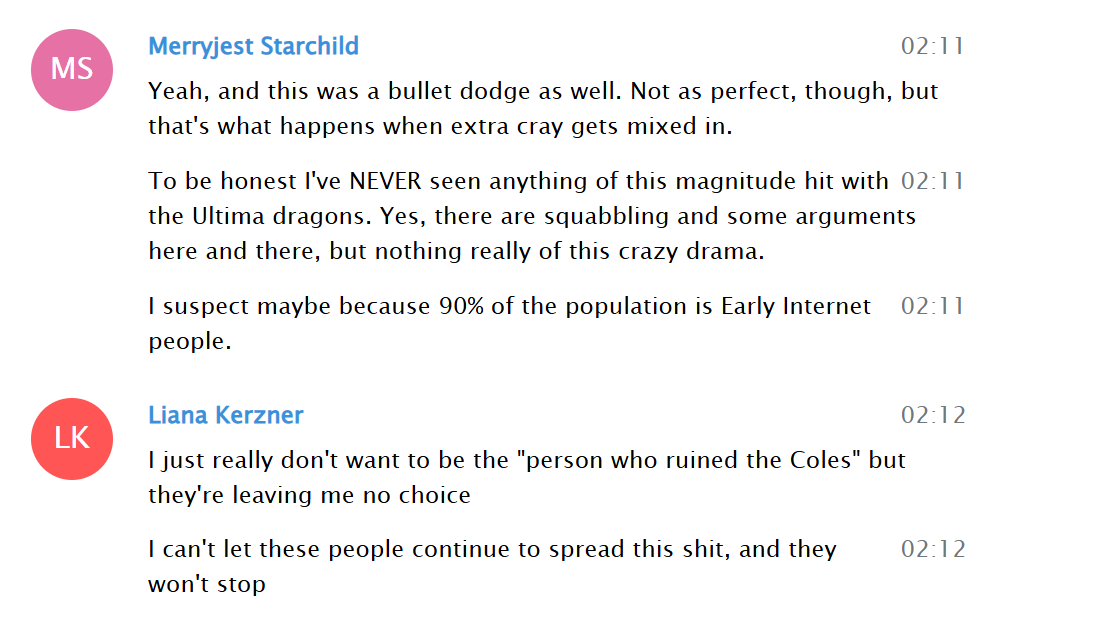
Yes. Liana Kerzner threatened to sue Lori and Corey Cole following contact from D’s brother, once the misogyny narrative had been adopted. This occurred after earlier insinuations that the company was homophobic because an artist was uncomfortable depicting same-sex interactions, along with other claims that sat uneasily with me even at the time.
I did not want to see this escalate. I regarded Lori and Corey as friends, and despite my own gullibility and misjudgment throughout this period, I attempted to mediate by speaking directly with them.
Ultimately, nothing came of the threat. There are likely several reasons for this. Most notably, it appears unlikely that Liana had the financial means to pursue an international defamation action—particularly against two individuals who are neither wealthy nor controversial, and who are widely respected within the industry. The optics would have been disastrous. And optics, as demonstrated repeatedly, matter deeply to Liana.
What followed instead was a quiet estrangement. The tabletop sessions never occurred, as Liana was no longer involved, and I felt deeply uncomfortable continuing without her. I did not know how to process what had happened. Lori and I had been in conversation for seven years before I ever met Liana Kerzner. During the period when Song of Sparklemuffin was later in development, I largely withdrew.
I can admit now that I was regretful, heartbroken, and embarrassed. Our involvement with the Guild had opened the door to a community that valued Asher’s ideas and our shared sensibilities. In a single series of events, that connection fractured.
I was correct in one respect: I had never seen disruption of that magnitude strike a community so quickly.
But I was wrong about its cause.
And the cause was not D.
On January 20th, 2025, I reached out to D and apologized:
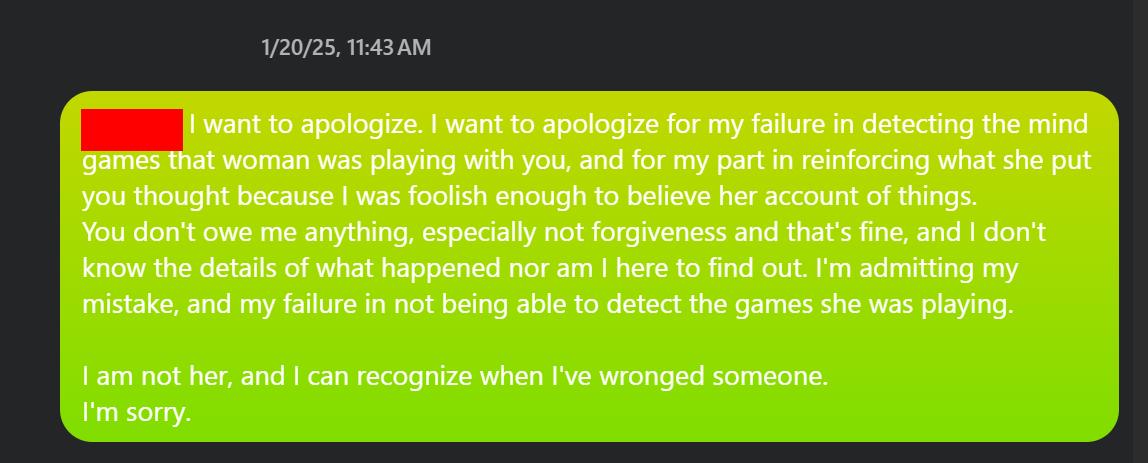
Later that day, she responded (“Keith” was the nickname I used when we first met, a reference to an old IRC story):

I did not ask D for further details about what had occurred. Nor have I sought additional information from Lori and Corey Cole and have not spoken to them about any further details regarding this situation aside from also apologizing to them.
This was in part to avoid exposing them to renewed hostility or legal threats should Liana choose to escalate again. I have, however, heard from others in the community who corroborated significant portions of what D had described.
I have heard allegations that Liana did, in fact, scream at D. I have also heard accounts of private, hostile interactions—persistent, needling, and at times bordering on cruelty. I cannot personally verify these claims.
If we limit ourselves strictly to what I can personally verify, one fact remains undeniable: in the documented exchange between D and Liana, Liana gaslit someone who said she had been harmed by her, using a claim about vocal incapacity that is contradicted by the evidentiary record.
Six months after our final exchange, D passed away unexpectedly. She leaves behind a community that mourned her deeply. D is remembered by them as someone who helped build a diverse, welcoming, and tightly knit group.
Liana Kerzner, in contrast, is not.
What Liana did do, however, was consult her friend Arie to "do voodoo shit" on D.

EPILOGUE TO PAX
This must be stated explicitly, because I am fully aware that Kerzner will very likely attempt to weaponize it.
When I referenced—without describing—the PAX incident publicly in one of my earliest rebuttals to Kerzner, she responded in her Discord server with the following comment, which was met with multiple expressions of sympathy from an audience of over one hundred members.
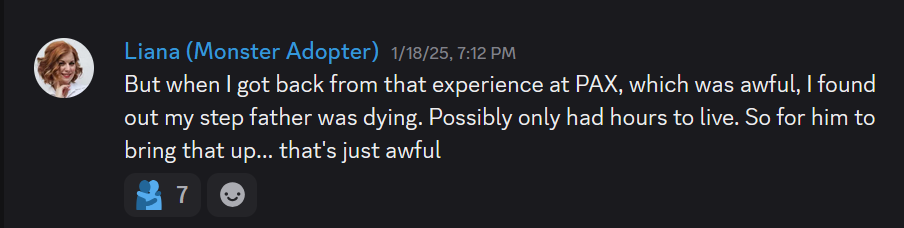
During the time that Liana published her cancellation video, Nanna was dying, my aunt Gilda was in the final stages of terminal cancer, (she died two weeks after the cancellation video was released) and my uncle Carlos would pass away from cancer one month later. During this same period, Asher was undergoing electroconvulsive therapy.
Kerzner was aware of all of this when she chose to proceed in the manner in which she did.
This was also in the context of her having mocked Asher’s father’s suicide and his worldview directly to Asher during what she later framed as the “Very Ugly Fight”—a characterization that will be examined in detail later.
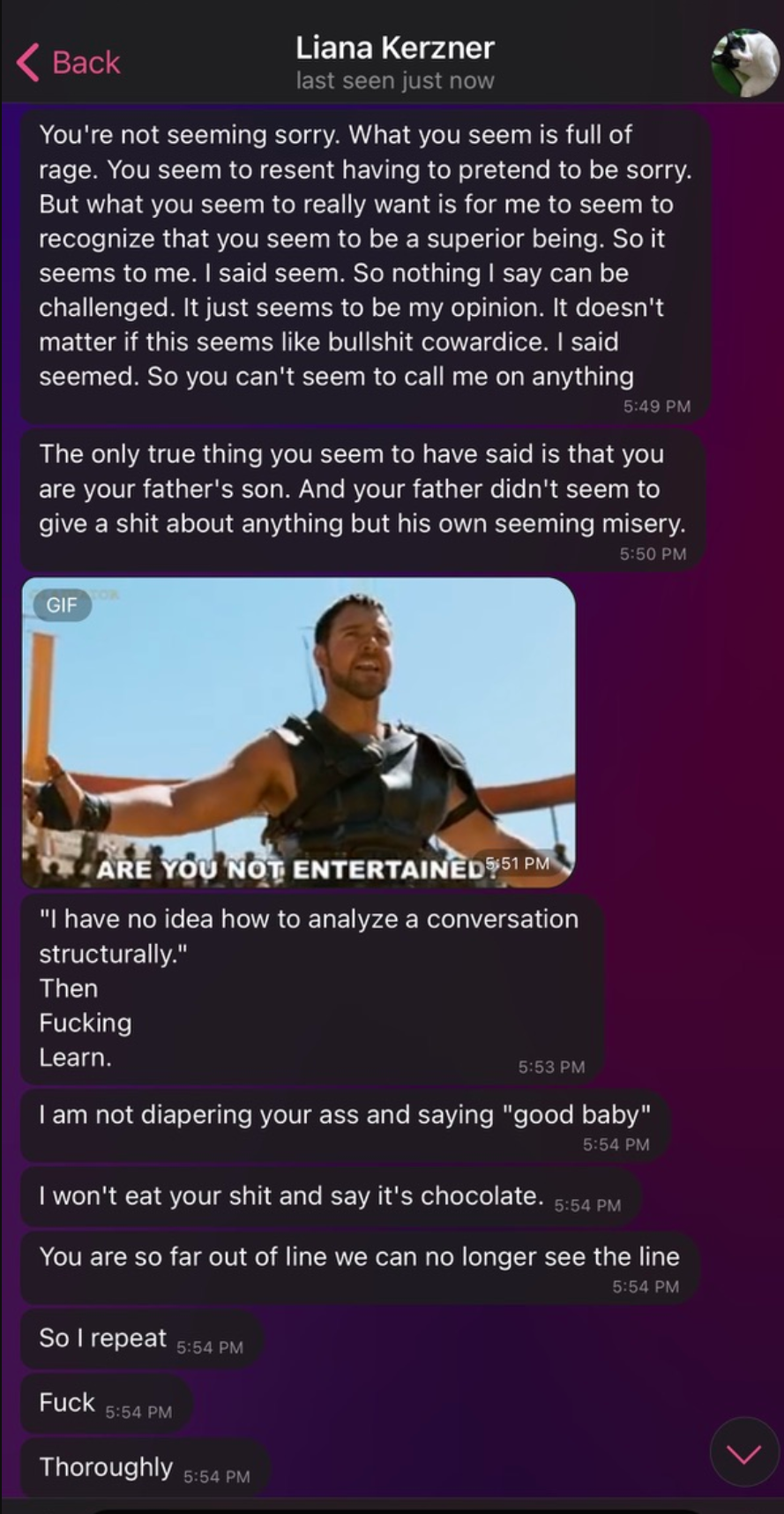
After fifteen months of sustained falsehoods, misrepresentations, and character assassination, I am well beyond the point of having any regard or care for Liana Kerzner’s feelings.
That threshold was crossed long ago.
She demonstrated no regard for my husband’s trauma when she disclosed details of the sexual trauma he endured as a child to her server—information he had entrusted to only one other person—to her entire Discord server (a membership of a hundred people that only requires a dollar to access). She did so mockingly, implying that he should not have been traumatized by events she herself described inaccurately.
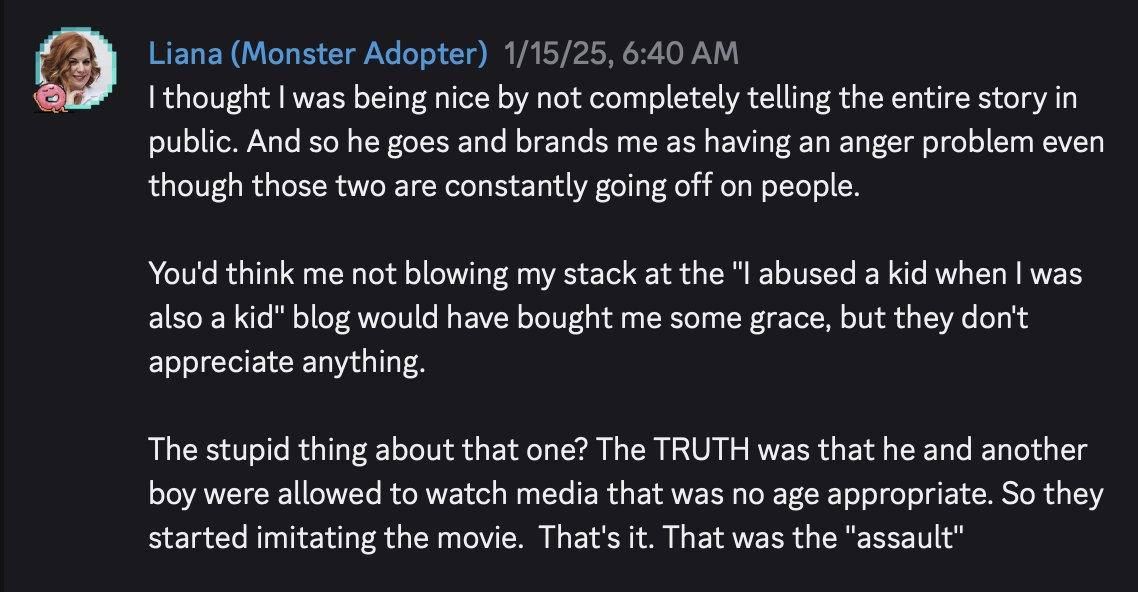
The screenshot referenced here is not drawn from my own records, though we had been aware of Kerzner’s disclosure for months prior. Its provenance and implications will be addressed in the Ethics section. For now, it is necessary to move on to the next incident.