EMILY SCHOOLEY
Liana Kerzner’s history with Emily Schooley is long, complex, and extremely difficult to reconstruct with certainty. The available accounts consist largely of competing narratives, each side making serious allegations about the other over a period of many years.
The dispute appears to trace back to an incident at Polaris Convention (formerly Toronto Trek) involving Schooley, her then-boyfriend, and Kerzner. The precise details of that event are unclear and heavily contested. Schooley has stated that her boyfriend, who was reportedly a friend of Kerzner’s at the time, was abusive toward her during that period. Kerzner, by contrast, has publicly claimed that Schooley herself was abusive and that she injured herself in order to frame the boyfriend.
From that point forward the narrative becomes significantly more convoluted. Kerzner has asserted that Schooley later “stalked” another individual who filed charges against her, and that Schooley ultimately entered into a plea arrangement involving community service. Schooley disputes this account and claims instead that Kerzner coached someone to provide false testimony against her in court, and that the charges were eventually dropped due to lack of evidence.
The conflict did not end there. Over time the two women have traded additional accusations involving stalking, harassment, and defamation. Because the claims span many years and multiple incidents, a fully granular reconstruction would require a dedicated examination of court records, archived posts, and contemporaneous documentation. For the purposes of this report, the events have been summarized only at a high level. A more detailed investigation may be warranted at a later stage.
Such an investigation would be particularly important for one reason: earlier sections of this report have already demonstrated several documented instances where Kerzner’s public statements conflict with verifiable evidence. Those contradictions raise legitimate questions about the reliability of Kerzner’s narrative in disputes where independent documentation is limited. At the same time, it would be inaccurate to present Schooley as a fully reliable narrator either. Based on the available public statements from both individuals, the conflict between them increasingly resembles a long-running adversarial relationship in which each side frames the history in ways that reinforce their own narrative.
Unfortunately, and to further complicate the matter, I also do not consider Schooley a reliable narrator either.
It is my opinion that Schooley and Kerzner have been engaged in a very strange symbiotic enmity for years. Both of them display disquietingly similar methods, finding ways to reframe their long-standing feud in ways that elevate themselves within the narrative.
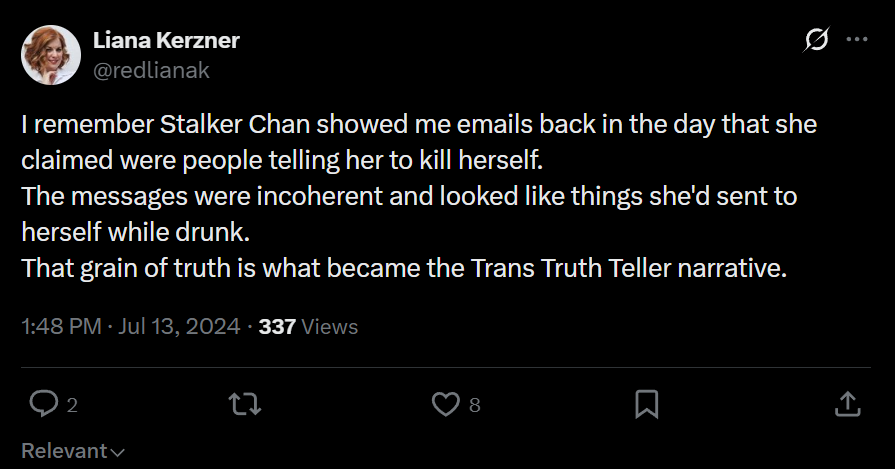
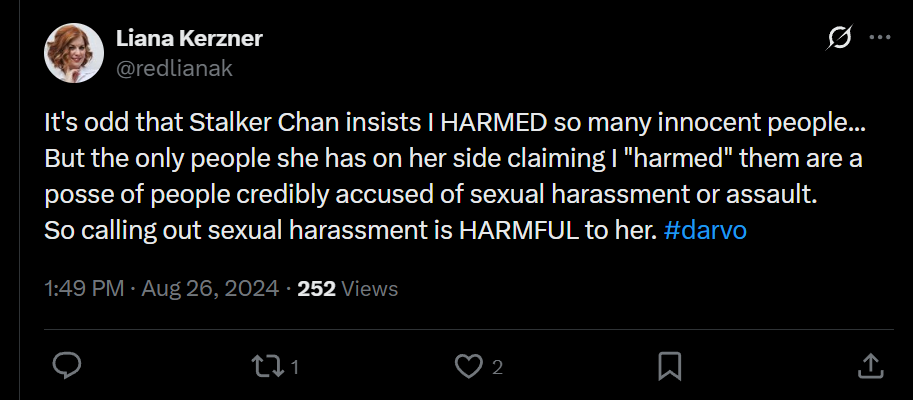
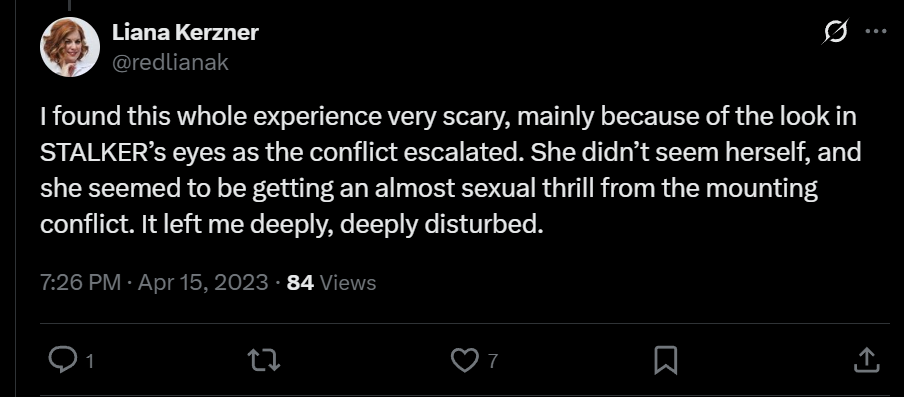
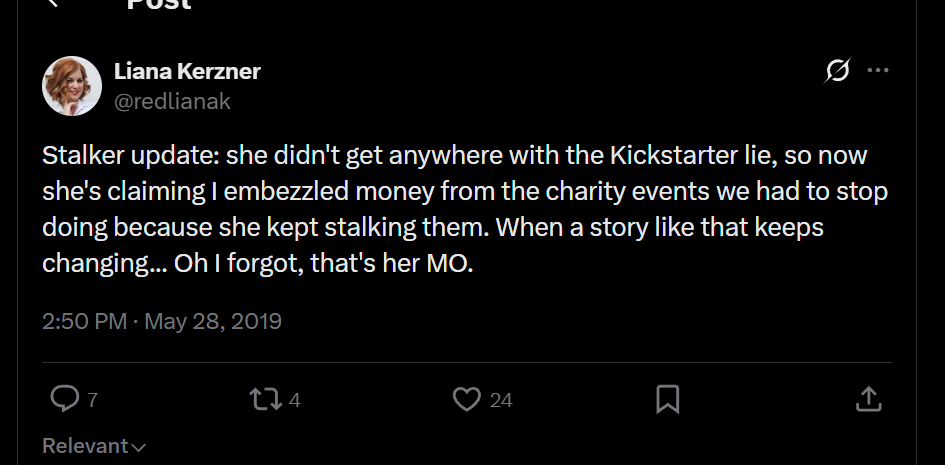
Kerzner’s approach is somewhat more subtle, but the pattern becomes noticeable to anyone reading her statements critically. Schooley tends to frame herself as a survivor of abuse and as the only person who has ever stood up to Kerzner using her own name. Kerzner, meanwhile, spends a great deal of time baiting Schooley, particularly whenever an alleged “sockpuppet” account of Schooley’s (according to Kerzner) appears online.
When such an account emerges, Kerzner frequently amplifies the accusation publicly. At those moments she also makes a point of speaking extensively about Schooley in her Discord server and on Twitter, revisiting the history of their dispute and reinforcing the framing of Schooley as a persistent adversary:
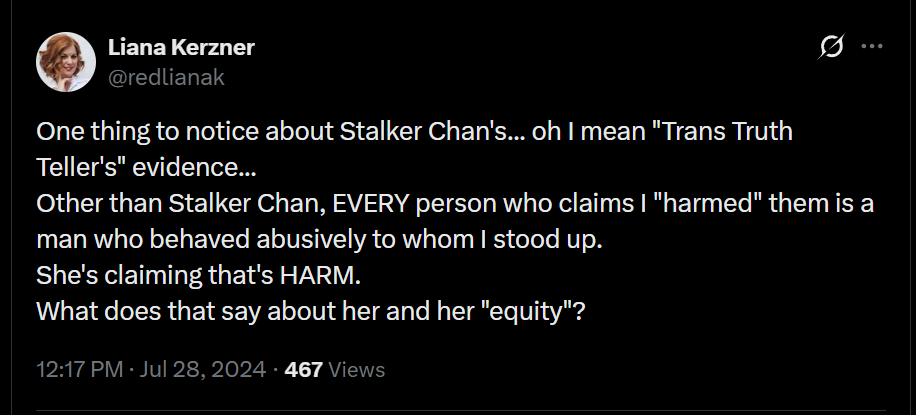
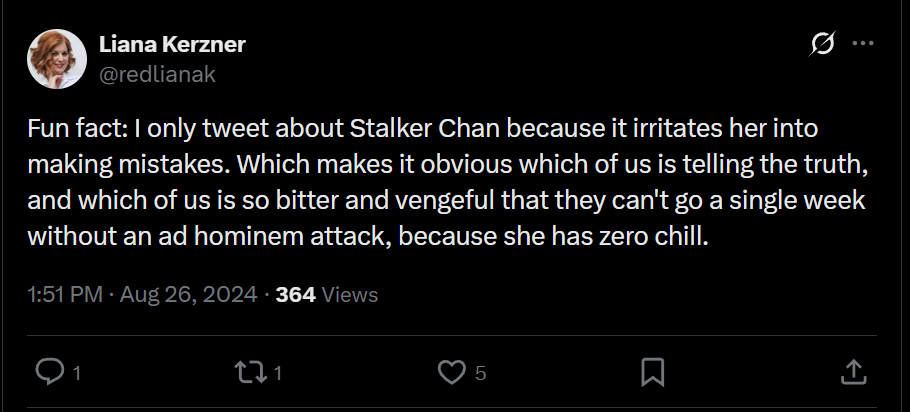
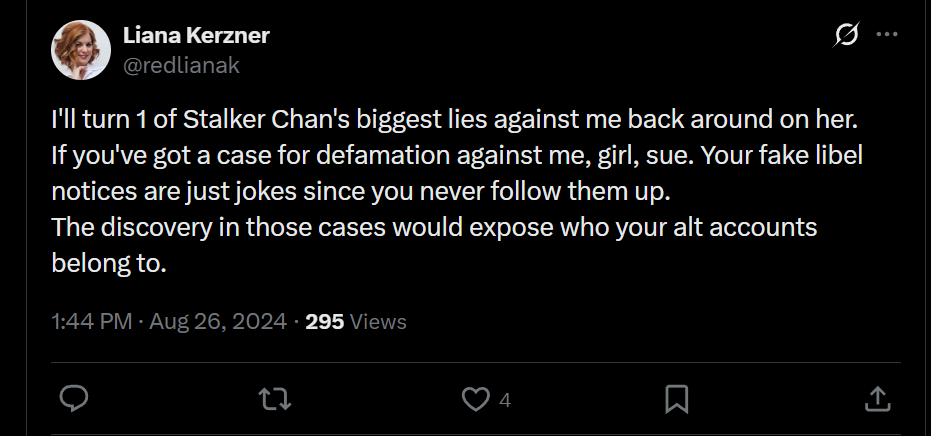
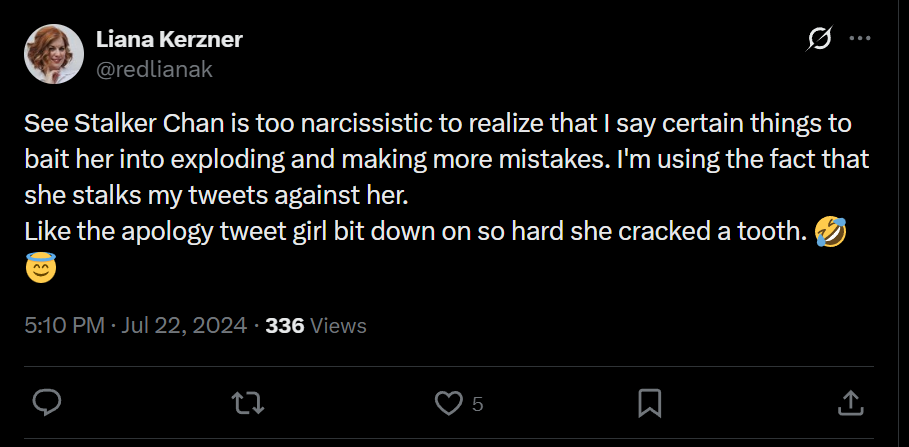
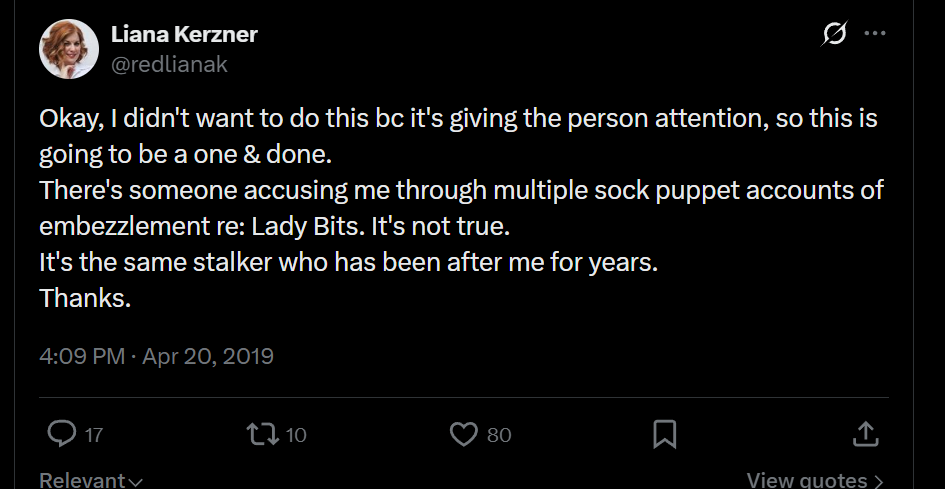
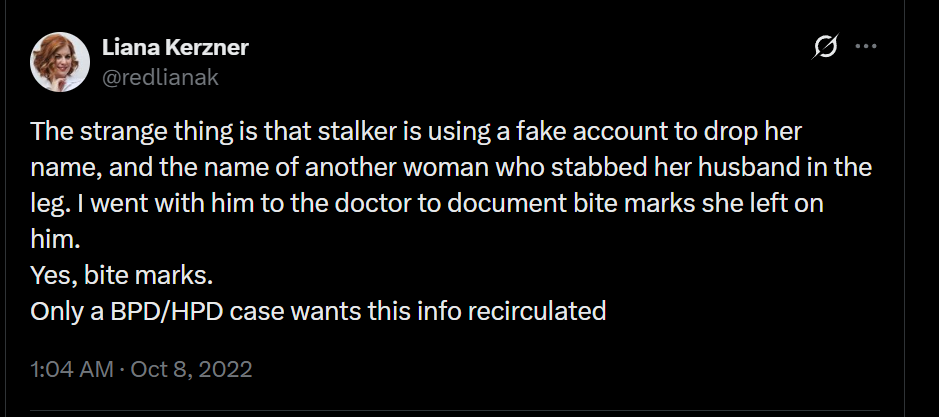

Kerzner has also alleged that the “nastygrams” she receives through her website’s submission form are being sent by Schooley. In at least one instance she mocked Schooley as being “drunk on Labor Day again” while attributing those messages to her.
This accusation is particularly strange given the technical reality of the submission form itself. The form appears to lack even basic safeguards that would make attribution meaningful. As it currently functions, messages can be submitted anonymously with little or no verification of the sender’s identity.
This is not a difficult technical problem to solve. A simple email verification system—requiring the sender to confirm their address before a message is accepted—would significantly reduce the possibility of anonymous or spoofed submissions. My husband implemented precisely this type of functionality on his own website without difficulty.
Given how frequently Kerzner claims to receive these messages, it is therefore difficult to understand why she has not taken this very straightforward step to secure the form.
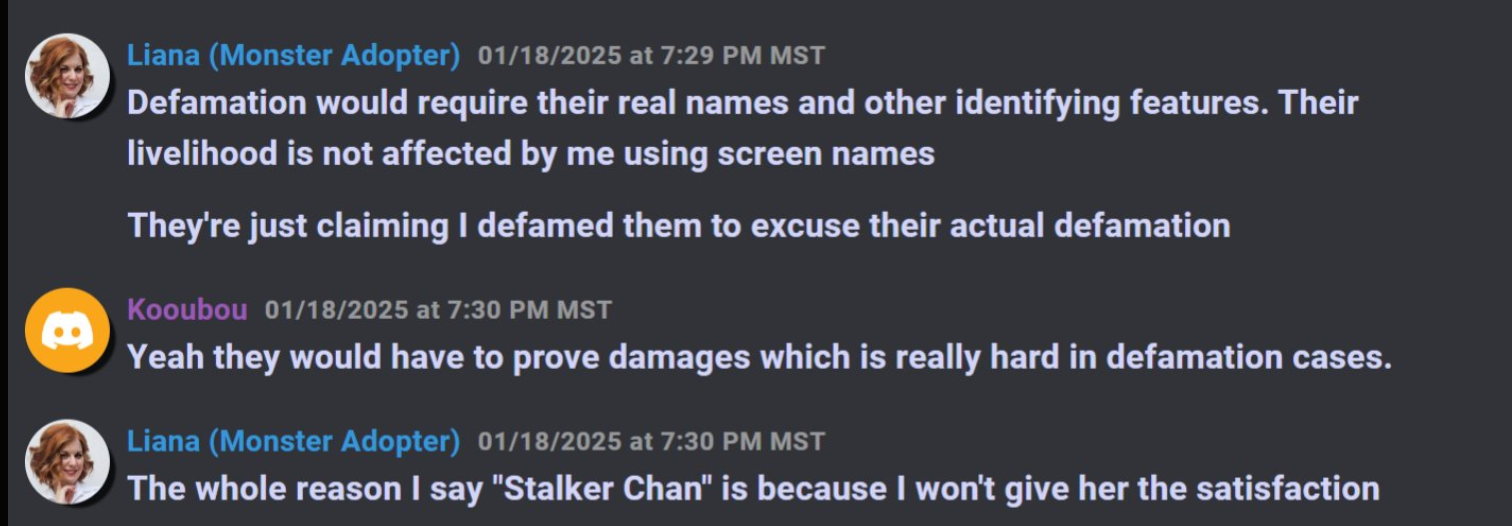
The claims found in the above screenshot are, of course, not accurate. Any reasonable observer who performs even a cursory search of Kerzner’s public timeline can find numerous examples that link the monikers “Stalker” and “Stalker-Chan” to Emily Schooley. This linkage appears not only in exchanges involving accounts such as troll_patrol4, but also in instances where Kerzner herself explicitly connects the two
explicitly connects the two through context and discussion. While Kerzner often maintains that she does not name Schooley directly, the surrounding statements and interactions make the identity being referenced readily apparent to anyone paying enough attention.
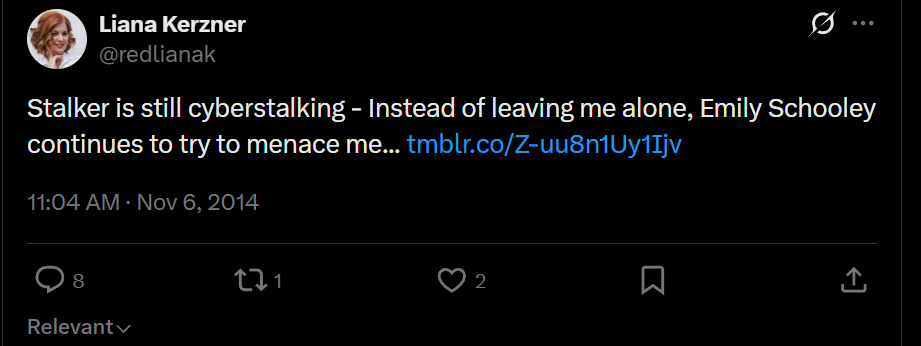
This is not the only place where such a co-occurrence can be observed in public. Numerous examples exist in Kerzner’s public posts where the labels “Stalker” or “Stalker-Chan” appear in contexts that point directly to Emily Schooley. However, as was also the case with Mitchell Jura, Gail Simone, Kim Crawley, and others, these public references are supplemented by private communications. The first time I heard the name Emily Schooley mentioned in connection with these accusations, it came directly from Kerzner herself:
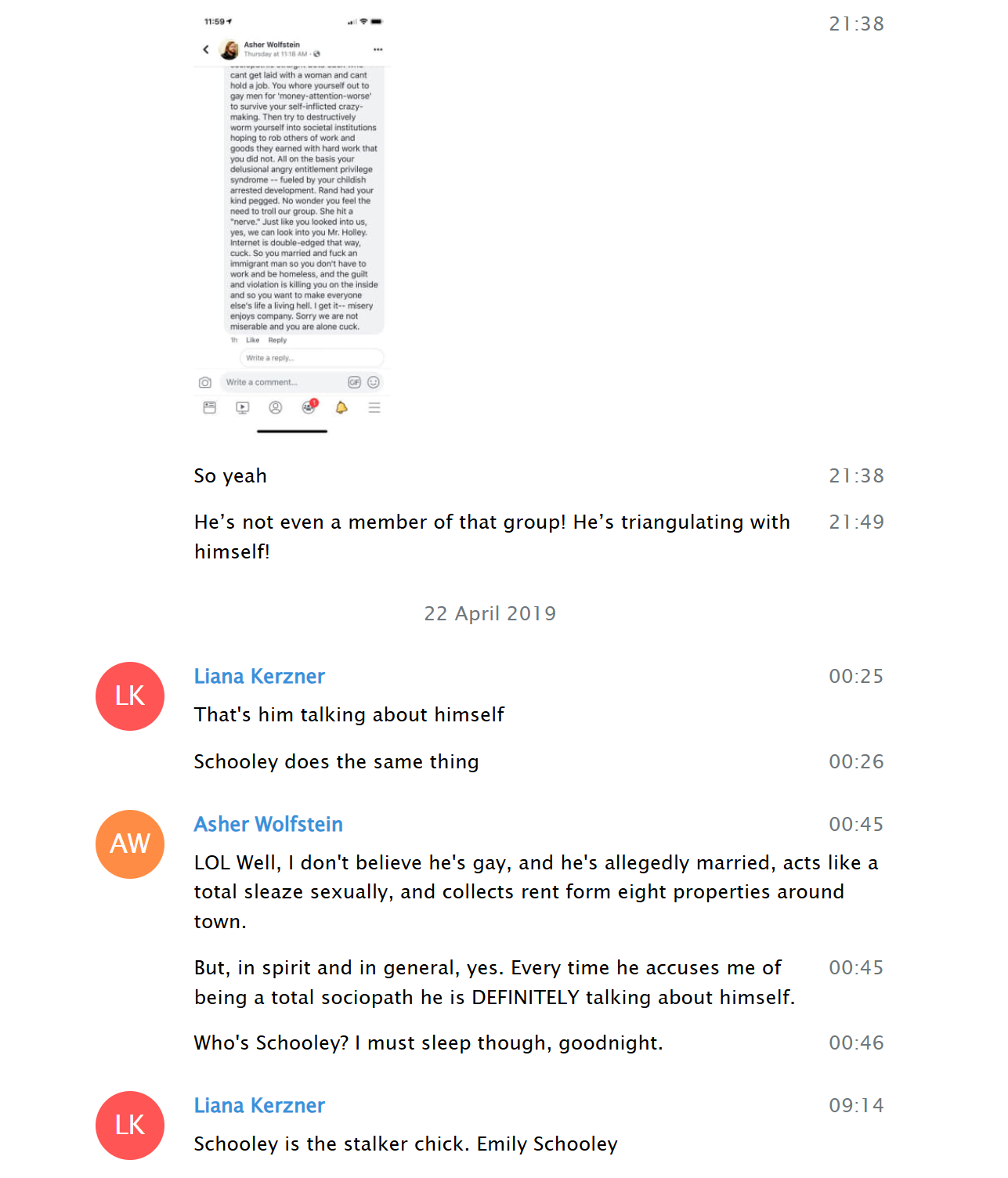
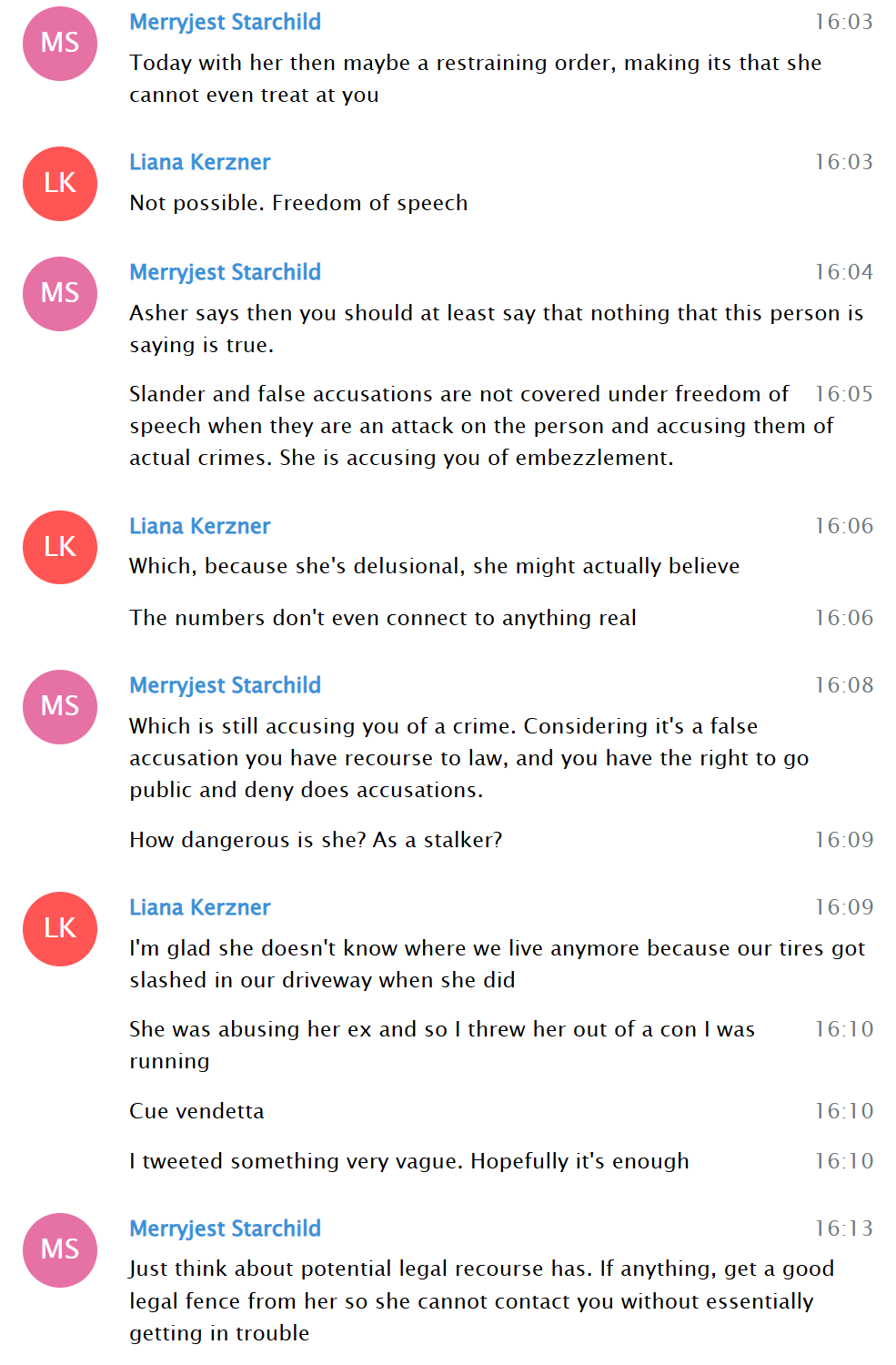

The third screenshot also demonstrates that Kerzner identified Schooley to Asher within the first two weeks of the beginning of their friendship. In that conversation, Asher was describing a man who was harassing us at the time and impersonating people online in order to triangulate against us. (I discussed this individual and his activities in my video.)
I possess documented chat records between Kerzner and Asher, as well as between Kerzner and myself, where this individual is explicitly mentioned and where his behavior is discussed in detail.
Despite this, Kerzner later claimed ignorance of this same individual’s identity when speaking to her Discord server.

Kerzner has stated publicly, “How was I supposed to know this? No idea.” However, the documentation tells a different story. Records show that she was made aware of this individual’s existence very early on, and he was mentioned multiple additional times in connection with various incidents and stunts he pulled. This is therefore another instance in which the documented history directly contradicts a claim Kerzner has made publicly. My interpretation is that this apparent lapse of memory serves a strategic purpose, because maintaining the appearance of ignorance helps support Kerzner’s narrative that the harassing emails impersonating us are coming from us rather than from this local individual. Yet the documented conversations demonstrate that Kerzner was aware of him and his behavior.
Kerzner confirmed Schooley’s identity to me after I saw her tweets referring to a “stalker” and located the original post, along with several related tweets naming Schooley as the stalker, and when I asked about them directly, Kerzner identified the person she was referring to as Emily Schooley. Kerzner did the same with my husband, Asher. In conversations with him, she identified Schooley by name almost immediately.
Given this pattern, there is little reason to believe that Kerzner does not privately communicate Schooley’s identity to many of her followers. This behavior is consistent with another pattern already established in this report whereby Kerzner frequently shares allegations that can damage the reputations of others in private conversations, often without documented proof, relying instead on the trust of the people she is speaking to to treat those claims as authoritative.
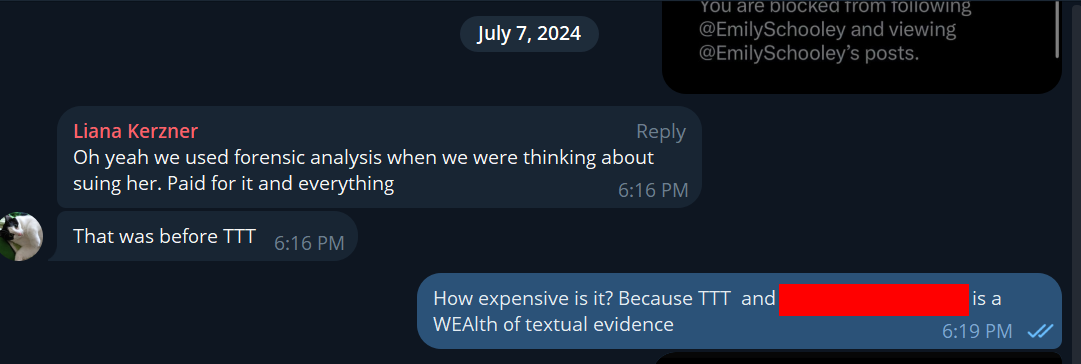
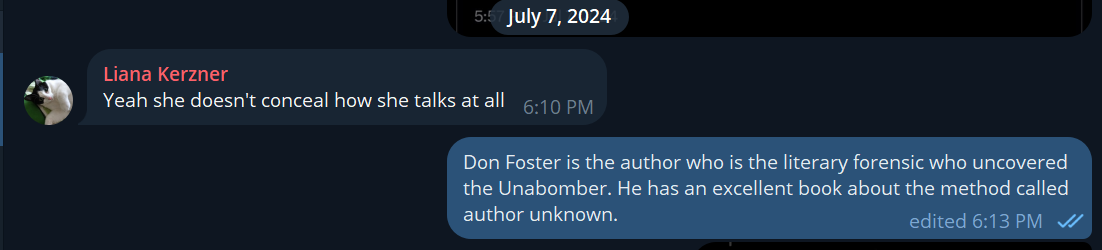
At one point, I even suggested that Kerzner could hire a literary forensic analyst to determine the authorship of the messages she attributed to Schooley.
This occurred around the same time that my husband and I had begun monitoring Kiwi Farms for our own safety. A user there had attempted to get my husband targeted by the forum after misrepresenting a paragraph from one of his blog posts. In that passage, Asher had alluded—obliquely, and by his own admission not clearly enough due to his desire to avoid excessive detail—to a traumatic childhood experience.
The situation escalated when we eventually identified the Kiwi Farms user responsible as Giancarlo Vanzzini, a conclusion that Kerzner herself later confirmed, as will be discussed later in this report. Ironically, the same traumatic experience that was misrepresented on Kiwi Farms was later mocked by Kerzner while discussing the situation with members of her server.
During this period we were also in direct confrontation with Schooley over her alleged stalking of Kerzner. Not long afterward, Schooley began repeating the Kiwi Farms narrative as well, encouraged by posts from Vanzzini’s Twitter “troll” account.
It was during this period that Asher and I suspected one particular Kiwi Farms user of being Emily Schooley. The posts made by that user in Poppy’s thread were the ones I suggested to Kerzner as potential material for stylometric analysis that might determine authorship and possibly tie the account to Schooley. Kerzner responded that such forensic analysis had already been conducted and that it had cost significantly more than she had wanted to spend—“about a grand,” as she put it.
I asked Kerzner if I could review the report myself, but she never forwarded it to me.
Schooley, however, has stated that a document presented as forensic analysis appeared in the court materials associated with a case Kerzner brought against her. According to Schooley, the case was dismissed because the document contained no actual forensic data and instead consisted largely of speculation about her moral character.
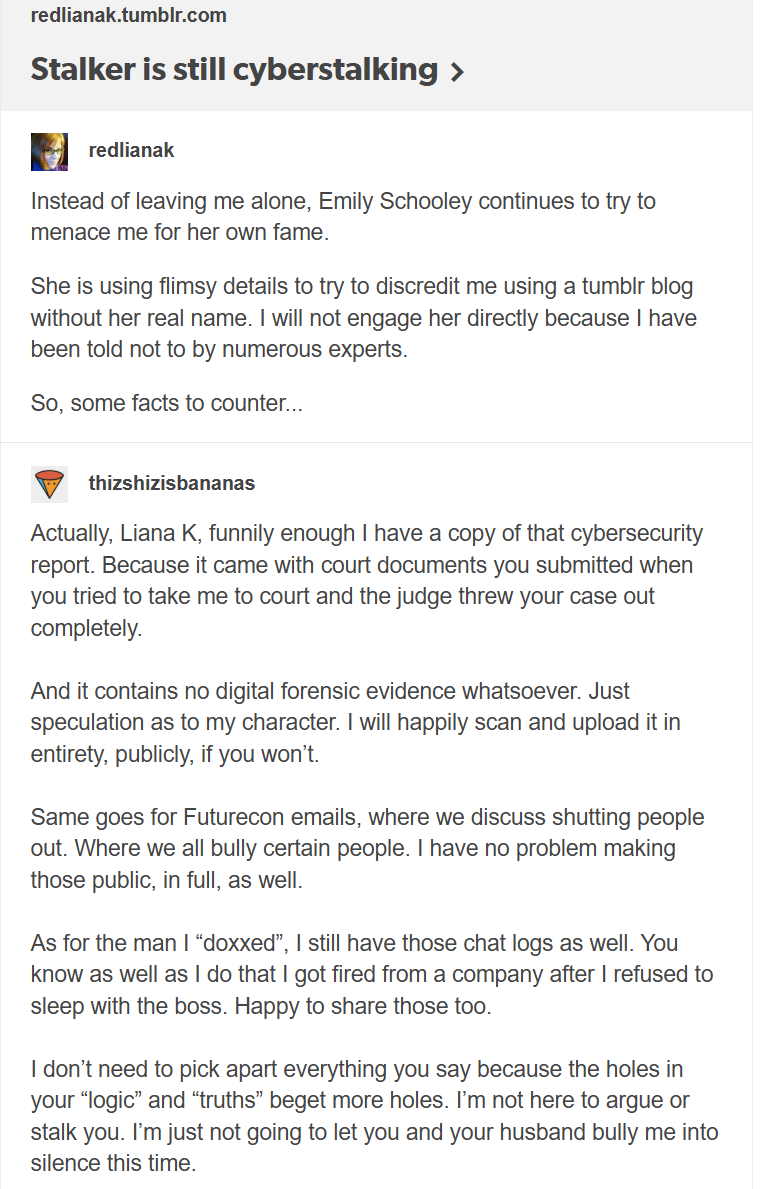
As with nearly everything involving these two individuals and their long-running conflict, fact verification is difficult in the absence of a reliable observer or clear documentary evidence. An extensive search of publicly available court materials did not reveal any reported decision relating to the matter. The absence of such records suggests that the case was not the subject of a published judgment. Determining the precise outcome would therefore likely require petitioning records from multiple courts, a process that would involve both time and expense.
Kerzner or Schooley could easily clarify the record by publishing the file in question. Schooley, in particular, stated that she intended to do so. Yet neither of them has produced the document. This is puzzling, given that its publication would likely settle the matter quickly.
As of more recent developments, Asher and I no longer believe that the Kiwi Farms user we originally suspected was Emily Schooley. There is now a far more plausible candidate—but that discussion will have to wait for a later section.
Schooley has also alleged that she had a court date scheduled at which she intended to present evidence against her ex-boyfriend. According to her account, she was arrested shortly before she was able to present that evidence. She claims the arrest was carried out by a detective who had previously yelled at her when she first attempted to make the report.
In Schooley’s telling of the situation, she suspects the arrest may have been orchestrated to prevent her from presenting the evidence. She has stated that she saw the detective in question speaking with the ex-boyfriend in what she described as a notably amicable manner.
Schooley has produced a copy of the document issued by the arresting detective. Kerzner, however, has argued that the existence of that document contradicts Schooley’s narrative.
However, if Schooley’s narrative is taken at face value, the behavior of the law enforcement officer she describes would be unusual. Kerzner herself has also described what appears to be an unusually close relationship with members of law enforcement. On multiple occasions she has mentioned she has friends in law enforcement who confide in her.
Moreover, Kerzner has recently asserted that she has friends in law enforcement who trust her and provide her with sensitive information she should not have access to under the reasoning that they need someone to confide in. This claim raises several serious ethical concerns.
Law enforcement officers are entrusted with confidential information obtained through their professional duties. If such information were being shared informally with private individuals, it could represent a breach of professional obligations and confidentiality standards. At the same time, if Kerzner is presenting herself as a confidant for law enforcement personnel in this way, it raises questions about the boundaries and responsibilities involved in those relationships.
Licensed therapists operate under strict rules of conduct and regulatory oversight concerning confidentiality. Canadian police departments and the RCMP actively encourage officers to speak with trained mental-health professionals, viewing such support as essential for maintaining mental well-being, resilience, and the management of operational stress injuries. To that end, many departments provide structured support systems, including confidential counseling services, in-house mental health professionals, and employee assistance programs (EAPs).
Kerzner, as has already been demonstrated in the case of Mitchell Jura and others, is not bound by those professional standards of confidentiality—nor does she appear inclined to observe similar restraints when engaged in interpersonal conflict. There is no obvious rationale that would justify law enforcement officers sharing confidential information with an unauthorized civilian, particularly given the legal frameworks that govern such matters in Canada, including the Privacy Act, the RCMP Act, provincial privacy legislation, and common-law doctrines such as informer privilege.
If Kerzner’s description of these relationships is accurate, her role as a civilian recipient of confidential information from law enforcement is difficult to explain and potentially troubling. It also raises questions about possible conflicts of interest in legal disputes, depending on the rank, position, and influence of the officers involved.
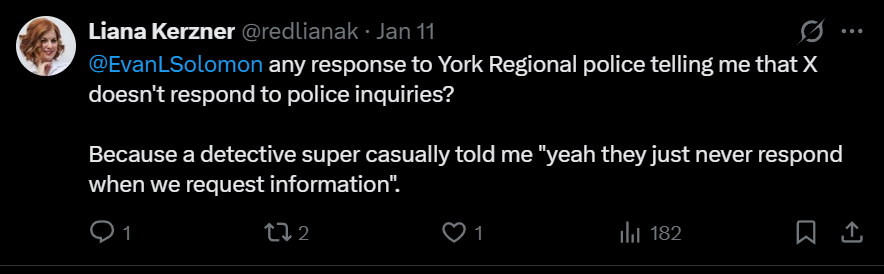
Kerzner’s claims of being immune from liability are also not as straightforward as she has suggested. After consulting with several individuals knowledgeable about the relevant legal principles, the following explanation was provided to me:
In both the United States and Canada, a speaker cannot automatically avoid defamation liability simply by omitting the subject’s legal name. The decisive issue is whether the statements would reasonably be understood to refer to an identifiable individual when considered within their full factual context.
In other words, liability may arise even when a name is not used if the surrounding circumstances, descriptions, or patterns of communication make it clear to a reasonable observer who the statements are about.
Under U.S. law, a plaintiff must prove that the allegedly defamatory statement was “of and concerning” them. Courts do not require that the plaintiff be named explicitly. Instead, the relevant question is whether reasonable readers or listeners, familiar with the surrounding circumstances, would understand that the statement refers to that individual.
Identification may be established through contextual clues, descriptive details, or other information that allows the audience to connect the statement to a particular person. Courts may also consider extrinsic evidence demonstrating that those who encountered the statement understood who was being referenced.
Where a speaker has privately informed members of their audience of the identity behind a pseudonym—for example through direct messages or other private communications—that evidence can significantly strengthen the identification element. Such communications may demonstrate that at least a portion of the audience understood exactly who was being discussed.
Public statements can reinforce this identification as well. Posts that connect a pseudonym to specific events, online exchanges, or named individuals may allow reasonable observers to deduce the identity being referenced. For example, if a speaker claims that a particular account is “stanning hard” for a named individual, and the referenced conduct corresponds to praise directed at a specific actress, those contextual signals may allow readers to connect the pseudonym to that real person.
Courts evaluate the totality of the circumstances rather than isolating a single statement. Even if only a subset of the audience is able to make the connection, that may still satisfy the identification requirement.
If the plaintiff is considered a public figure, she would also need to prove actual malice. That requirement, however, is separate from the threshold question of identification.
Canadian law follows a similar approach on identification, though it is generally considered more plaintiff-friendly overall. A plaintiff must establish three elements: that the words are defamatory, that they refer to the plaintiff, and that they were published to at least one third party.
As in the United States, the plaintiff does not need to be named explicitly.
The relevant question is whether a reasonable person who knows the plaintiff would understand that the words refer to them.
Canadian courts permit the use of extrinsic evidence to establish identification, including private communications that demonstrate how members of the audience understood the statements.
Public commentary linking a pseudonym to identifiable real-world interactions or to named individuals may also satisfy the “reference” element.
Unlike in the United States, Canadian plaintiffs do not face a heightened constitutional “actual malice” standard based solely on their public profile.
In both jurisdictions, courts evaluate identification based on how a reasonable audience would interpret the statements in their full context. Where there is evidence that a speaker privately disclosed the identity behind a pseudonym and also provided public contextual cues enabling readers to deduce who is being discussed, the absence of the person’s legal name is unlikely, by itself, to defeat a defamation claim.
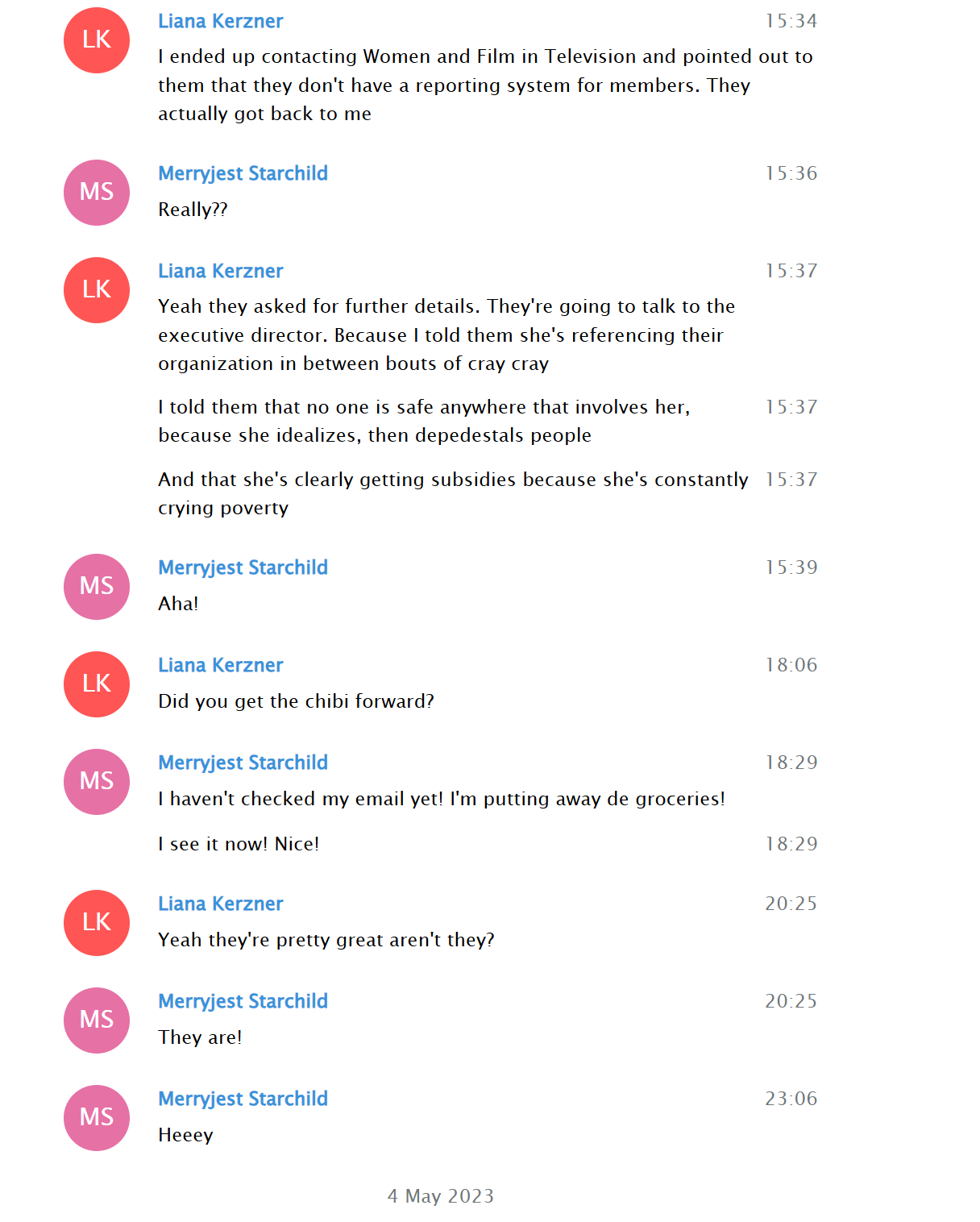
In May of 2023, Liana Kerzner contacted Women and Film in Television in order to report Emily Schooley as a dangerous individual. If Kerzner’s claim that Schooley was receiving a subsidy or other form of support from that organization is accurate, such a report could potentially place Schooley’s source of income or financial support at risk. Viewed in that light, the action could reasonably be interpreted as Kerzner attempting to interfere with Schooley’s livelihood. This detail will become relevant later:
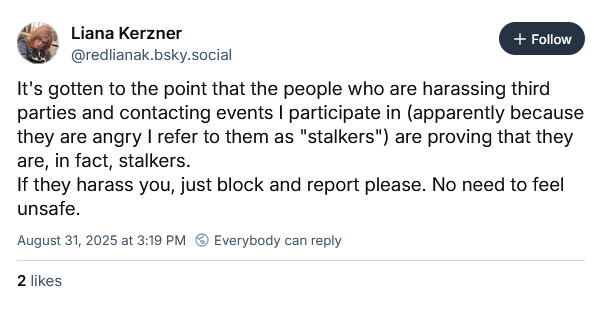
Yet in August of 2025, when Schooley allegedly contacted A Way Forward to raise complaints about Kerzner after learning that she would be speaking at their mental health event, Kerzner had this to say:
It is also worth asking a question that no one in Kerzner’s server or circle of friends seems inclined to ask whenever she announces that “Stalker-Chan” has “yet another alt” and has made herself known: How, exactly, is it being made known that the commenter is Schooley?
In most cases, nothing about the usernames themselves appears to point to Schooley at all.
At this point, however, based on everything that has come before, there are many reasons to doubt Kerzner’s account of events—indeed, of any event, to be frank.
As with Mitchell Jura, Asher and I do not have a favorable opinion of Schooley, and we have not spoken to her—or to any of the individuals discussed here—in preparation for this document. Instead, we have relied solely on the evidence available to us.
Likewise, as in the case of Jura, we do not condone any illegal or unethical conduct Schooley may have (allegedly) engaged in. That said, it is difficult to ignore that Kerzner appears to have approached her conflict with Schooley in much the same way she has approached similar disputes with others: through insinuation, the private disclosure of personal information to prime her audience with the identity behind a pseudonym while avoiding naming the person publicly, the disclosure of mental-health details in ways that invite social ridicule, and the recounting of events that appear incomplete, inaccurate, or selectively framed.
And Schooley, whatever her flaws may be, should be confronted only with the consequences and criticism for actions she has actually taken—not for events that are fictional or unsupported.
Kerzner’s Discord audience appears to accept her word and her identification of “the stalker” almost immediately. This is typical of Kerzner’s server: her assertions are seldom, if ever, questioned. When pushback does occur, it is quickly shut dow by Kerzner herself or by moderators such as Aileyn. Skepticism is not especially welcome in Kerzner’s otherwise “welcoming” community.
A welcoming community that, in practice, often functions as a breeding ground for exclusion and rumor.
This will become evident in the case of Vagabond, but first we need to make a small detour and discuss Song Eretson:
